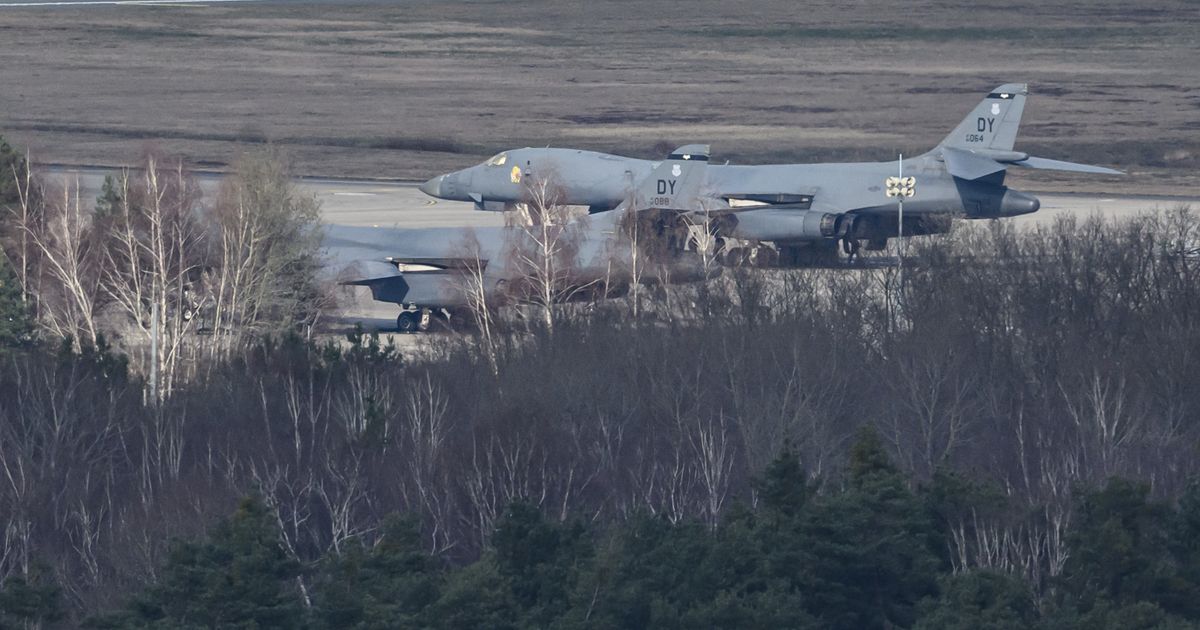
Iran’s ambassador to Germany has formally asked Berlin to clarify whether the United States has used the Ramstein Air Base in western Germany to support recent military attacks on Iran and whether such use could qualify as aggression under UN General Assembly Resolution 3314. Both opposition and pro-government sources agree that Germany’s defense minister currently sees no reason to question the legality of US activities at Ramstein, and that the base serves as a key logistical and command hub for US forces in Europe and beyond, with its precise operational role in any strikes on Iran not publicly confirmed. They also note that Germany hosts Ramstein under bilateral and NATO-related agreements, and that domestic political actors, including the Left party, have raised concerns or demands for clearer limits on how the base may be used in foreign operations.
Coverage across both camps highlights that the controversy around Ramstein is not new, referencing its prior involvement in US drone operations and earlier legal and parliamentary challenges over whether German territory is being used to facilitate unlawful extraterritorial uses of force. Both sides describe the legal framework as a combination of stationing treaties and NATO commitments that, in theory, allow Germany to impose restrictions or even terminate agreements, though such steps would be politically costly and are considered unlikely under current circumstances. They also concur that the Iranian inquiry is framed in legalistic terms, centering on international law definitions of aggression and state responsibility, and that the episode touches broader debates about alliance solidarity, German sovereignty over foreign bases on its soil, and the transparency of US military activities in Europe.
Areas of disagreement
Responsibility and blame. Opposition outlets emphasize potential German complicity if Ramstein enabled attacks on Iran, stressing that allowing such operations from German soil could breach international law and implicate Berlin as an accomplice. Pro-government coverage, while acknowledging the question, places more weight on US operational control and treats German responsibility as indirect and constrained by alliance and treaty obligations. Opposition sources frame the Iranian query as a serious legal warning that might expose Germany to international claims, whereas pro-government sources present it more as a diplomatic request that does not yet demonstrate concrete wrongdoing.
Legal status and urgency. Opposition reporting frames the legal uncertainty around Ramstein as acute, portraying existing agreements as outdated or insufficient to regulate modern remote warfare and urging immediate clarification or review. Pro-government outlets stress continuity and stability of the legal framework, underscoring that the defense ministry sees no current legal problem and that any reinterpretation should be cautious and alliance-consistent rather than reactive. Where opposition sources imply that UN Resolution 3314 could readily classify support from Ramstein as aggression, pro-government sources treat that classification as a complex and contested legal matter requiring high evidentiary thresholds.
Political framing inside Germany. Opposition coverage amplifies domestic critics like the Left party, presenting them as articulating a broad public unease about subordination to US military priorities and about transparency over what happens at Ramstein. Pro-government coverage acknowledges these voices but situates them on the political margins, stressing instead mainstream consensus on the importance of US basing for Germany’s security and NATO cohesion. Opposition narratives cast the government as reluctant to confront Washington and overly deferential, while pro-government narratives highlight the balancing act between democratic oversight and the practical demands of alliance politics.
Characterization of Iran’s move. Opposition-aligned sources describe Iran’s démarche as a legitimate attempt to hold Germany to its international obligations and to force clarity on whether its territory is being used for unlawful force. Pro-government sources more often frame the request as part legal inquiry, part political maneuver, suggesting Tehran may be seeking to drive wedges within NATO or exploit German domestic sensitivities about US bases. Opposition outlets tend to validate Iran’s legal framing and demand a robust German response, whereas pro-government outlets urge measured engagement that does not overstate Iran’s claims or undermine alliance trust.
In summary, opposition coverage tends to depict Ramstein as a legally and morally problematic instrument of US power that risks dragging Germany into unlawful aggression, while pro-government coverage tends to present the base as a legitimate element of alliance commitments where legal concerns exist but are manageable within existing frameworks.