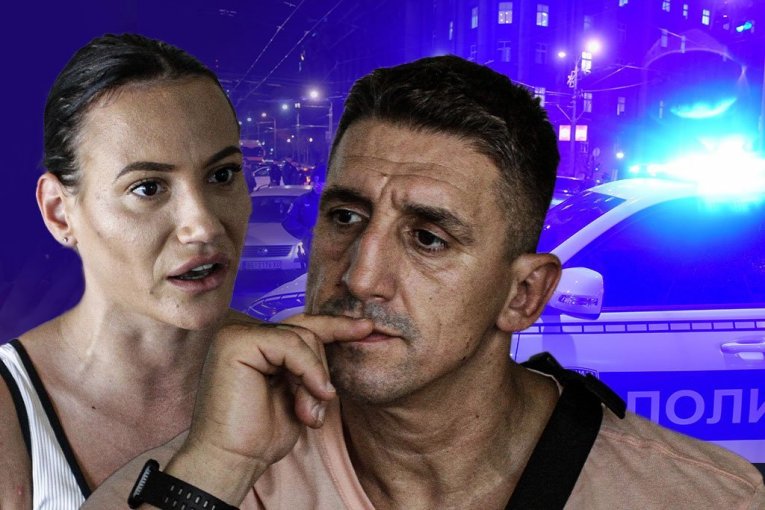



Kristina Spalević and Kristijan Golubović’s breakup is reported across the spectrum as the result of a serious incident in their shared apartment that triggered police intervention and a restraining order against Golubović. Both sides agree that Spalević left the home with their young son, obtained a court-imposed ban on Golubović’s approach, and has since been giving detailed media statements about the deterioration of their relationship, including frequent arguments, her feeling unappreciated, and fears for her children’s emotional development. Outlets from all camps also highlight her claims of visible marks on her body after the incident, her concerns about financial insecurity after the split, and her insistence that she will not reconcile, emphasizing that her decision is final. There is consensus that Golubović, a controversial public figure with a criminal past and reality‑show fame, has made his own public comments and is portrayed as distressed by the separation.
Coverage also aligns on broader contextual elements: Spalević frames her decision through the lens of motherhood, stressing her responsibility to protect her sons and prevent them from adopting what she describes as problematic behavioral patterns she attributes to Golubović. Media on both sides situate the story within Serbia’s wider pattern of high‑profile domestic disputes and the role of police and courts in issuing restraining orders to prevent escalation. They also note her turn toward faith and spirituality as a coping mechanism, as well as the influence of advice from Golubović’s ex‑wife and friends encouraging her to leave a toxic environment. In general, both opposition and pro‑government outlets agree that institutions responded by formalizing the no‑contact order and that the case has become another made‑for‑tabloids example of how volatile relationships among celebrity couples spill into the public sphere.
Areas of disagreement
Responsibility and blame. Opposition‑aligned sources tend to emphasize Spalević’s narrative of long‑term mistreatment, describing Golubović’s behavior as a pattern of aggression, manipulation, and disrespect that culminated in the incident and restraining order. Pro‑government outlets, while not denying the conflict or the ban on approach, often soften direct accusations by framing the clash as a relationship breakdown between two temperamental individuals. Opposition media are more likely to underscore her physical marks and quotes about feeling unsafe as evidence of clear fault, whereas pro‑government coverage mixes such details with mentions of Golubović’s grief and emotional turmoil, diluting the focus on his responsibility.
Portrayal of institutions and police. Opposition outlets typically use the case to question how effectively police and courts protect women, hinting that only Spalević’s media visibility guaranteed a swift restraining order and implying that ordinary women might not receive the same protection. Pro‑government media, by contrast, present the intervention as straightforward proof that institutions function properly, stressing that police intervened, a ban was issued, and the situation is now under control. In opposition reporting the episode can be folded into a broader critique of systemic neglect of domestic violence, while pro‑government reporting tends to isolate it as a private drama successfully managed by state mechanisms.
Moral framing and public sympathy. Opposition‑aligned sources more clearly cast Spalević as a victim seeking to break free from a toxic, possibly abusive relationship, and they frame her as a cautionary example about the risks of tolerating controlling partners. Pro‑government outlets, though relaying many of the same quotes, devote more space to her worries about children, finances, and faith, crafting a softer family‑drama narrative that invites empathy for both sides. Where opposition coverage leans into Golubović’s notorious reputation to heighten moral condemnation, pro‑government stories balance his negative traits with references to his pain, past tragedies, and public persona, thereby moderating public judgment.
Degree of political and social generalization. Opposition media are prone to connect this breakup to broader social issues such as normalized violence, misogyny, and the celebrity culture fostered under the current political climate, suggesting that the case reflects deeper societal decay. Pro‑government outlets usually avoid such extrapolations, keeping the story firmly in the sphere of entertainment and private life, and focusing on personal choices and character flaws rather than systemic critique. As a result, opposition coverage uses the episode as an entry point into debates about women’s rights and state priorities, whereas pro‑government coverage aims to contain it as a self‑contained, sensational but apolitical incident.
In summary, opposition coverage tends to frame the breakup and restraining order as emblematic of systemic problems in protecting women and dealing with violent male behavior, while pro-government coverage tends to treat it as a personal celebrity drama that shows institutions working and invites a more balanced sympathy toward both partners.
Story coverage