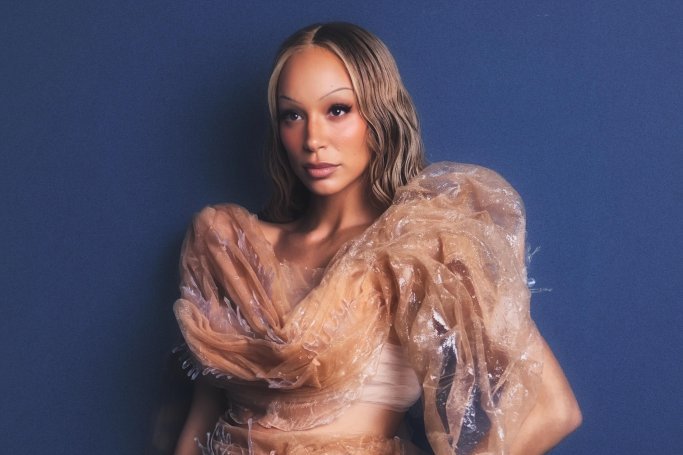

Singer Edita Aradinović has publicly announced that she is pregnant, revealing that she is already in her fifth month and expecting a daughter. She shared the news with a photo of her baby bump on Instagram, where she received a wave of congratulations and supportive comments from followers and fans. In her public messages, she directly addressed her unborn child with emotional language, while also making a broader appeal to other mothers. Across coverage, it is consistently stated that she is continuing to perform and remain professionally active during this stage of her pregnancy.
Media reports also agree that Aradinović is simultaneously focused on her music career, preparing a new album while promoting recent singles such as “Livada” and “Kišobran za suze.” Outlets note that producer Miloš Roganović is an important collaborator on this project, framing the pregnancy as coinciding with a particularly productive creative phase. Coverage converges on the idea that she is trying to balance the physical demands of pregnancy with professional commitments, acknowledging that she feels energetic but experiences expected physical challenges. Both sides, where mentioned, place the story in the broader context of celebrity motherhood and the public’s interest in the private lives of high-profile performers.
Areas of disagreement
Framing of the announcement. Opposition-aligned outlets tend to present Aradinović’s pregnancy announcement, when they cover it, as a standard celebrity lifestyle story, emphasizing the personal nature of the news and downplaying any broader social messaging. Pro-government outlets instead highlight the emotional dimension of her direct address to the unborn daughter and amplify it into a more emblematic moment, framing the announcement as a positive, aspirational event. While opposition sources may treat the Instagram post as one item in a broader entertainment news cycle, pro-government sources use more celebratory language and stress the warmth and public resonance of her message.
Role-model narrative. Opposition coverage, where it appears, typically treats Aradinović primarily as an entertainer whose pregnancy is of interest to fans but not inherently a public-model issue, often minimizing any moral or social exemplarity. Pro-government outlets more explicitly suggest she is a role model, stressing her “urgent appeal to mothers” and portraying her as a responsible, caring future parent whose choices and words are worth emulating. The result is that opposition-leaning pieces tend to keep the story at the level of individual lifestyle, while pro-government pieces use it to reinforce a narrative about family values and socially approved motherhood.
Work–family balance. Opposition-aligned media are more likely to frame her continued performances and album work as a typical example of modern professional women managing pregnancy alongside demanding careers, sometimes underscoring the pressures of the entertainment industry. Pro-government coverage emphasizes her energy and commitment as something admirable and patriotic, positioning her productivity during pregnancy as proof of resilience and devotion to both career and family. Thus, opposition narratives may hint at structural challenges for working mothers, whereas pro-government narratives focus on her personal strength and positivity without broad systemic critique.
Use of the story in broader politics. Opposition outlets, when they touch on the story, generally avoid tying her pregnancy to state policies or demographic debates, leaving it largely apolitical entertainment content. Pro-government outlets are more inclined to subtly embed the story in a wider discourse that normalizes and celebrates childbirth, aligning it with pro-family messaging common in government-friendly media, even if explicit policy references are absent. This leads to a contrast between opposition coverage that isolates the event from politics, and pro-government coverage that quietly situates it within a favorable narrative about national renewal and traditional values.
In summary, opposition coverage tends to present Edita Aradinović’s pregnancy as a personal celebrity milestone and an ordinary lifestyle story, while pro-government coverage tends to elevate it into a symbolically loaded, pro-family narrative that emphasizes her role-model status and aligns subtly with wider government-friendly social messaging.