

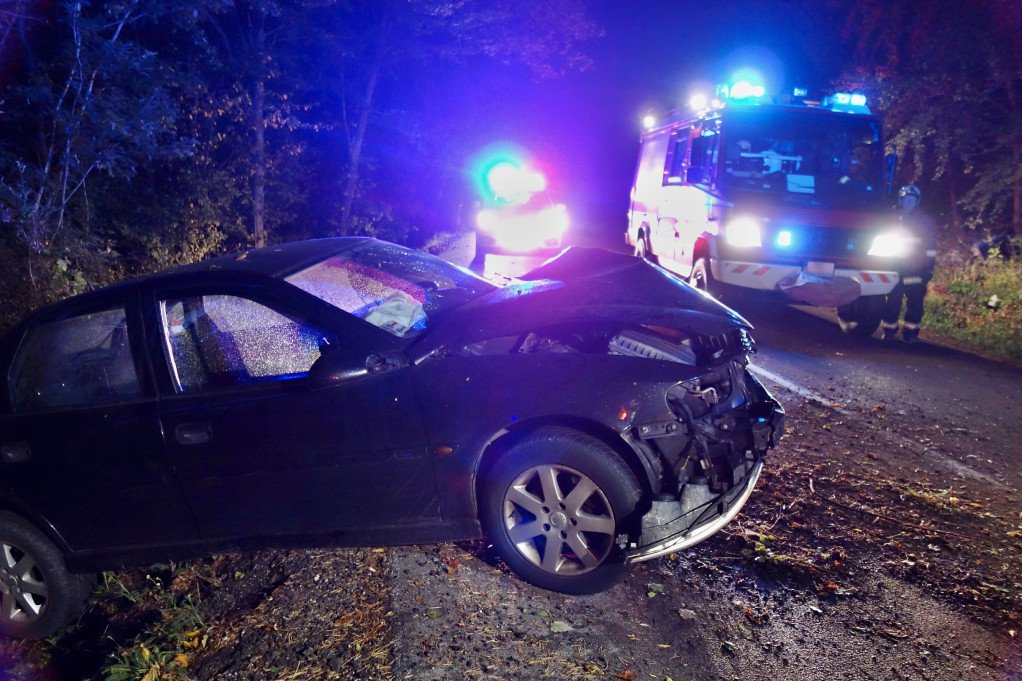
A married couple from Bosnia and Herzegovina and their baby were seriously injured when their passenger car plunged into a ravine off the Nikšić–Plužine main road near Brezna in Montenegro, in the early morning hours around 6 a.m. Both opposition and pro-government outlets agree that all three occupants survived but sustained serious injuries: the woman underwent urgent surgery for internal bleeding and had a kidney removed, the man suffered chest injuries and is hospitalized in a stable condition, and the infant was transported to the Clinical Center of Montenegro for specialized care. They also concur that the vehicle carried BiH license plates, that the terrain is difficult and mountainous, and that emergency services intervened promptly at the scene.
Across the spectrum, outlets note that the section of the Nikšić–Plužine highway where the accident occurred is known as a challenging and accident-prone route through the Montenegrin interior, with sharp curves and ravines that complicate rescue operations. There is broad agreement that the incident has reignited discussion about road safety, driver obligations after a traffic accident, and the role of the police, emergency medical services, and the Clinical Center in handling severe crashes, with particular emphasis on the legal duty to secure the accident site, deploy warning signs such as a triangle, and notify authorities. Both sides reference the institutional framework of traffic regulations and the health system’s capacity to respond quickly to complex trauma cases, using this case as an illustration of systemic pressures on Montenegro’s road and emergency infrastructure.
Areas of disagreement
Responsibility and blame. Opposition-aligned sources tend to frame the crash as a symptom of chronic state neglect of dangerous road sections, implying that inadequate investment and oversight contributed to the severity of the accident, while downplaying or leaving open the question of individual driver error. Pro-government outlets focus more narrowly on the immediate circumstances and personal responsibility, highlighting driver obligations under traffic law and describing the incident as a tragic but isolated case. The former stress structural and policy failures, whereas the latter emphasize compliance with existing rules and avoid assigning systemic blame to state institutions.
Infrastructure and investment. Opposition coverage typically uses the ravine crash to underscore longstanding underinvestment in road infrastructure, criticizing authorities for slow modernization, insufficient guardrails, and inadequate signage on mountainous routes like Nikšić–Plužine. Pro-government media, by contrast, either highlight previous or ongoing state projects to improve highways and tunnels or omit broader infrastructure critique altogether, suggesting that such accidents can occur even on upgraded roads. Where opposition narratives connect the event to a pattern of fatal or severe crashes on similar roads, pro-government narratives keep the focus on this particular incident without extrapolating to a systemic indictment.
Institutional performance and emergency response. Opposition outlets are more likely to question whether the emergency response was as fast and well-equipped as it should be, using the remoteness of the location to raise doubts about ambulance coverage, rescue logistics, and the overall readiness of the health and police systems. Pro-government reports, however, stress that emergency services reacted promptly, underline the successful transfer of the baby to the Clinical Center, and frame the complex surgery and hospital care as proof that institutions function effectively under pressure. Thus, opposition narratives treat institutional performance as contested and potentially deficient, while pro-government narratives present it as a success story deserving public trust.
Use of the case in broader political debate. Opposition coverage tends to situate the accident within a broader critique of governance, tying it to debates about corruption, misallocation of infrastructure funds, and the government’s priorities in regional development. Pro-government outlets avoid overt politicization, treating the crash primarily as a human-interest and public-safety story and occasionally using it to remind readers of their own responsibilities under traffic law rather than to question state policy. This creates a contrast where the same tragic event becomes a vehicle for systemic political criticism in opposition narratives, while in pro-government narratives it remains largely depoliticized and confined to legal, medical, and human angles.
In summary, opposition coverage tends to embed the accident in a larger narrative of state neglect, infrastructural risk, and institutional underperformance, while pro-government coverage tends to emphasize individual responsibility, prompt emergency action, and the competence of existing laws and services.