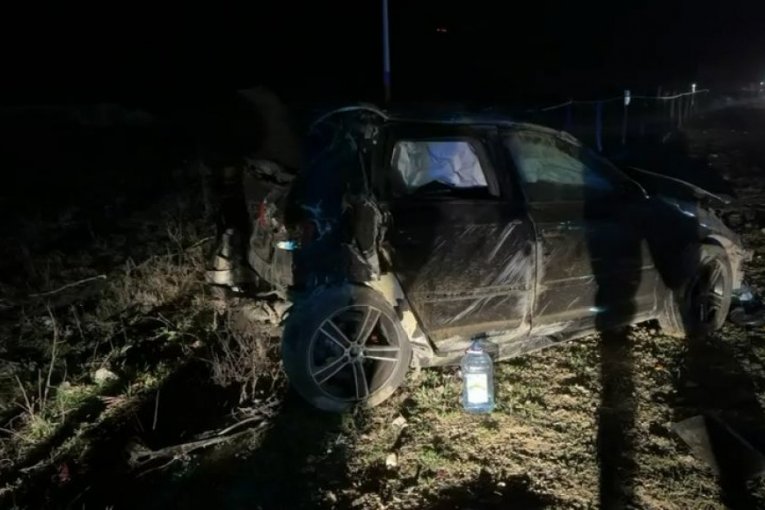
Two people were seriously injured and one person sustained minor injuries in a head-on collision between an Audi passenger car and a truck on the main Novi Pazar–Raška road, near Novi Pazar. Pro-government outlets agree that emergency services transported all the injured to the General Hospital in Novi Pazar, where doctors are fighting to save the lives of the two most seriously hurt. Shared reporting places the crash on a key regional route, describes the Audi as heavily crumpled after the impact, and notes that the collision occurred when the car and the truck met frontally on this busy roadway.
Across available coverage, outlets concur that the incident highlights broader concerns over road safety and driving behavior on Serbian highways and regional roads. They reference standard institutional responses: police securing the scene, medical staff providing emergency care, and traffic experts implicitly invoked through reminders of safety procedures. The shared context emphasizes the importance of following established traffic rules and post-crash protocols—such as stopping safely, turning off the engine, switching on hazard lights, wearing a reflective vest, and setting up a warning triangle—as part of ongoing public safety campaigns and efforts to reduce the severity and frequency of such accidents.
Areas of disagreement
Cause and driver behavior. Opposition-aligned sources are likely to frame the cause in terms of systemic issues such as poor road maintenance, inadequate lighting, and lax enforcement, suggesting that these structural failures made a loss of control and head-on impact more likely. Pro-government media instead focus on the immediate driver behavior, reporting that the Audi driver apparently lost control and collided with the truck, and largely treat this as an isolated incident rather than a symptom of systemic neglect.
Role of the state and institutions. Opposition outlets would typically stress failures by traffic police, road authorities, and the transport ministry, arguing that repeated accidents on major routes show chronic underinvestment and ineffective safety policy. Pro-government coverage, by contrast, highlights the swift reaction of emergency services and the professionalism of doctors in Novi Pazar, portraying institutions as responsive and functioning properly without questioning higher-level state responsibility.
Framing of road safety policy. Opposition media are inclined to link such crashes to a broader critique of the government’s road safety strategy, questioning whether current reforms, funding levels, and oversight mechanisms are sufficient to protect citizens. Pro-government outlets tend to fold the event into ongoing public-awareness narratives, reinforcing official guidance on how drivers should behave in accidents and echoing government messages about individual responsibility and compliance with traffic rules rather than calling for major policy change.
Political significance. Opposition-aligned reporting would likely interpret the accident as another data point in a pattern of preventable tragedies, using it to pressure authorities and highlight what they view as failures of governance and accountability. Pro-government sources treat the crash as a tragic but apolitical event, focusing on factual updates about the injured, publishing dramatic images from the scene, and avoiding any direct linkage between the collision and criticism of current leadership or infrastructure policy.
In summary, opposition coverage tends to connect the accident to structural failings, institutional accountability, and broader critiques of government road policy, while pro-government coverage tends to present it as an unfortunate but isolated incident emphasizing individual driver behavior, rapid institutional response, and official safety guidance.