

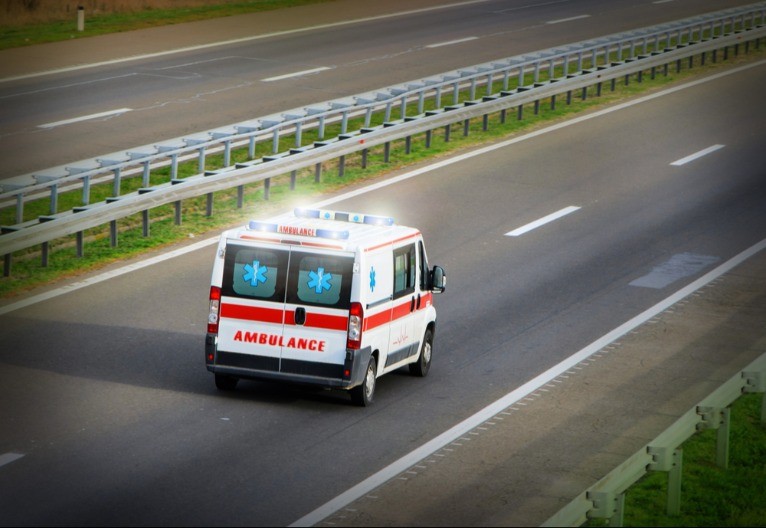
A young man from Vranje was seriously injured after falling from an overpass near Momin Kamen, close to Vladičin Han, on the Vladičin Han–Leskovac highway. Both opposition and pro-government accounts agree that the incident happened in the evening when the car in which he was traveling broke down, he exited the vehicle to wait for help, and subsequently fell from the flyover. They concur that he initially received medical attention at the local health center in Vranje and was then transported to the Clinical Center in Niš, with reports noting serious injuries to his legs, head, and spine but indicating that his condition is not life-threatening.
Across the spectrum, coverage situates the event within the broader framework of traffic safety on Serbian highways and the role of emergency medical services and road maintenance authorities. Both sides characterize it as an unusual, almost bizarre accident rather than a typical collision, and they underline the sequence of breakdown, roadside waiting, and fall as the central narrative. There is shared acknowledgment of the involvement of standard institutions such as the health center in Vranje, the University Clinical Center in Niš, and the traffic police, but outlets largely refrain from speculating about deeper systemic or political causes in the basic factual recounting of the case.
Areas of disagreement
Causation and systemic factors. Opposition-aligned outlets tend to frame the fall from the overpass as potentially linked to broader systemic issues such as inadequate roadside protection, poor lighting, or insufficient emergency response protocols, hinting that the conditions around Momin Kamen may have contributed to the accident. Pro-government outlets, by contrast, describe the event as an isolated, freak occurrence, emphasizing the individual circumstances and avoiding suggestions that infrastructure or state services bear responsibility.
Institutional responsibility. Opposition coverage is more inclined to question whether highway operators, local authorities, or traffic police have failed in maintaining barriers, signage, or safe waiting areas for stranded motorists, sometimes embedding the incident within a pattern of alleged negligence. Pro-government sources largely report only that the police and medical services responded appropriately and promptly, highlighting the rapid transport to the Niš clinic and focusing on the effectiveness rather than possible shortcomings of the institutions.
Political framing and context. Opposition-aligned media are more likely to place the accident in a narrative of ongoing concerns about public safety, underinvestment in infrastructure, and a lack of accountability in state and parastatal companies managing the roads. Pro-government outlets keep the story narrowly focused on the human-interest angle and medical outcome, omitting broader political or governance angles and avoiding drawing connections to national debates on infrastructure policy.
Transparency and follow-up. Opposition reporting tends to call for further clarification from authorities, pressing for detailed explanations about how a person waiting by a broken-down car could fall from an overpass and whether safety standards were breached. Pro-government reporting, meanwhile, emphasizes official statements about the victim’s condition and the fact that his life is not in danger, providing minimal detail on any ongoing investigation and signaling that the matter is being handled routinely by competent services.
In summary, opposition coverage tends to treat the incident as a possible symptom of wider infrastructural and institutional failings that merit scrutiny and follow-up, while pro-government coverage tends to present it as an unfortunate but isolated accident handled properly by existing state services.
