

pro-government
Jelena Tomašević's Diagnosis: Singer's First Statement After Collapsing on Stage
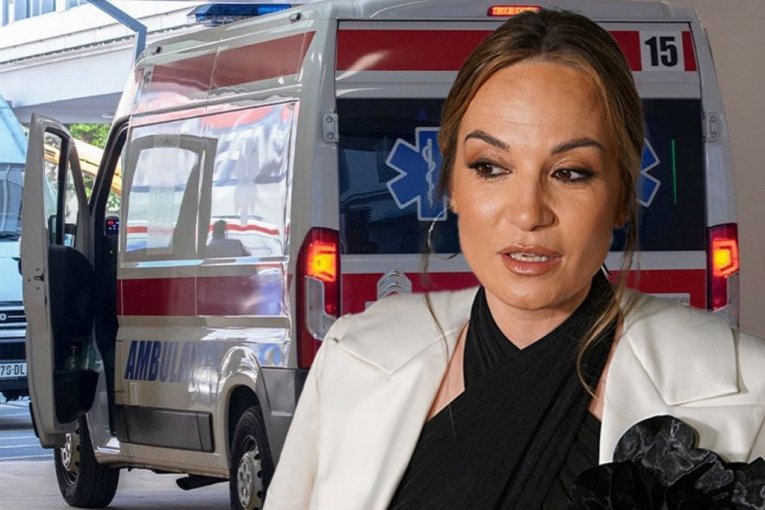
Music star, Jelena Tomašević, was hospitalized last night after suddenly falling ill during a concert in Bar.
a month ago
Singer Jelena Tomašević collapsed on stage during a concert in Bar, Montenegro, suddenly falling to her knees and prompting the immediate interruption of the performance and her urgent transport to emergency services. Both opposition and pro-government–aligned outlets describe that she was hospitalized, examined by doctors, and subsequently diagnosed with vertigo, a condition associated with an intense sensation of spinning, imbalance, and nausea that can be triggered by inner ear or, less commonly, brain issues. Coverage from both sides notes that her husband, actor Ivan Bosiljčić, said she had been fighting a virus and fatigue before the concert but chose to perform out of respect for the audience, after which she became acutely unwell on stage. Media across the spectrum emphasize that she later addressed the public directly, mainly through social networks, reassuring fans that she is now feeling better, thanking them for their concern, and even making lighthearted references to her diagnosis.
There is broad agreement that vertigo itself is generally a manageable condition but can become serious when accompanied by additional alarming symptoms, which is why Jelena’s sudden collapse warranted urgent medical evaluation. Outlets on both sides cite similar medical explanations: vertigo as a false sensation of movement, usually peripheral (inner ear) rather than central (brain-related), and describe typical symptoms such as loss of balance, nausea, and fear. They also relay experts’ or medical sources’ warnings that when vertigo appears abruptly or with chest pain, severe headache, or weakness, immediate medical attention is needed, using Jelena’s case as a hook to explain diagnosis methods and treatment options ranging from specific head and body maneuvers to medication, and in rare cases surgery. Across the political spectrum, coverage situates the incident within her established career and public image, noting that she even released a song titled “Vertigo” in 2013, which is now being referenced as an ironic coincidence while reinforcing that she is recovering and under medical supervision.
Tone and framing of the incident. Opposition-aligned sources tend to frame Jelena Tomašević’s collapse as a stark illustration of the broader social climate, stressing overwork, economic pressure on performers, and systemic strain on public health, sometimes presenting the episode in a more somber or critical tone. Pro-government outlets, by contrast, largely present the incident as an isolated medical event, emphasizing her quick recovery, the professionalism of medical staff in Bar, and her resilience, often using emotional or reassuring language and highlighting her own optimistic social media posts.
Systemic health context. Opposition coverage is more likely to use the story as a gateway to critique healthcare capacity and working conditions, hinting that frequent viral illnesses and exhaustion among public figures reflect deeper structural problems in the health system and labor protections. Pro-government reporting focuses on the adequacy and speed of the emergency response, portraying Jelena’s swift diagnosis of vertigo and hospitalization as proof that local services function effectively, while downplaying or omitting any systemic critique.
Responsibility and risk. Opposition-leaning outlets are inclined to question why the concert proceeded if Jelena was known to be ill, implicitly critiquing commercial or institutional pressures on artists to perform even when unwell and suggesting that such pressures mirror broader governance issues. Pro-government media instead frame her decision to go on stage as a personal act of dedication to her fans, repeating her husband’s explanation that she performed out of respect for the audience and avoiding any suggestion of institutional or managerial responsibility for the risk.
Broader political subtext. Opposition sources may subtly link the episode to a narrative of a society under chronic stress, arguing that even high-profile artists are not shielded from the consequences of long-term mismanagement, poor public-health planning, and economic insecurity. Pro-government outlets, on the other hand, largely strip the story of political subtext, centering on human-interest angles, comparisons with other singers who experienced vertigo, and educational content about the condition, thereby reinforcing a narrative that this was a personal health scare rather than a symptom of wider political or systemic failings.
In summary, opposition coverage tends to embed Jelena Tomašević’s collapse within a broader critique of social and health-system pressures and implied governance failings, while pro-government coverage tends to treat it as a contained medical episode, spotlighting her recovery, the responsiveness of local healthcare, and depoliticized human-interest and educational angles.