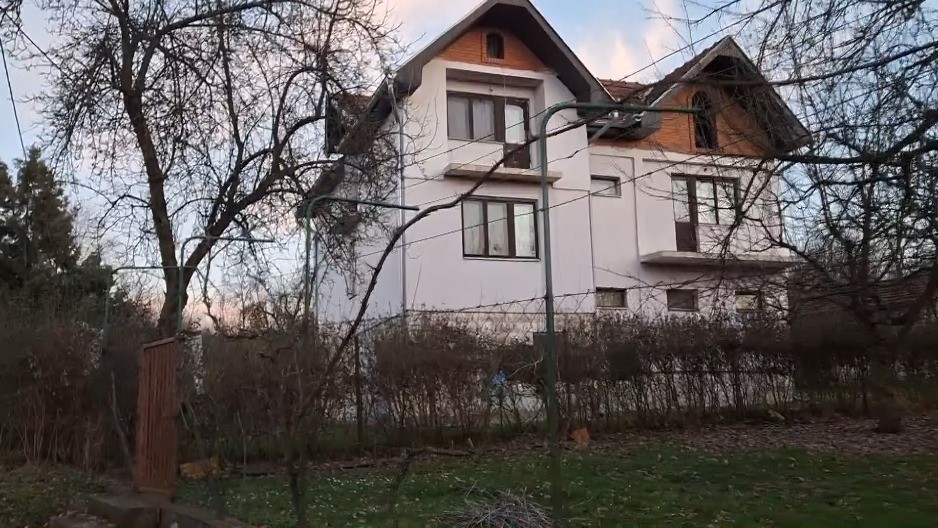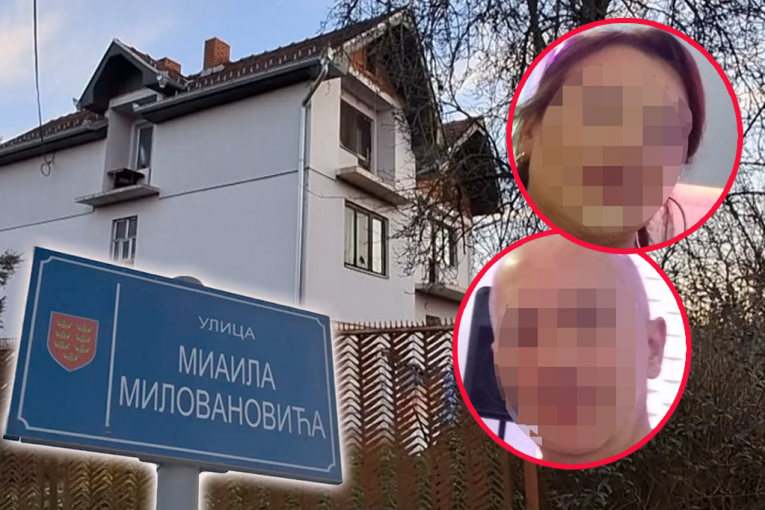


In Kraljevo’s Jarčujak neighborhood, both opposition and pro-government outlets report that retired firefighter Toni R. (56) killed his wife Jelena R. (50) with a crossbow in their family home, seriously wounded his 79-year-old mother Grozdana, and then committed suicide with a firearm (described as a hunting or automatic rifle). Coverage agrees on the basic sequence: a domestic dispute or heated argument inside the house, the wife dying at the scene from crossbow injuries, the mother managing to flee to neighbors or otherwise reach help despite being gravely hurt, and police later finding the bodies and opening an investigation while the mother remains hospitalized in serious condition.
Across the spectrum, media emphasize that the crime took place in what is described as a peaceful suburban settlement where residents were shocked and horrified, characterizing the family as previously harmonious and the perpetrator as a good neighbor and respected professional who had saved many lives as a firefighter. Outlets concur that authorities have not yet definitively established a motive, that autopsies and forensic work are underway, and that the surviving mother is in a state of severe psychophysical shock under medical care. Shared context also includes broader concern about domestic violence and sudden eruptions of lethal family conflict in otherwise seemingly stable households, with references to institutional follow-up through police, prosecutors, and social services, but without concrete claims that prior complaints or formal warnings existed in this particular case.
Areas of disagreement
Framing of responsibility. Opposition-aligned sources tend to use the case to question systemic failures, suggesting that institutions charged with preventing domestic violence and detecting risk signs may be ineffective or politically captured. Pro-government outlets instead concentrate responsibility almost entirely on the individual perpetrator, framing the crime as an inexplicable personal tragedy rather than an institutional lapse. While opposition media are more likely to hint that authorities could and should have done more, pro-government reporting stresses the absence of prior visible warning signs and treats the event as essentially unforeseeable.
Link to broader domestic-violence policy. Opposition coverage usually places the Kraljevo killing within a pattern of repeated family murders, invoking statistics or recent cases to argue that government policies against domestic violence are underfunded, poorly coordinated, or not seriously implemented. Pro-government outlets, by contrast, either avoid extensive policy discussion or briefly mention existing laws and police procedures to imply that the framework is in place and functioning. As a result, opposition media present the tragedy as symptomatic of a wider policy crisis, while pro-government media portray it as an isolated but shocking anomaly within an otherwise adequate system.
Portrayal of the state and its agencies. In opposition narratives, the police, prosecutors, and social services are often portrayed as reactive and slow, with questions raised about whether early-warning mechanisms, neighborhood reports, or mental health support were missing or mishandled. Pro-government outlets focus instead on prompt police response, the professionalism of investigators, and technical details such as autopsies and forensic work to underline that the state is doing everything possible after the fact. The opposition thus uses institutional angles to highlight perceived governance weaknesses, whereas pro-government media emphasize operational competence and rule-of-law procedures.
Use of emotion and symbolism. Opposition-aligned reporting tends to use the emotional shock of neighbors as a springboard to discuss fear, insecurity, and a sense that violence is becoming normalized under the current leadership. Pro-government coverage leans more on human-interest elements, foregrounding the perpetrator’s prior role as a lifesaving firefighter and the community’s disbelief to stress the unpredictability of human behavior rather than any political meaning. Consequently, opposition outlets infuse the story with symbolic weight about societal decay, while pro-government outlets treat it as a tragic but apolitical family catastrophe.
In summary, opposition coverage tends to politicize the Kraljevo tragedy by stressing systemic failures, weak domestic-violence protections, and institutional responsibility, while pro-government coverage tends to depoliticize it, focusing on the perpetrator’s individual act, the shock of neighbors, and the authorities’ professional response without questioning the broader governance framework.