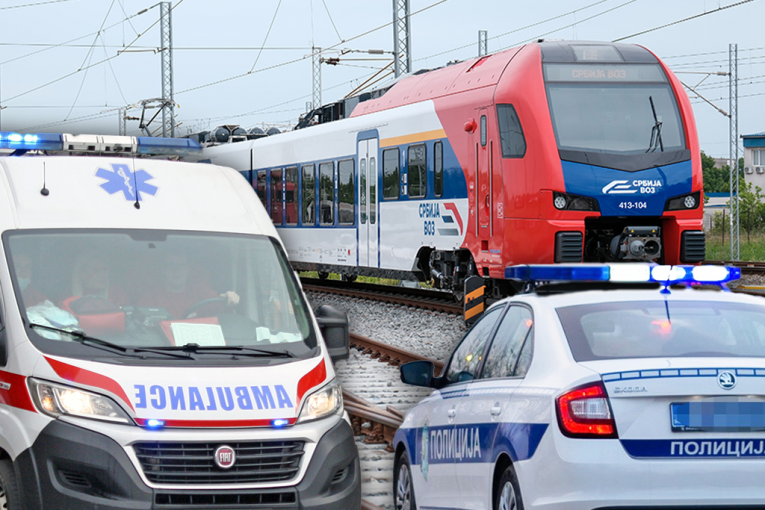
A woman was struck and killed by a passenger train traveling from Subotica to Belgrade Center in the early evening near Petrovaradin, on the section of track between Petrovaradin and Sremski Karlovci. Both opposition and pro-government outlets agree that the collision occurred around 18:50 on February 20, 2026, that rail traffic on this section was suspended, and that the train remained stopped with passengers still on board while police and emergency services conducted an on-site investigation. The victim was initially unidentified, and official information about her identity, the precise circumstances of her presence on the tracks, and any potential witnesses remained limited in early reports.
Coverage across the spectrum situates the event within broader concerns about railway and general traffic safety, emergency response protocols, and public awareness of how to behave at accident scenes. Outlets on both sides highlight the institutional role of the national rail operator and the police in managing the incident, securing the scene, and restoring traffic, and they echo official instructions to immediately call emergency services, avoid touching a body, and cooperate with investigators. There is shared emphasis on established procedures for handling accidents—such as warning other drivers, ensuring personal safety, and notifying authorities—as well as on the need for continued public adherence to safety rules around railway lines and roadways.
Points of Contention
Framing of the incident. Opposition-aligned sources tend to frame the death as part of a broader pattern of systemic safety failures, using the Petrovaradin case to illustrate perceived neglect of rail infrastructure and inadequate institutional oversight. Pro-government outlets, by contrast, largely describe the event as a tragic but isolated accident, focusing on factual chronology rather than connecting it to broader governance critiques. While opposition coverage is more likely to question whether poor maintenance, signaling, or fencing contributed, pro-government reports typically avoid speculative causal links and emphasize the ongoing investigation.
Responsibility and blame. Opposition reporting often implies shared institutional responsibility, suggesting that the state, rail operator, and regulatory bodies may have fallen short in preventing unauthorized access to tracks or ensuring sufficient safety measures. Pro-government coverage largely refrains from assigning blame, presenting the incident as under investigation and avoiding discussion of potential failures by public companies or ministries. In opposition narratives, the woman’s death is sometimes implicitly linked to policy and budgetary choices, whereas pro-government stories focus on individual behavior and procedural adherence.
Institutional performance and reforms. Opposition outlets are inclined to use the case near Petrovaradin to raise questions about delayed or insufficient investments in rail modernization, staff levels, and safety reforms, arguing that repeated accidents show deeper structural problems. Pro-government media instead highlight the quick response of emergency services, the role of "Srbija voz" in promptly announcing disruptions, and existing safety campaigns, presenting institutions as functioning properly within current frameworks. Where opposition voices call for accountability and new safety initiatives, pro-government narratives underscore the adequacy of current regulations and ongoing, government-led infrastructure projects.
Public messaging and purpose of coverage. Opposition-aligned sources often embed the story in a wider critique of public communication, arguing that authorities downplay risk and only reactively inform citizens after tragedies occur. Pro-government outlets use the coverage to circulate practical guidance—such as what to do if one finds a lifeless body or is involved in a traffic accident—framing their role as educative and supportive of official protocols. Thus, opposition media leverage the incident rhetorically to press for transparency and change, while pro-government media emphasize civic responsibility and cooperation with state institutions.
In summary, opposition coverage tends to present the Petrovaradin train death as symptomatic of systemic safety and governance problems demanding accountability and reform, while pro-government coverage tends to treat it as a tragic but exceptional event that validates existing emergency procedures and underscores the importance of citizens following official safety guidance.