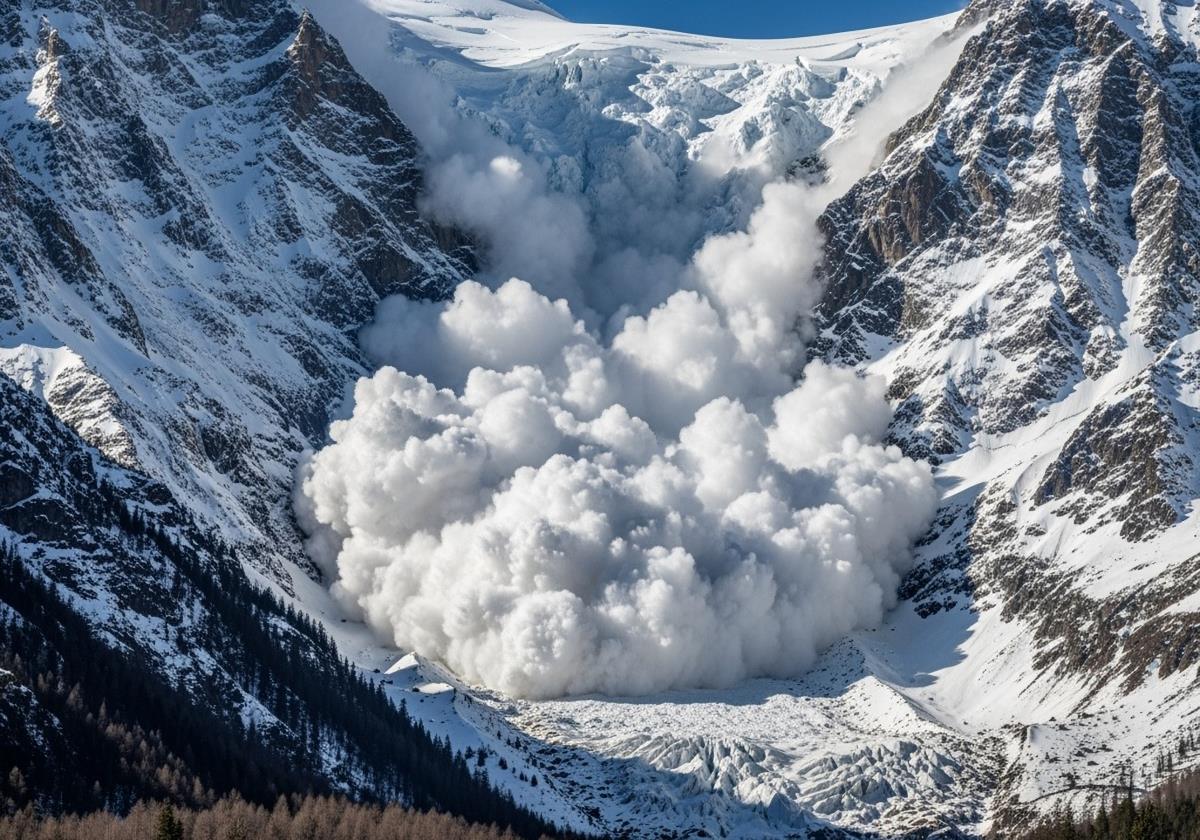

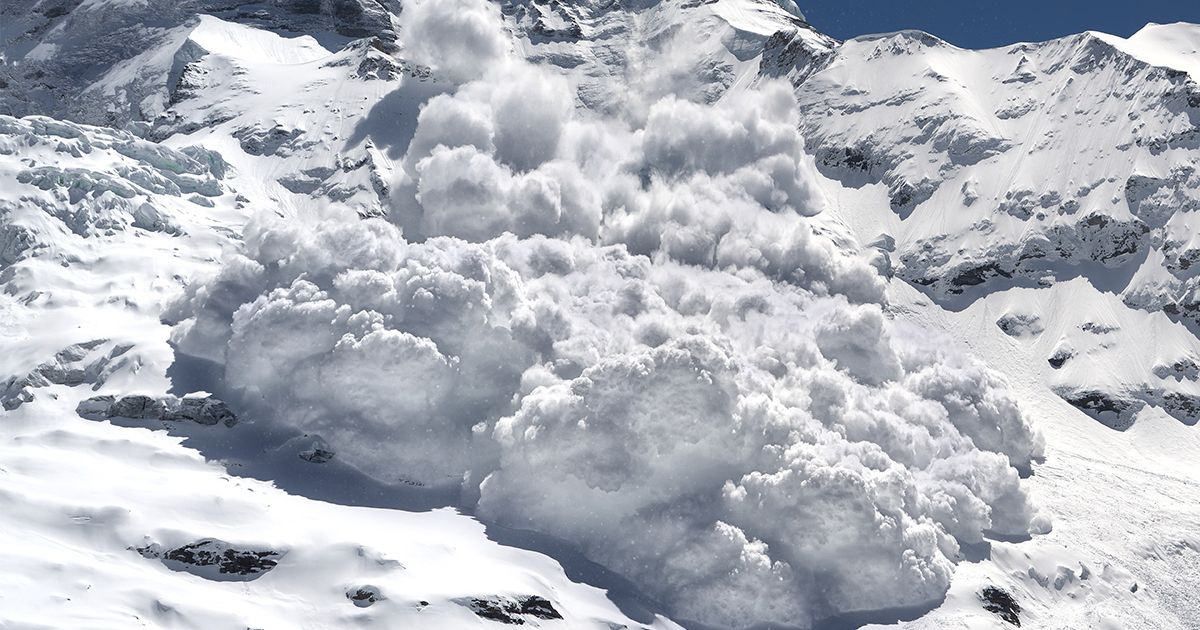
A regional passenger train traveling through Switzerland’s Valais region was hit by an avalanche, causing at least one carriage to derail and injuring five people, including the driver. Both opposition and pro-government outlets report that around 80 passengers were on board the train, which was running on the Frutigen–Brig route near the Alps when the snow mass struck. Emergency services deployed helicopters and ground teams to evacuate the injured and other passengers, and rail traffic on the affected section has been suspended for several days as rescue, repair, and safety checks continue. All sides agree that there were no reported fatalities, that video footage from the scene shows the derailed carriages surrounded by snow, and that authorities are investigating the incident.
Across the spectrum, coverage situates the derailment within Switzerland’s broader context of mountain rail operations and winter avalanche risk management, noting that this route is well known for its Alpine terrain and exposure to harsh weather. Outlets from both camps reference coordination between local authorities, rail operators, and rescue services, underscoring the role of existing emergency protocols and technical infrastructure in limiting casualties. There is shared recognition that heavy recent snowfall and unstable snowpacks contributed to the avalanche, and that the incident is being treated as a natural disaster rather than an intentional act. Both opposition and pro-government sources also highlight that the investigation may inform future safety enhancements for Alpine rail corridors, including updated avalanche monitoring, barriers, and route closures during high-risk periods.
Points of Contention
Responsibility and blame. Opposition-aligned coverage tends to question whether rail operators and local authorities sufficiently accounted for avalanche forecasts and whether trains should have been running through that segment at all, implicitly raising doubts about institutional preparedness. Pro-government outlets, by contrast, emphasize the sudden and exceptional force of the avalanche, framing it as an unavoidable act of nature and stressing that crews followed established safety and emergency procedures. While opposition pieces hint that the investigation might reveal preventable oversights, pro-government reports foreground statements suggesting that existing protocols functioned as intended under extreme conditions.
Emphasis on safety record. Opposition sources are more likely to juxtapose the derailment with other recent infrastructure or transport incidents, using this event to question the robustness of safety regimes and investment priorities in Alpine transit. Pro-government media, however, underline Switzerland’s generally strong rail safety record, portraying this crash as a rare anomaly within an otherwise well-managed system. The former thus present the derailment as symptomatic of broader systemic strains, whereas the latter highlight long-term statistics and expert commentary to reassure the public that rail travel remains safe.
Portrayal of emergency response. Opposition coverage tends to focus on any reported delays, logistical challenges, or gaps in communication experienced by passengers and local residents, suggesting that the rescue effort, while ultimately successful, revealed weaknesses in coordination. Pro-government outlets stress the speed and professionalism of helicopter and ground teams, featuring visuals of rescues and quoting officials who praise the rapid mobilization of resources. In doing so, opposition narratives frame the operation as adequate but improvable, while pro-government narratives depict it as a model demonstration of crisis management.
Framing of future reforms. Opposition-aligned sources often present the derailment as evidence that more comprehensive reforms are needed, such as expanded avalanche protection infrastructure, stricter operating thresholds in bad weather, and greater transparency over risk assessments. Pro-government reporting, conversely, tends to speak of targeted technical adjustments and reviews rather than systemic overhaul, suggesting that fine-tuning existing mechanisms will suffice. This leads opposition media to cast the incident as a turning point demanding significant policy debate, while pro-government outlets treat it as a prompt for routine safety updates within a broadly sound framework.
In summary, opposition coverage tends to use the avalanche derailment to question preparedness, highlight potential institutional shortcomings, and argue for broader safety reforms, while pro-government coverage tends to stress the exceptional natural causes, highlight the competence of the response, and frame any follow-up as incremental improvements within an already reliable system.