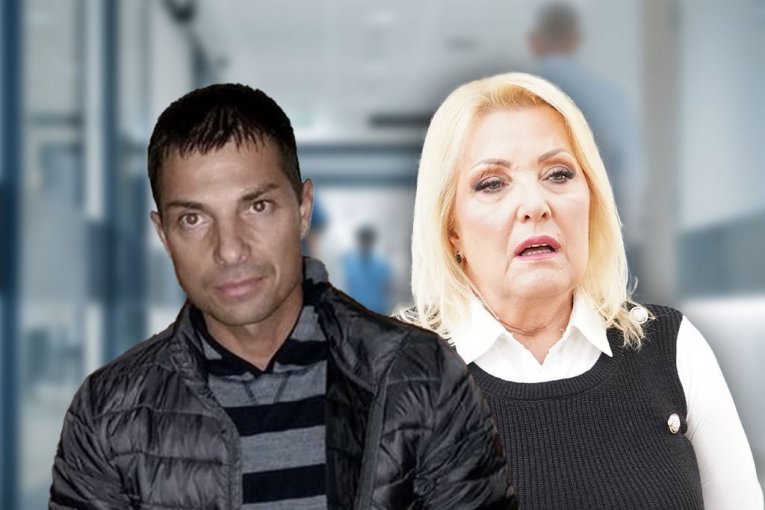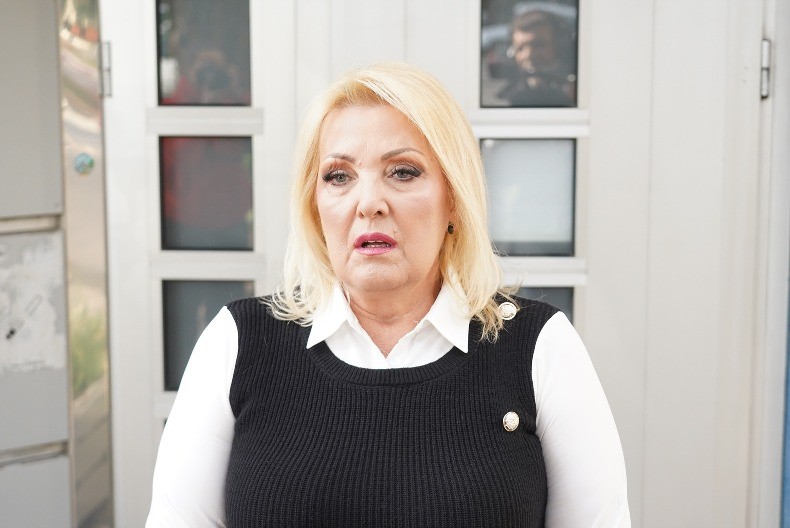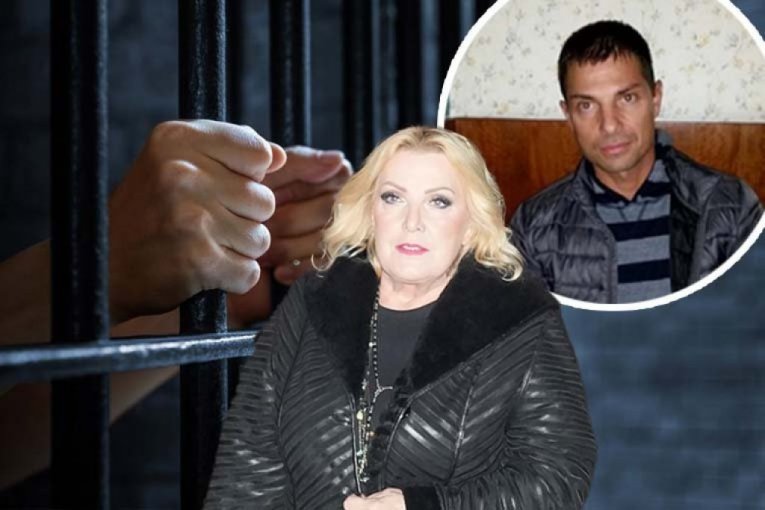



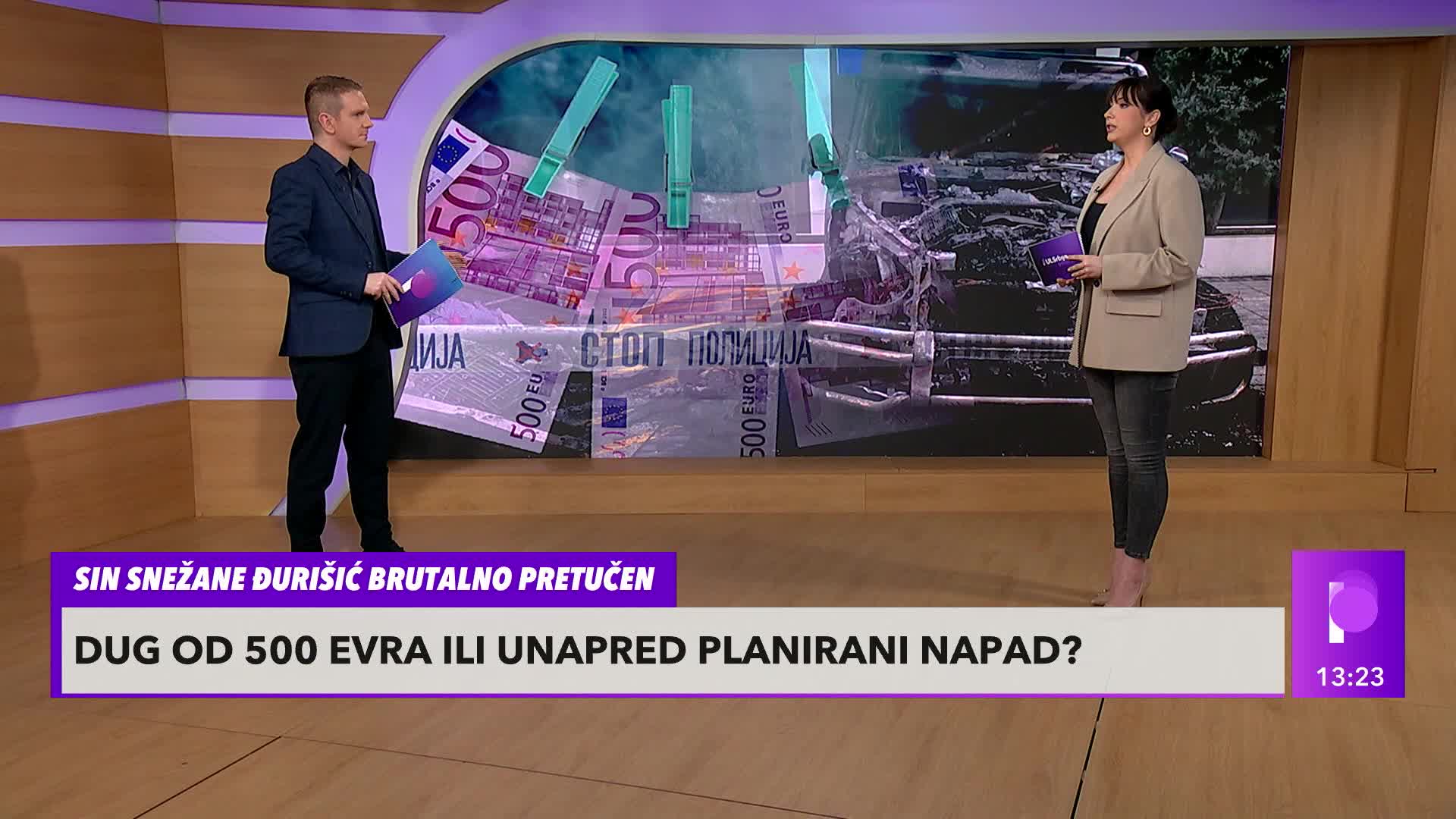
Singer Snežana Đurišić’s son, Marko Gvozdenović, was severely beaten and allegedly tortured for several hours in an apartment in Belgrade’s Vračar municipality around February 15. Both opposition and pro-government coverage agree that two adult suspects, identified as Zoran (or Zoran I./L.) aged about 53 and Lazar (L./S.) aged about 26, have been arrested and placed in custody on suspicion of causing serious bodily injury, abuse, and torture, with a possible involvement of a minor also mentioned. Reports consistently state that Gvozdenović sustained grave injuries, including multiple fractured ribs, head trauma, and extensive bruising, and that he required hospitalization after managing to escape and seek help, in part via his ex-wife. The media on both sides acknowledge that the case quickly drew wide public attention because of Đurišić’s celebrity status, and that the suspects’ detention was ordered to prevent interference with witnesses and to reduce the risk of flight.
Across the spectrum, outlets present the basic sequence as a quarrel or dispute that escalated into prolonged violence inside a private apartment, with neighbors describing scenes of chaos and visible damage in common areas of the building. It is broadly accepted that Đurišić canceled at least one performance—most notably at a concert dedicated to Šaban Šaulić—citing private reasons linked to the assault on her son, while the concert itself is still set to go ahead with other performers. Shared coverage notes that Đurišić initially refrained from detailed public comment, using her PR team to signal that she would speak later, and that she subsequently resumed or promoted some professional engagements abroad. Both sides situate the case within standard institutional procedures: police intervention after a delayed report, prosecutorial oversight, court-ordered custody of the suspects, and an ongoing investigation into the circumstances and possible additional participants.
Points of Contention
Framing of the incident. Opposition-aligned outlets are more likely to frame the case as part of a broader climate of insecurity and institutional failure, presenting the assault as one symptom of systemic problems in policing, justice, and social protection. Pro-government outlets instead emphasize the brutality and sensational details of the attack itself, treating it primarily as an extraordinary criminal case affecting a famous family rather than a systemic issue. Where opposition coverage tends to connect the event to patterns of violence and impunity, pro-government reports usually keep the focus on the personal tragedy, medical condition, and dramatic escape of Gvozdenović.
Role of state institutions. Opposition sources typically stress questions about why the attack could last for hours, why the police were notified only after a long delay, and whether authorities respond consistently when the victim is not related to a public figure, implicitly criticizing state capacity and political leadership. Pro-government media, by contrast, highlight that the suspects were quickly identified, arrested, and remanded in custody, portraying police, prosecutors, and courts as acting decisively and professionally. In doing so, opposition narratives underline perceived gaps and double standards, while pro-government narratives present the case as proof that institutions function and protect citizens.
Portrayal of the victim and family. Opposition outlets, where they engage with the story, tend to avoid moralizing about Gvozdenović’s character and instead stress his status as a victim whose rights must be protected, occasionally questioning media intrusion into the family’s privacy. Pro-government coverage devotes more space to neighbors’ and acquaintances’ testimonies about his personality, mixing sympathy with human-interest angles, and alternates between depicting Đurišić as a grieving mother and as a resilient professional resuming work. Thus, opposition media lean toward a more rights-based and privacy-focused framing, while pro-government media more readily personalize and dramatize the family’s responses.
Political and societal implications. Opposition-aligned sources are more inclined to read the case through a political lens, weaving it into narratives about rising violence, social decay, and the government’s responsibility for the overall security situation. Pro-government outlets largely avoid direct political linkage, framing the story as a tragic but isolated criminal matter and occasionally folding it into broader entertainment and lifestyle coverage rather than governance debates. As a result, opposition media use the incident to question the ruling establishment’s record on public safety, whereas pro-government media seek to contain its meaning within the boundaries of crime reporting and celebrity news.
In summary, opposition coverage tends to treat the beating of Snežana Đurišić’s son as a window into wider problems of security, institutional performance, and political accountability, while pro-government coverage tends to emphasize the swift arrest of suspects, the dramatic and emotional aspects of the case, and a narrative that reassures audiences that state institutions are functioning effectively.
Story coverage