


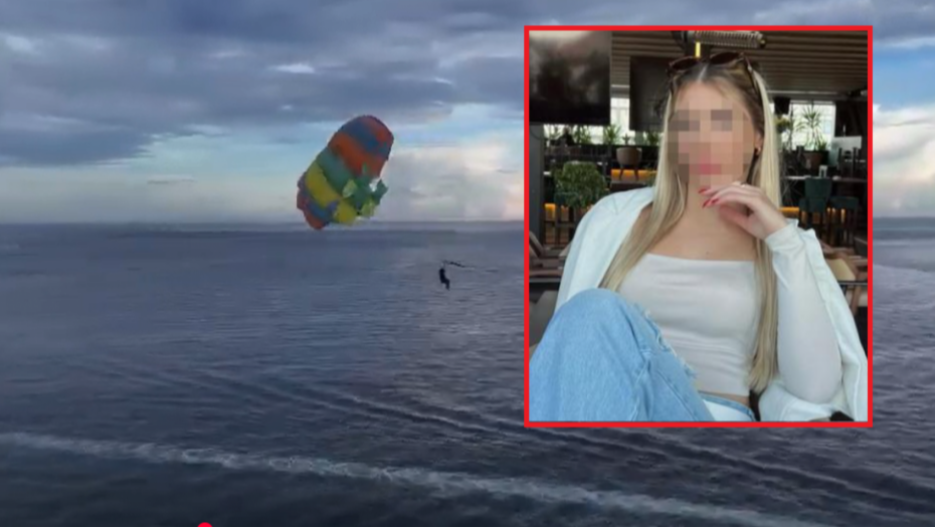
Media across the spectrum report that the Basic State Prosecutor's Office in Kotor has dismissed the criminal complaint against the owner of the parasailing and water sports company and the skippers involved in the fatal accident in Budva in which 19‑year‑old Tijana R. from Novi Sad died. Coverage agrees that the prosecution’s key finding is that Tijana allegedly unfastened her safety vest mid‑flight, leading to a fall from approximately 50 meters, and that no defects in the parasailing equipment or boat operation were officially established. Both sides highlight that the incident occurred during a tourist parasailing ride off the Budva coast, that no one has been found criminally responsible under the current prosecutorial decision, and that the girl’s family is represented by lawyer Mirko Bogićević from Budva.
Outlets on both sides also note that the family’s lawyer has filed a complaint with the Higher State Prosecutor’s Office in Podgorica, seeking a review and reversal of the Kotor office’s decision. There is shared acknowledgment that the legal arguments on appeal center on alleged failures of the skippers and operators to exercise due care and to provide timely assistance, invoking criminal code provisions on endangering safety and failure to render aid. Both opposition and pro‑government reporting situate the case within the broader functioning of Montenegro’s prosecutorial institutions, recognizing that any change in the status of responsibility now depends on the higher‑level prosecutorial review and potential re‑opening or re‑qualification of the case.
Points of Contention
Responsibility and blame. Opposition‑aligned sources tend to frame the dismissal as an attempt to shift blame primarily onto the victim, emphasizing the imbalance of power between a deceased teenager and commercial operators who control equipment and procedures. Pro‑government outlets more closely echo the prosecution’s conclusion that her unfastening of the vest was the decisive cause, presenting this as a key exculpatory fact for the company and skippers. While opposition coverage stresses systemic negligence and shared responsibility regardless of the vest issue, pro‑government coverage underscores the lack of evidence for equipment failure or direct unlawful conduct by the operators.
Portrayal of the prosecution. Opposition media generally depict the Basic State Prosecutor’s Office in Kotor as protective of local business interests and resistant to fully probing institutional or operator failures, using this case as an example of selective justice. Pro‑government outlets, by contrast, present the prosecutors as acting within legal standards, relying on expert findings and available evidence, and suggest that disagreement with the decision is a matter for regular appeals rather than proof of bias. Opposition narratives question the independence and rigor of the investigation, whereas pro‑government narratives emphasize procedural correctness and the availability of higher‑instance review as proof the system is functioning.
Framing of the family’s appeal. Opposition‑aligned reporting tends to spotlight the family lawyer’s complaint to the Higher State Prosecutor’s Office as a quest for justice against an unresponsive system, amplifying arguments that operators failed to ensure safety and render aid. Pro‑government outlets cover the same appeal more narrowly as a legal remedy within the normal course of proceedings, outlining the cited criminal code articles but avoiding broader accusations of institutional failure. In opposition narratives, the appeal symbolizes a larger struggle against impunity in tourism‑related accidents, while in pro‑government narratives it is portrayed as one step in a structured legal process that may or may not alter the initial decision.
Broader systemic implications. Opposition sources are more likely to connect the Budva parasailing case to patterns of weak regulation, lax oversight of tourist activities, and a judiciary perceived as lenient toward commercial operators and local elites. Pro‑government media, when they mention systemic issues at all, tend to describe them in softer terms, if not presenting the incident as an unfortunate but isolated tragedy grounded in individual actions. Thus, opposition coverage leverages the case to argue for sweeping institutional reforms and tighter safety enforcement, whereas pro‑government coverage keeps the focus on the specific evidentiary assessment in this case rather than on structural critique.
In summary, opposition coverage tends to treat the dismissal as evidence of systemic protection of operators and institutional injustice toward the victim’s family, while pro-government coverage tends to validate the prosecution’s reasoning as evidence-based and emphasize that any remaining disputes should be resolved through regular appellate channels.
Story coverage