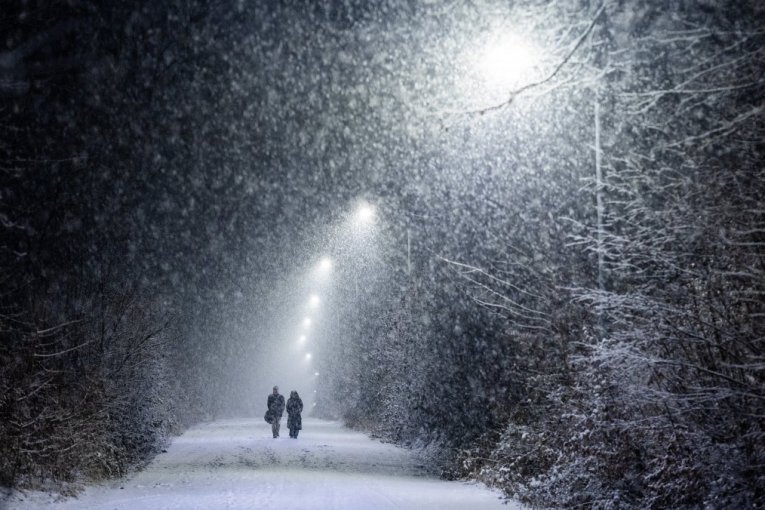
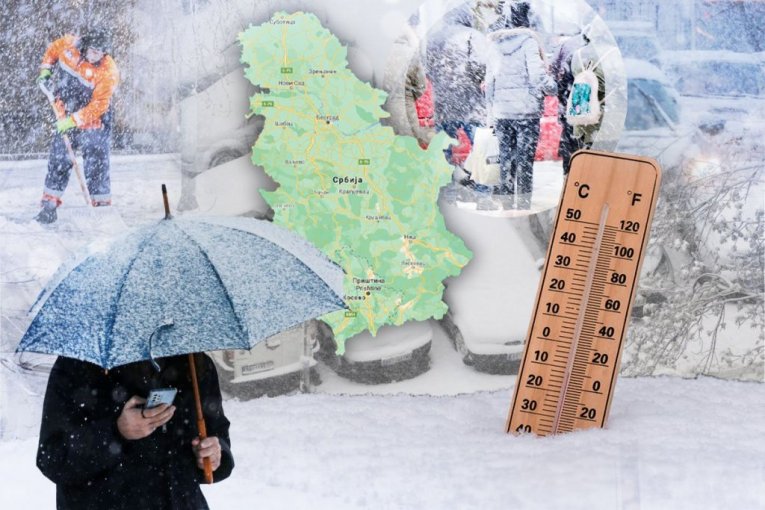
Serbia is undergoing an abrupt shift from unusually warm early-spring conditions back to winter weather, with meteorologists warning of a sharp temperature drop, strong winds, and the spread of snow from higher to lower elevations. Both opposition and pro-government outlets report that the Republic Hydrometeorological Service (RHMZ) has issued yellow and orange alerts for much of the country, citing unstable conditions, heavy rain in the south and center, and snow that has already begun on mountains like Kopaonik, where up to around 15 centimeters is expected alongside blizzard conditions. Coverage across the spectrum notes that a Mediterranean–Adriatic cyclone is the main driver, that the "temperature shock" will be most pronounced over the coming days, and that mixed precipitation—rain turning to snow—is likely in lower-lying areas as the cold air deepens, potentially leading to localized traffic disruptions and hazardous road conditions.
Outlets on both sides also agree that these developments fit into a familiar regional pattern of volatile March weather, emphasizing that late cold snaps are not unprecedented and that RHMZ remains the central, authoritative source for forecasts and alerts. There is shared acknowledgment that the hydrometeorological service has increased its warnings to the public, that local and national emergency structures are nominally on alert, and that citizens are being urged to follow official updates, especially drivers and those in higher, exposed terrain. While some reports briefly nod to broader climate variability as a backdrop to such swings, the basic context presented across the media space is that this is a significant but expected transition period between seasons, requiring heightened short-term preparedness rather than extraordinary, long-term systemic measures.
Points of Contention
Emphasis and tone. Opposition-aligned outlets tend to frame the sudden cold snap and snowfall as another stress test for public services, using a more alarmed tone about possible grid strain, road chaos, and institutional unpreparedness. Pro-government media, while also using dramatic language like "winter is returning with full force," usually pivot quickly from sensational headlines to reassuring detail, underscoring that the situation is under control and closely monitored by authorities. As a result, both sides acknowledge the same meteorological event, but opposition pieces emphasize potential disruption, whereas pro-government pieces highlight managed risk and resilience.
Government preparedness and capacity. Opposition coverage typically questions whether road maintenance companies, municipal services, and energy providers have sufficient equipment, staffing, and contingency planning in place before the snow reaches lower areas, sometimes recalling past failures during storms. Pro-government outlets, by contrast, stress official warnings from RHMZ and portray the issuance of yellow and orange alerts as proof that the state is acting proactively, implying that utilities and communal services stand ready to respond. Where opposition narratives suggest that authorities are again “caught off guard” by seasonal weather, pro-government narratives frame the same forecasts as evidence of professional, routine preparedness.
Attribution and underlying causes. Opposition media are more inclined to situate the cold snap within a wider discussion about climate volatility, infrastructure vulnerability, and the cumulative effects of underinvestment, hinting that each extreme shift exposes long-standing structural weaknesses. Pro-government outlets mainly attribute the event to a strong Mediterranean–Adriatic cyclone and normal March variability, sometimes mentioning climate trends but treating this as a primarily meteorological, not governance, issue. Thus, opposition coverage uses the weather swing as an entry point into systemic critique, while pro-government coverage treats it as an act of nature that authorities simply have to manage.
Impact on everyday life. Opposition reporting tends to foreground how sudden snow and temperature drops could complicate rural access, schooling, and commuting, stressing the burdens on citizens in poorly served areas and the risk of localized isolation if roads are not cleared promptly. Pro-government reporting does mention hazardous driving conditions and strong winds but usually in shorter advisory segments, focusing more on forecast detail—where it is raining, where it is already snowing—than on extended human-impact stories. This creates a contrast between opposition narratives that stress social and regional inequalities in coping with the cold snap and pro-government narratives that treat the episode as a short-lived inconvenience within an otherwise functioning system.
In summary, opposition coverage tends to use the return of winter conditions to question state readiness, amplify citizen hardships, and link the cold snap to broader governance and infrastructure critiques, while pro-government coverage tends to emphasize professional forecasting, institutional control, and the idea that this is a manageable, seasonally normal weather disturbance.