

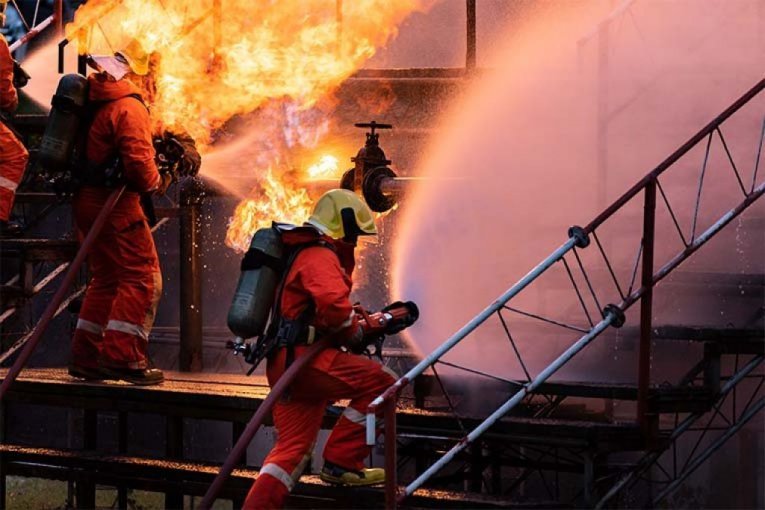
An explosion on a Pemex-owned pipeline in the state of Oaxaca, Mexico, left three people dead and six injured, according to both opposition and pro-government coverage. Reports agree that the blast occurred along infrastructure belonging to the state oil company and that local and state authorities, including Governor Salomón Jara’s administration, mobilized emergency and medical services to the scene to treat the wounded and secure the area. Both sides note that the area around the pipeline was cordoned off as rescue and firefighting teams worked to control the incident and prevent further damage or casualties.
Across outlets, there is shared acknowledgment that Pemex has a prior record of serious accidents and safety incidents, and that this explosion fits into a broader pattern of industrial risk around Mexico’s aging hydrocarbon infrastructure. The coverage converges on the idea that institutions such as Pemex, civil protection agencies, and state and federal regulators will be central to any investigation into the causes of the blast, with attention on whether equipment failure, corrosion, or human factors played a role. Both opposition and pro-government media reference the wider national context of energy policy and infrastructure management, including the importance of Pemex to Mexico’s economy and public finances, and the need for ongoing maintenance, safety protocols, and possible reforms to reduce the likelihood and impact of such disasters.
Points of Contention
Responsibility and blame. Opposition-aligned outlets are likely to frame the explosion as evidence of systemic negligence at Pemex and by the federal government, emphasizing long-standing safety deficiencies and regulatory failures. They may question why recurring accidents persist under current leadership and highlight management decisions or budget allocations as contributing factors. Pro-government media, by contrast, tend to present the incident as a tragic but isolated event, focusing less on institutional culpability and more on the fact that authorities have promptly opened an investigation to determine the precise cause.
Government response and competence. Opposition coverage often scrutinizes the speed and organization of the emergency response, probing whether protocols were followed, if nearby communities were adequately warned, and whether this reflects broader shortcomings in public safety management. It may cast Governor Salomón Jara’s and federal officials’ statements as defensive or insufficient. Pro-government outlets, in turn, underscore the rapid deployment of emergency services, the governor’s immediate confirmation of the incident, and official coordination on the ground as proof that institutions functioned effectively under pressure.
Narrative around Pemex’s record. Opposition media generally situate the explosion within a long chain of Pemex accidents, drawing connections to past disasters to argue that structural problems remain unresolved and that political promises of improved safety have not materialized. They may invoke Pemex’s financial and operational troubles as signs that the company is overstretched and poorly governed. Pro-government coverage acknowledges past incidents but often frames them as part of inherited challenges, emphasizing ongoing investments, modernization efforts, and the strategic importance of Pemex as a national asset that justifies continued support rather than harsh criticism.
Energy policy and reforms. Opposition outlets are inclined to link the blast to the administration’s broader energy model, arguing that prioritizing Pemex and state control over hydrocarbons has not translated into better safety or efficiency and may crowd out investment in safer, diversified energy infrastructure. They might call for deeper regulatory reform, more transparency, or even greater private-sector participation to improve standards. Pro-government media instead present the explosion as a reminder of the risks inherent in the oil industry worldwide, using it to argue for reinforcing state-led investment, tightening internal controls at Pemex, and preserving sovereign control over strategic resources rather than shifting direction.
In summary, opposition coverage tends to treat the explosion as symptomatic of deeper governance, safety, and policy failures at Pemex and within the current administration, while pro-government coverage tends to emphasize the swift official response, the ongoing investigation, and the importance of supporting and strengthening Pemex as a strategic state enterprise despite the tragedy.