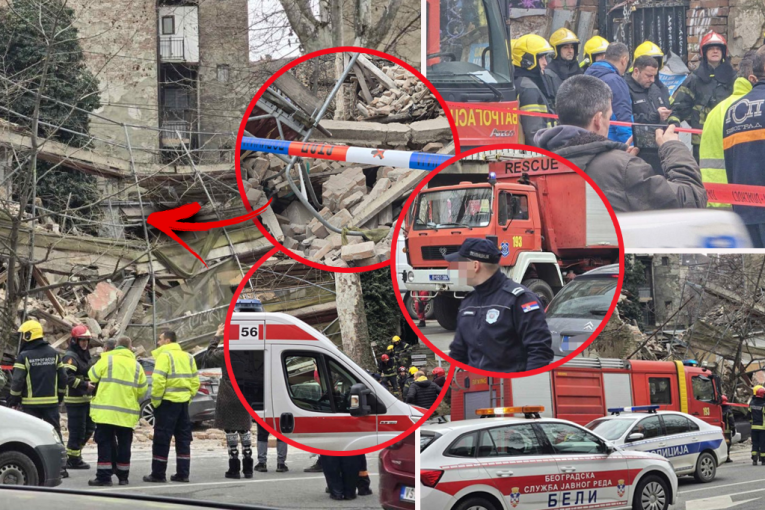
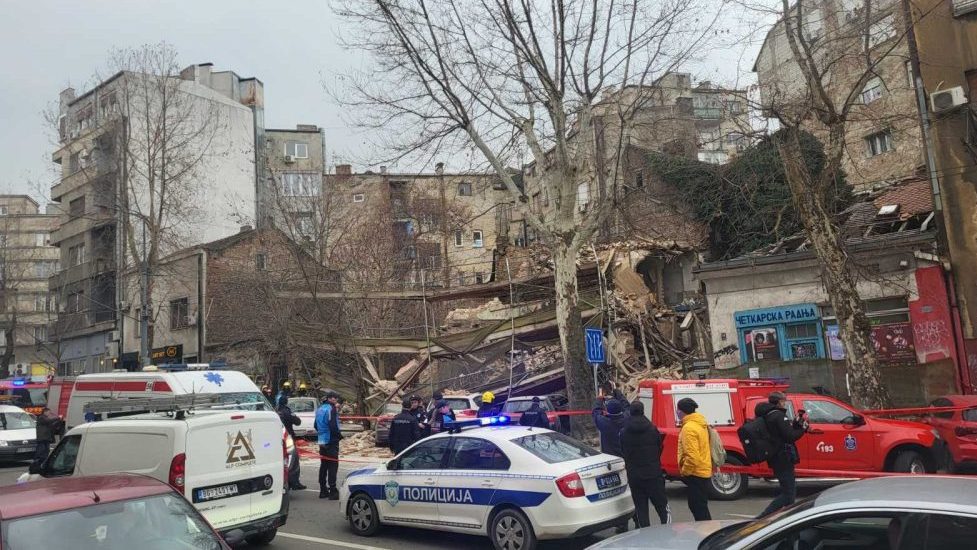
An old, abandoned two-story building in Belgrade’s Džordža Vašingtona (George Washington) Street partially collapsed, bringing down part of the structure and adjacent scaffolding onto the street, damaging four parked cars and interrupting local traffic, including tram services. Both opposition and pro-government outlets agree there were no fatalities or reported injuries, that at least two people were evacuated from nearby premises, and that firefighters, police, medical teams, and specialized search-and-rescue units conducted a full search of the debris to confirm no one was trapped. All sources note that the site was legally registered as private property and that construction inspectors had already been involved prior to the collapse, with the immediate area secured by police following the incident.
Across the coverage, both sides frame the collapse within the broader issue of neglected, unsafe buildings in central Belgrade and the formal responsibilities of city inspection bodies and private owners. They concur that construction inspection had previously identified deficiencies at the property and issued orders to the owner, and that post-collapse procedures include penalizing owners of dangerous, unmaintained structures that threaten public safety. Both opposition and pro-government media emphasize that an investigation is ongoing into the precise causes of the collapse and that the authorities are expected to both clear the debris and determine liability, while the discovery of a suspected explosive device in the ruins is presented as a serious security concern handled by police.
Points of Contention
Responsibility and blame. Opposition outlets stress systemic failure by the City Secretariat for Inspection Affairs, arguing that, regardless of owner negligence, the Secretariat had a legal duty to actively secure or remove dangerous structures and then recover costs, portraying the collapse as the result of long-term institutional neglect. Pro-government outlets, by contrast, foreground the building’s private ownership and emphasize prior inspection orders to the owner, framing the main fault as the owner’s non-compliance rather than regulatory inaction, and presenting the Secretariat’s response as consistent with procedure.
Performance of city institutions. Opposition coverage personalizes responsibility, naming specific officials such as the long-serving secretary of the Secretariat and citing years of allegedly poor performance to suggest entrenched mismanagement and weak enforcement. Pro-government coverage avoids direct criticism of individual officeholders, focuses on the operational presence of emergency services and inspectors on the scene, and depicts institutions as functioning promptly and professionally in managing the aftermath rather than as central culprits.
Framing of risk and public safety. Opposition-aligned sources use the collapse as evidence of a broader, ongoing risk from many neglected buildings in Belgrade, warning that citizens are endangered by inadequate oversight and that this is not an isolated incident but a pattern. Pro-government outlets highlight the absence of injuries, the swift evacuation of nearby residents, and the thorough search of the rubble, portraying the event more as a successfully contained emergency, with risk mitigated by effective intervention rather than by preventative governance.
Emphasis on explosive device discovery. Opposition reports mention the investigative and inspection angle but focus primarily on regulatory responsibility and the chain of omissions leading up to the collapse, treating the suspected explosive device as secondary. Pro-government outlets give more weight to the drama and security dimension of an explosive device being found in the collapsed house, accenting police cordons and evacuations, which shifts attention from prior regulatory oversight to real-time security and public-order management.
In summary, opposition coverage tends to depict the collapse as a clear manifestation of chronic institutional failure and lax enforcement that endangered citizens, while pro-government coverage tends to present it as an unfortunate but well-managed incident primarily caused by a negligent private owner, with state bodies shown as responding efficiently and maintaining public safety.