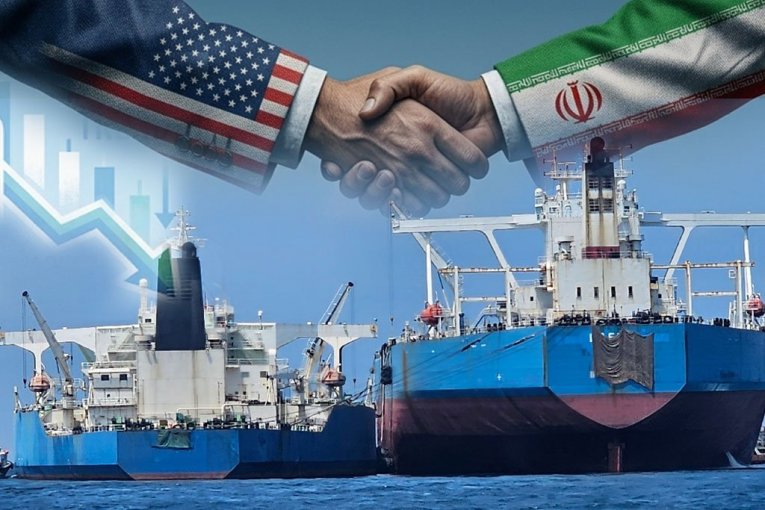
Barely five years after their ignominious retreat from Afghanistan (August 15, 2021), America has once again gone to war. This time against Iran and with Israel as its main ally. Officially, the cause of the intervention is the Islamic Republic's aspiration to create its own nuclear weapons. On the other hand, both attacking countries have possessed them for a long time. Americans like to wage war, especially if the front is far from their shores. Throughout the history of great powers, only seven presidents here have not taken up arms. But that refers to those from the 17th and 18th centuries, when the settlers were still busy conquering vast, sparsely populated areas on the continent and exterminating the natives. American tactics have long been known. They never lose wars. They simply "end military missions." In their efforts to impose their dominance in certain states and regions, they try to provoke conflict in the targeted area between religious, national, political factions favorable to them and those opposed to them, and somehow insert themselves into all of this. In this regard, "soft power" is used in preparing the ground. More precisely, an atmosphere is created that is favorable to the American option, which invariably goes with the slogan "fight for democracy." We in the former socialist Yugoslavia were also targets of similar endeavors for decades. The visits of American artists who came here (and to other countries of the so-called socialist bloc) exclusively on the orders and organization of USAID programs are still remembered. In many cases, those who went on such trips were even forced to do so. The same applies to the real flood of American films that were distributed to these areas without any compensation, or at dumping prices. In this way, an atmosphere was created in which those to whom it was intended, seemingly voluntarily, formed opinions and attitudes closer to American ones, which were then easier to manipulate. All of the above, of course, along with the proverbial rigidity of the Eastern systems, made America a seemingly promised land. Where they did not succeed with the mentioned "soft power," Americans resorted to - bombers. In all of the above, there is a very clear principle: America wages wars as long as it is profitable. And not a step further. It is not interested in the fate of the attacked, the consequences of destruction, the number of killed... The recent case of the attempted overthrow of the regime in Venezuela speaks best of this. The moment an opportunity for war against Iran arose, the South American country went out of Washington's focus. The successors of Nicolás Maduro suddenly became acceptable, the dust raised in those few days settled, and attention shifted to a completely different corner of the world. Victory for Americans has never been ultimate. They just need a war. Whatever it is, as long as it is waged somewhere far away and does not disturb the domestic public too much. On the contrary, it is enough to create an atmosphere in the targeted country where those under American influence could raise their voices more sharply, rebel, demand change. As is currently happening in Serbia. The goal of such action is to turn these countries into economic and political dependents, that is, to force them to play as the American state demands. Whether as sources of energy, cheap production bases, or as strategic locations for further military operations. Americans go to war for several reasons: to maintain tension in certain parts of the world, to deplete weapons stocks that are no longer needed or are obsolete, to test the latest products of the arms industry under real war conditions, or to stifle any thought of independence in those they have already taken under their wing. Today, this fight is more delicate, as no one is willing to resort to nuclear potential, and in any other way, objectively, a definitive victory cannot be achieved. One of the specificities of American warfare, following the British doctrine, is "using the enemy's living force as cannon fodder." The best way to achieve this is to install military bases around the country targeted for attack. The first natural reaction of the attacked will be to target American bases in their immediate vicinity. But by doing so, they drag their closest neighbors into conflict. "Bad blood" is created among them. And we have seen this in the Balkans. More than once. The next phase is the use of long-range weapons such as fighter jets or guided missiles, the engagement of the navy in the nearest seas, the blockade of shipping routes... Sending people to the front, to the direct line of conflict, is the last option and is inevitably accompanied by a thunderous campaign. After World War II, Americans, in principle, waged wars at someone else's expense and with considerable profit. They did not mind losing wars in Vietnam, Afghanistan, Syria..., because their idea was not to entrench themselves forever in those areas, but to take control of the local industrial, economic, energy, and human capacities, to install a military base... And this is mostly carried out through subsequent "humanitarian aid" and similar tricks. As we said, Americans never lose wars. When they see that they cannot achieve what they intended, when they are on the verge of defeat, or when the domestic public raises its voice, they simply announce that they have achieved what they wanted and that the soldiers can go home. Without mentioning what their real goal was and why they did not achieve it. Especially if presidential elections are approaching. But they always leave behind chaos, misery, poverty, and unresolved local issues. This is how they ended the wars in North Korea, Vietnam, Afghanistan, Iraq... And even in our country. They do not ask for the price. The Korean War (1950-1953) cost, by today's standards, between 300 and 350 billion US dollars. The one in Vietnam (1965-1973) reached 1.2 trillion, while in Afghanistan, 2.3 trillion was thrown away. There is also the one in Iraq (2003), which also cost more than two trillion dollars from the pockets of American taxpayers. The engagement in Afghanistan and Iraq alone cost more than all American wars in the second half of the 20th century combined. This latest one in Iran will definitely not be cheaper. However, the result in all the mentioned interventions today can be considered - null. At the same time, generals and admirals in the Pentagon are careful not to enter into conflict with the "great powers" in any way. Primarily with China or Russia. They are aware that in such a case, military operations would definitely spread to American soil, possibly with the disastrous use of nuclear weapons. And it is a big question how ordinary Americans, especially those of Russian or Far Eastern origin, would behave in that case. But who knows what else the Pentagon bosses will come up with.