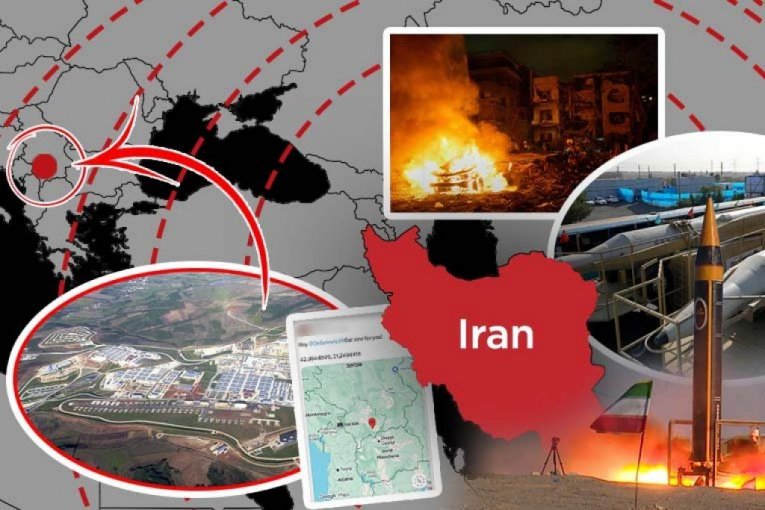
Iran’s use of a Chinese-built spy satellite to monitor United States military facilities in the Middle East is reported across outlets as being based on leaked or classified military documents and satellite data. Both opposition and pro-government sources describe a satellite identified as TEE-01B, originally developed by China’s Earth Eye company and transferred to Iran’s Islamic Revolutionary Guard Corps Aerospace (or Air) Force in late 2024. The reports say Iranian commanders directed the satellite to image multiple US bases and related infrastructure across the region, with high‑resolution imagery taken in March bracketing subsequent Iranian drone and missile strikes on some of those locations. Both sides broadly agree that the system’s tasking pattern indicates deliberate surveillance of US assets, that Chinese-origin technology made this capability possible, and that the intelligence was likely integrated into Iran’s operational planning.
Coverage on both sides situates the episode within a longer trajectory of Iran’s expanding space and missile capabilities and growing security cooperation with China. Outlets agree that the IRGC has been pushing for greater autonomy in reconnaissance and targeting, moving from reliance on commercial or foreign imagery to more dedicated, military-grade systems. They also converge on the view that the incident underscores the increasingly contested nature of satellite services, where nominally civilian platforms or third-country assets are used to support military operations by sanctioned states. Finally, both opposition and pro-government reporting frame this development as part of a broader strategic rivalry involving Iran, China, the United States, and regional US partners, with implications for arms control, sanctions policy, and the militarization of space.
Areas of disagreement
Framing of Iranian actions. Opposition-aligned outlets tend to frame Iran’s use of the satellite as evidence of aggressive, destabilizing behavior and a willingness to leverage foreign technology to threaten US and regional security. Pro-government sources instead stress Iran’s right to gather intelligence on foreign forces stationed near its borders and present the surveillance as a defensive response to perceived US encirclement. Opposition coverage is more likely to emphasize the premeditated nature of the targeting and to pair it with past IRGC activities labeled as proxy or asymmetric warfare, whereas pro-government coverage stresses strategic deterrence and national sovereignty.
Characterization of Chinese involvement. Opposition reporting often highlights China’s role as a concerning expansion of Beijing–Tehran military cooperation, portraying the satellite transfer as a breach of international norms and a direct challenge to US and Western interests. Pro-government outlets, by contrast, typically depict China’s role as a commercial or technological partnership, downplaying any suggestion of a formal military alliance or deliberate collusion against the United States. Where opposition pieces hint at sanctions violations or call for stronger Western countermeasures, pro-government coverage tends to frame Chinese assistance as a legitimate alternative to Western technology denied by sanctions.
Implications for regional security. Opposition-aligned media generally argue that the satellite-enabled surveillance escalates risks to US personnel and allies, potentially justifying tougher deterrence measures, missile defenses, or even preemptive options. Pro-government sources frame the same development as restoring balance in a region they say is already dominated by US and allied ISR capabilities and advanced weapons. Opposition outlets frequently warn of an arms and space race driven by Iran and its partners, while pro-government narratives cast Iran’s behavior as catching up to what they see as long-standing Western militarization of the region.
Legal and normative framing. Opposition coverage more often invokes international law, space law, or norms against using ostensibly civilian or third-party space assets to plan attacks, arguing that Iran and possibly China are eroding those standards. Pro-government outlets rarely foreground legal infractions and instead emphasize that there is no explicit global ban on military reconnaissance from space, implying Iran is operating within a gray but widely used area of practice. Opposition media may call for new regulations, sanctions, or UN scrutiny, while pro-government narratives stress that any such moves would be politicized tools aimed at constraining Iran and its partners.
In summary, opposition coverage tends to portray Iran’s satellite use as an alarming escalation enabled by China that undermines regional and international security, while pro-government coverage tends to cast it as a sovereign, largely defensive intelligence capability gained through legitimate cooperation with China and used to counter overwhelming US power in the region.