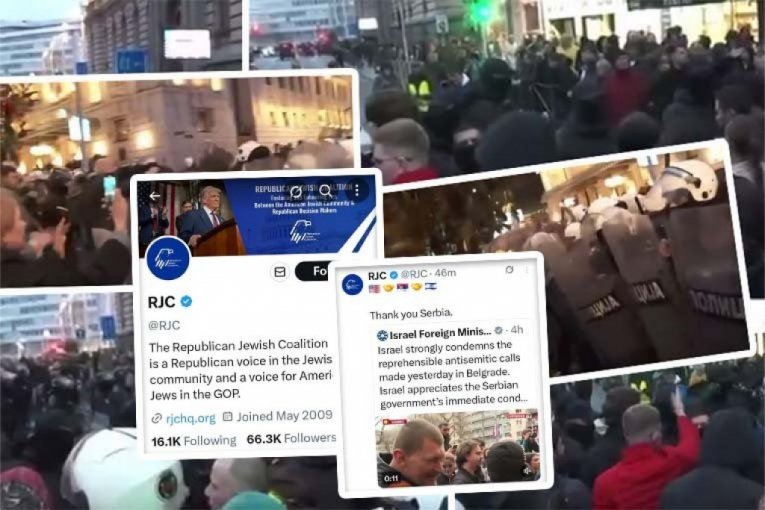
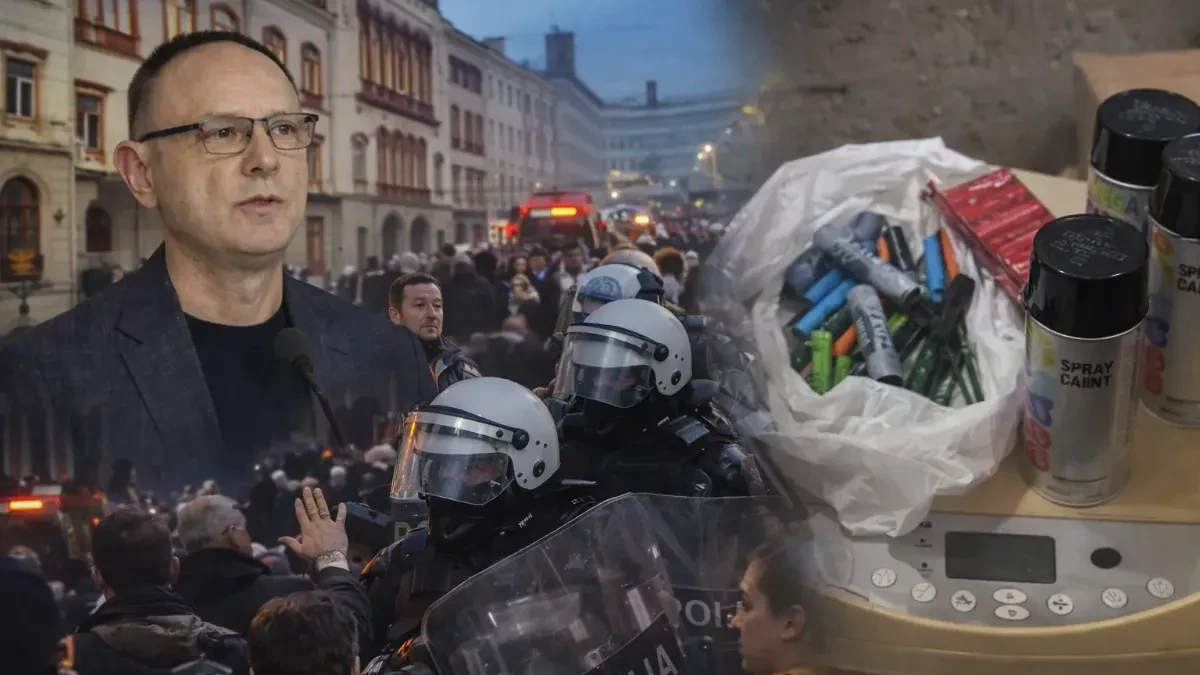
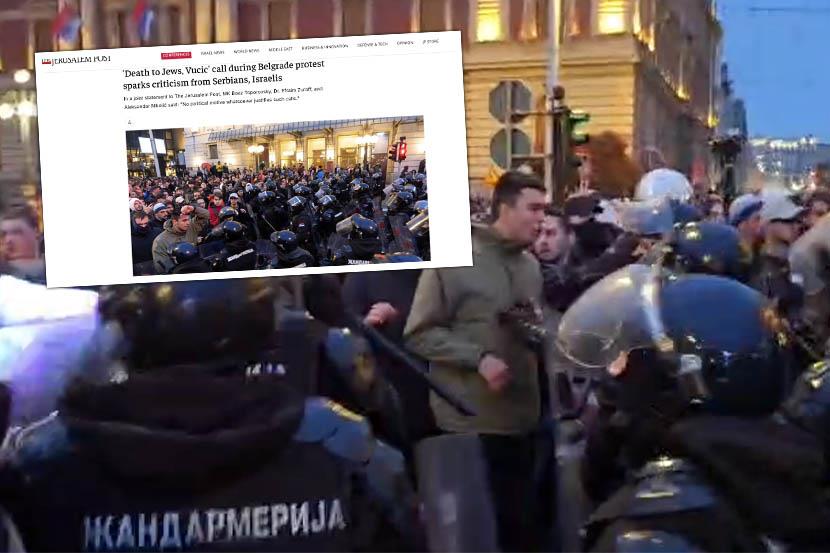
International and Serbian officials are widely reported to have condemned antisemitic slogans and explicit calls for violence that appeared during recent anti-government protests in Belgrade, triggered after a police raid on a Belgrade University building occupied by students and activists. Both opposition and pro-government outlets describe chants or graffiti targeting Jews and calling for the murder of President Aleksandar Vučić, note that footage and images from the protests circulated online, and agree that these incidents drew reactions from foreign governments, Jewish organizations, and diplomatic representatives.
Coverage from both sides also acknowledges that Israeli officials and the Jerusalem Post publicly denounced the antisemitic rhetoric, stressing that no political motive can justify calls to kill Jews or the Serbian president and highlighting Vučić’s previous positioning as a supporter of Israel and the Jewish community. There is broad agreement that the episodes at the Belgrade protest have raised concerns about hate speech and extremism in Serbia’s political climate, prompted calls for protest organizers to distance themselves from antisemitic expressions, and re-opened discussion of Serbia’s obligations under international human-rights and anti-hate-speech norms.
Areas of disagreement
Framing of the protests. Opposition-aligned sources tend to frame the Belgrade gatherings primarily as legitimate civic resistance to authoritarianism, corruption, and police overreach at the university, treating antisemitic slogans as marginal or provocations that do not represent the broader movement. Pro-government outlets instead depict the same protests as radical, violent blockades dominated by extremists whose antisemitic and violent rhetoric reveals the true nature of the opposition. While opposition coverage stresses grievances against the government and structural abuses, pro-government coverage foregrounds security risks and public order.
Responsibility and blame. Opposition media generally argue that isolated hate slogans should be condemned but not used to delegitimize the entire protest, sometimes hinting that regime-linked actors or fringe infiltrators could be responsible for the most extreme messages. Pro-government outlets place direct responsibility on opposition parties, student leaders, and protest organizers, asserting that their rhetoric and strategy have opened the door to antisemitism and direct threats against Vučić. Opposition narratives emphasize state responsibility to investigate and prevent provocations, while pro-government narratives stress opposition responsibility to control or suspend protests.
Portrayal of Vučić and the state. Opposition coverage typically presents Vučić and the security apparatus as the underlying source of tension, portraying the police raid and broader repression as what drove people onto the streets and insisting that criticism of the president is a democratic right. Pro-government outlets, by contrast, cast Vučić as a victim of hate speech and a steadfast friend of Jews and Israel, highlighting statements from Israeli officials and Jewish organizations thanking Serbia’s government for its stance. Opposition accounts question the sincerity and instrumentalization of this diplomatic support, while pro-government media use it to validate the government’s moral high ground.
International reaction and its meaning. Opposition-aligned sources often interpret international concern as part of a broader critique of shrinking civic space and the government’s management of dissent, framing antisemitic incidents as a worrying but symptomatic outgrowth of polarized politics. Pro-government outlets instead emphasize that foreign governments, the Jerusalem Post, and organizations like the Republican Jewish Coalition are horrified specifically by the opposition-led protest’s antisemitic hysteria and threats, using this external condemnation to discredit the movement as dangerous and uncivilized. While opposition media downplay diplomatic praise for the government or suggest it is selectively amplified, pro-government media treat it as decisive evidence that global opinion backs Vučić and condemns his critics.
In summary, opposition coverage tends to defend the protests’ legitimacy, minimize the representativeness of antisemitic incidents, and shift focus back to government abuses, while pro-government coverage tends to foreground antisemitism and threats against Vučić as defining features of the protests, using strong international condemnation to portray the opposition as extremist and the government as a responsible, pro-Israel actor.