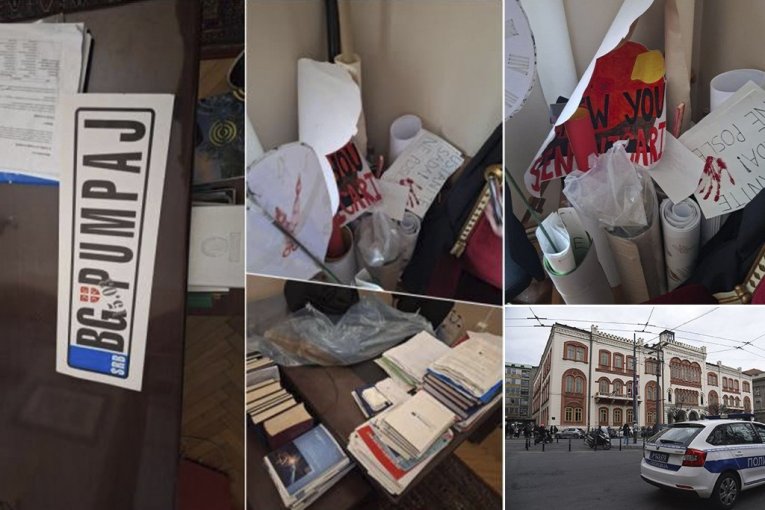
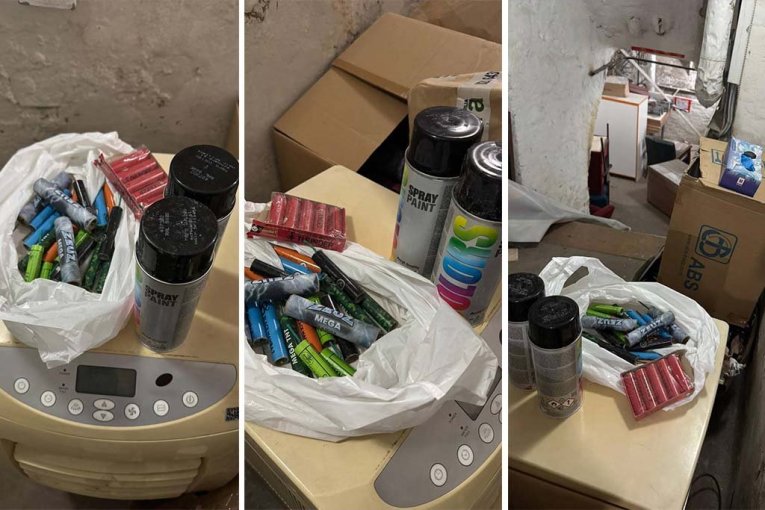
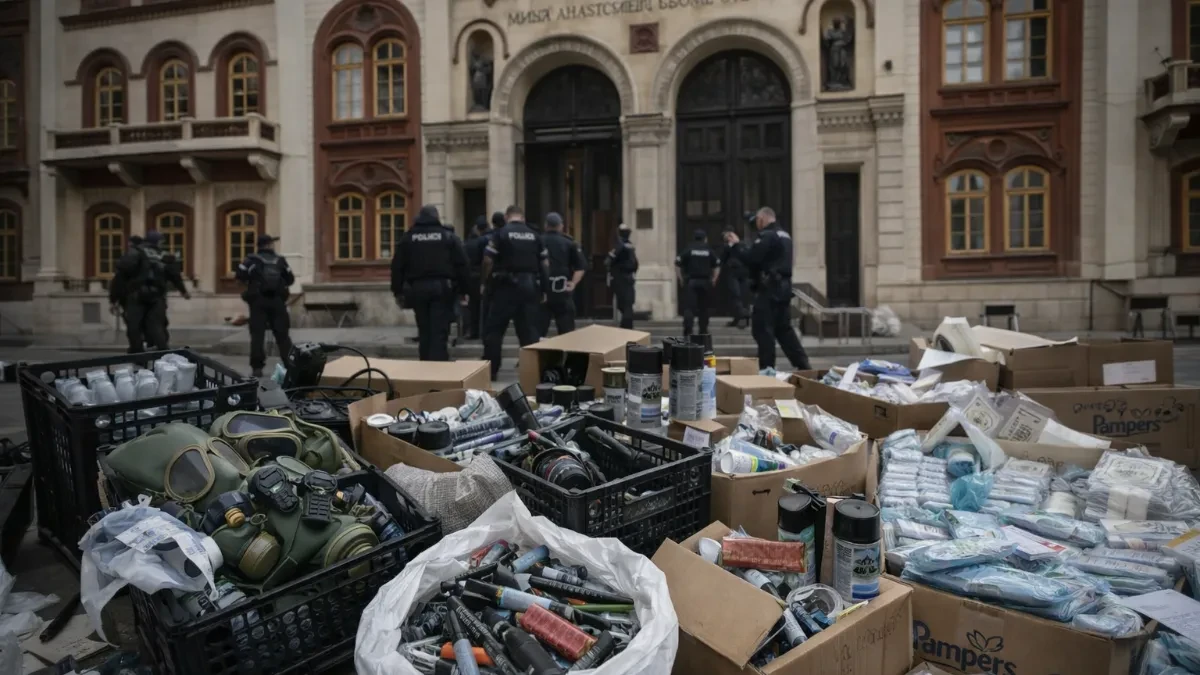
Police, acting on orders from the Higher Public Prosecutor's Office and a court, entered and searched the University of Belgrade Rectorate building in connection with the recent death of a student at the Faculty of Philosophy and related security irregularities. Both opposition and pro-government outlets agree that the search covered a large number of rooms (around 28, including halls and basement areas) and that officers found various items such as pyrotechnics and firecrackers, gas masks, hand-held radios, medical equipment and supplies including IV drips and syringes, as well as other materials whose purpose is under investigation. They concur that the search is formally part of a broader criminal investigation, that the Prosecutor’s Office is involved in coordinating actions, and that there were tensions and incidents around the police operation near the Rectorate.
Across the spectrum, outlets present the search as linked to concerns over student safety and possible irregularities in how the university premises are secured and used. They describe institutional actors consistently: the University of Belgrade Rectorate as the central administrative building, the Faculty of Philosophy as the location of the student’s death, and the Higher Public Prosecutor’s Office and Criminal Police Directorate as the key investigative authorities. There is shared acknowledgment that questions have been raised about open or unsecured passages between the Rectorate and the Faculty of Philosophy, the lack of complete entrance records, and potential lapses in security company coverage, with the ongoing probe meant to clarify how these factors may have contributed to the tragedy and what legal or disciplinary consequences might follow.
Areas of disagreement
Nature and meaning of the seized items. Pro-government outlets portray the discovery of pyrotechnics, gas masks, radios, and bags of syringes as shocking and suggestive of preparations for violence, blockades, or other destabilizing activities within the Rectorate. They use dramatic language about a “war base” and emphasize cannon firecrackers and “guerrilla equipment” to imply organized intent. Opposition-aligned coverage, by contrast, either does not foreground these items or treats their presence as ambiguous, focusing less on alleged militant preparations and more on routine or unexplained storage that should not overshadow the core issue of a student’s death and campus security failures.
Framing of police conduct and protests. Pro-government media underscore that the police acted on a lawful prosecutorial order and insist they used only minimal force when confronted by blockade participants, stressing that officers were “attacked for doing their job.” They highlight prosecutorial warnings that any attack on police will be harshly punished, framing demonstrators around the Rectorate as violent or obstructive. Opposition sources, while acknowledging police entry, tend to frame the operation within a pattern of heavy-handed or politically motivated policing, emphasizing students’ and staff’s rights and portraying blockades more as legitimate expressions of outrage over a death and systemic negligence than as assaults on law enforcement.
Primary responsibility and causality. Pro-government coverage focuses on identifying those who stored or used pyrotechnics and other equipment in university premises, implicitly shifting responsibility toward unnamed groups within or around the Rectorate who might be exploiting the campus for political or disruptive actions. The narrative links the search and seizures to a broader effort to clamp down on threats to public order, corruption, and potential criminal activities unrelated to routine academic life. Opposition outlets instead center responsibility on institutional management and the state, highlighting unsecured passages, missing entry records, and possible failures by security firms and university authorities as systemic causes that allowed the fatal incident to occur.
Political and institutional implications. Pro-government sources frame the episode as proof that the state, police, and prosecutors are proactively defending student safety and rule of law, using the found items to justify tougher oversight and to legitimize the government’s security agenda. They present the Rectorate search as a necessary step in restoring order and preventing further incidents, hinting at outside agitators or oppositional structures misusing university space. Opposition media interpret the same events as exposing chronic mismanagement and politically influenced policing, suggesting the search could be instrumentalized to intimidate critical academic and student circles and to deflect attention from long-standing demands for institutional reform and accountability.
In summary, opposition coverage tends to treat the Rectorate search as a window onto systemic security lapses, institutional negligence, and potential political abuse of policing, while pro-government coverage tends to cast it as a justified, security-driven operation that uncovered alarming stockpiles and confirmed the need for firm state action against disorder around the university.