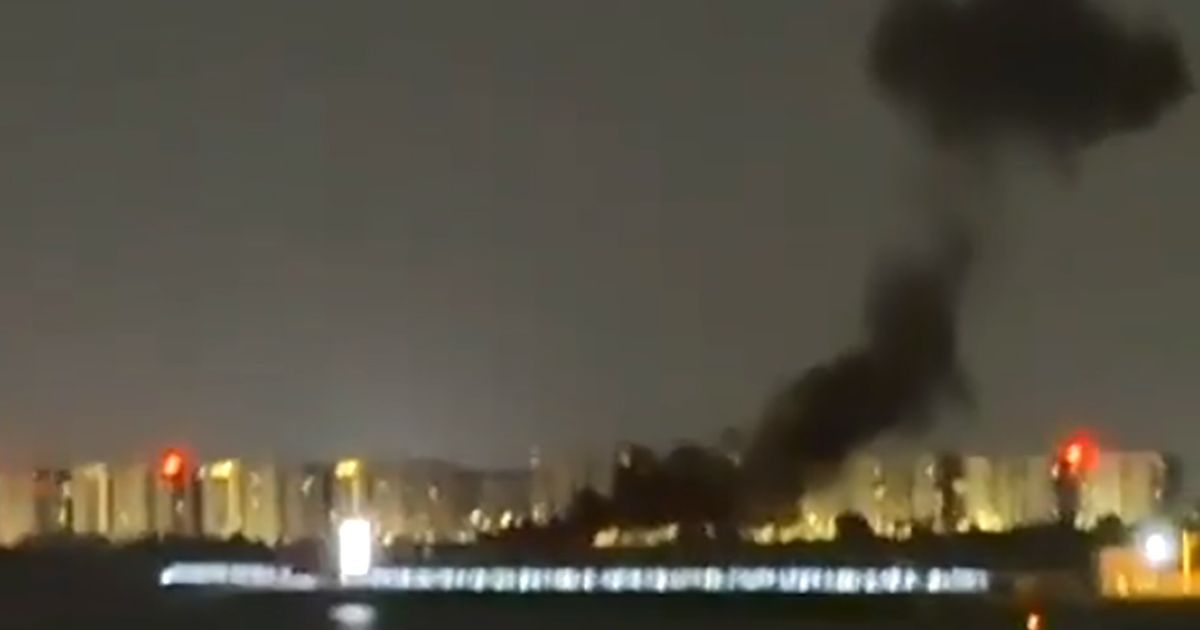
Two foreign workers, one Pakistani and one Indian, were killed in Abu Dhabi when debris from an intercepted Iranian ballistic missile fell onto a city street, injuring at least three other people and damaging vehicles. Across the United Arab Emirates, the death toll from missile and drone debris in the current escalation has risen to around eleven, with well over a hundred injured, as Emirati air defenses reported intercepting roughly 15 ballistic missiles and 11 drones attributed to Iran.
Both opposition and pro-government outlets describe the incident as part of a wider regional confrontation involving Iran, the US, Israel, and Gulf states, noting that the UAE has become an indirect front-line despite not being the primary party to the conflict. They agree that the strikes are framed by all sides as retaliatory actions within a cycle of escalation, that Emirati air defenses largely prevented more catastrophic damage, and that foreign workers continue to bear a disproportionate share of the human cost.
Areas of disagreement
Responsibility and blame. Opposition-aligned outlets tend to stress Iran’s stated motives of retaliation and deterrence, while also holding the UAE and its security partners responsible for aligning with American and Israeli military actions that invite such attacks. Pro-government media instead foreground Iranian aggression, emphasizing that Tehran directly targeted civilian areas and international economic hubs, and they portray Iran as the sole culprit for all casualties. Where opposition sources often distribute blame across Iran, regional powers, and Western military involvement, pro-government narratives narrow culpability to Iran and describe the UAE and its allies primarily as victims defending themselves.
Effectiveness of defenses and foreign support. Opposition coverage typically acknowledges the high interception rate but questions its adequacy, highlighting that repeated debris-related deaths show that air defense systems and civil protection measures are still failing vulnerable migrant communities. Pro-government outlets highlight figures such as the interception of 99 percent of Iranian capabilities, amplify US statements about having destroyed most of Iran’s military assets, and present these as proof that Emirati and allied defenses are highly effective and improving regional security. While opposition sources use the casualties to argue that militarized reliance on foreign protection is insufficient and risky, pro-government sources cast the same figures as validation of deep security cooperation with Washington.
Framing of victims and domestic impact. Opposition-aligned media generally underscore that the dead and injured are low-wage migrant workers from South Asia, using this to critique social and labor inequalities and to argue that foreign workers are treated as expendable in a conflict not of their making. Pro-government outlets mention the nationalities of the victims but focus more on the shock to Abu Dhabi’s image as a safe “paradise,” the resilience of the state, and rapid emergency responses. The opposition tends to frame the event as exposing structural vulnerabilities in worker housing, evacuation planning, and compensation schemes, whereas pro-government narratives use it to highlight national unity, continuity of business, and the swift restoration of normal life.
Broader political narrative. Opposition coverage often embeds the incident in a larger critique of Gulf foreign policy, arguing that participation in regional coalitions and tacit alignment with Israeli and US strategies has dragged the UAE into a dangerous confrontation. In contrast, pro-government outlets place the event within a story of a responsible, stability-seeking state under attack by a revisionist Iran, justifying tougher security measures and closer coordination with Western partners. Opposition sources are more likely to question censorship, information gaps, and the risk of further escalation, while pro-government sources stress deterrence, de-escalation diplomacy led by the UAE, and confidence that further attacks can be contained.
In summary, opposition coverage tends to treat the Abu Dhabi deaths as a symptom of risky alliances and structural injustices affecting migrant workers, while pro-government coverage tends to frame them as the tragic but contained result of unprovoked Iranian aggression against an otherwise stabilizing, well-defended state.