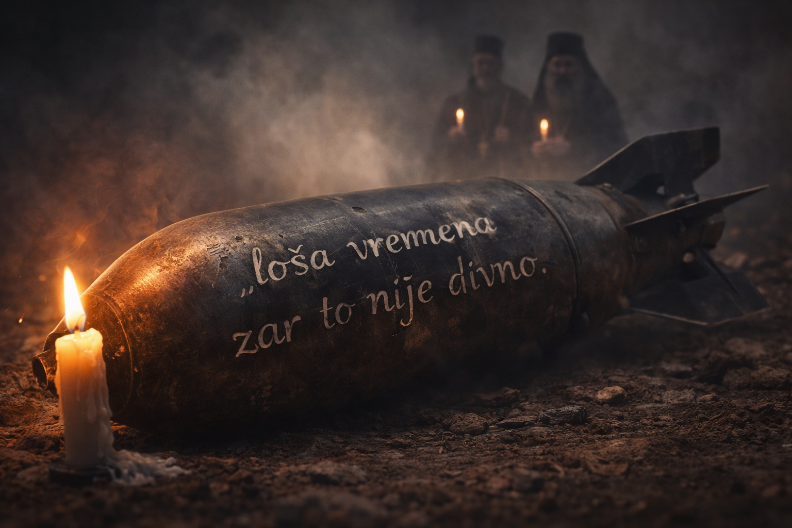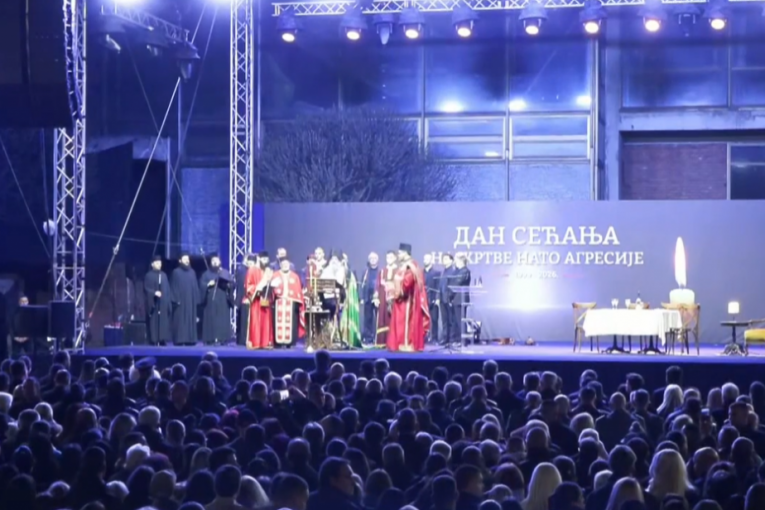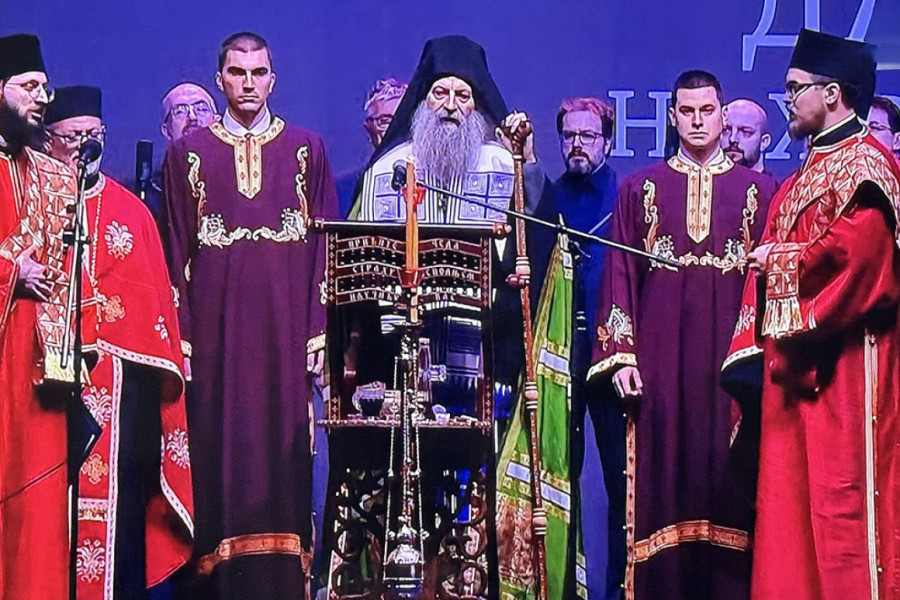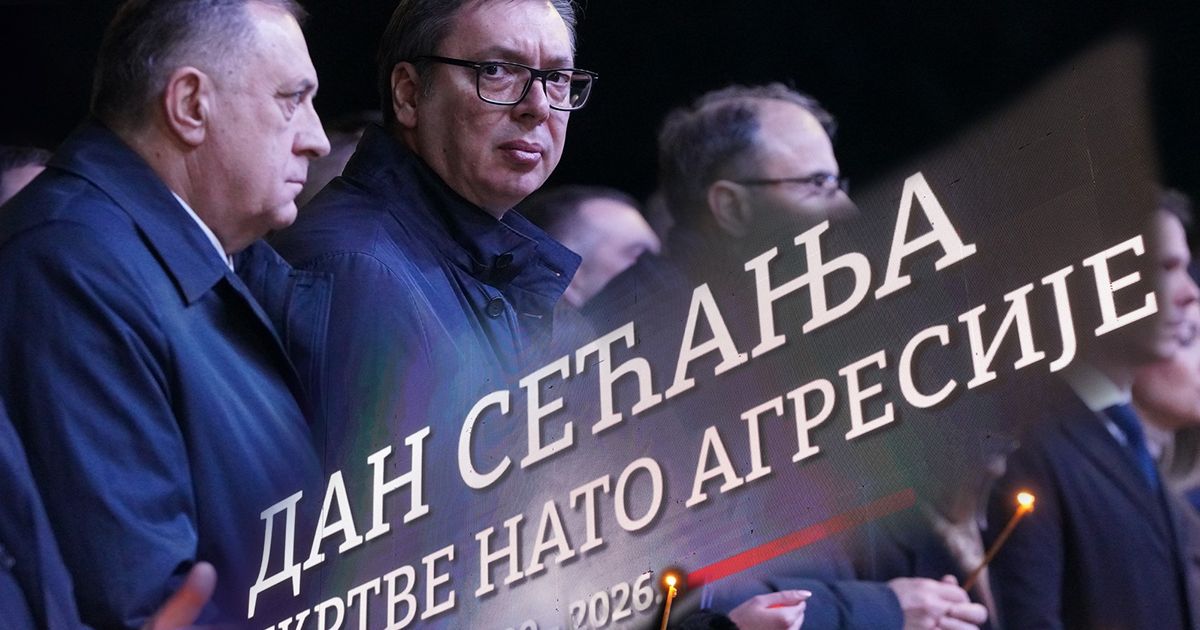



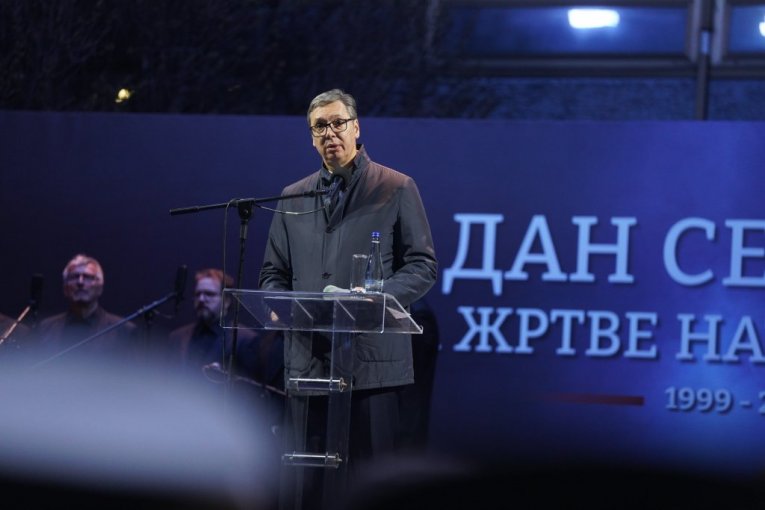
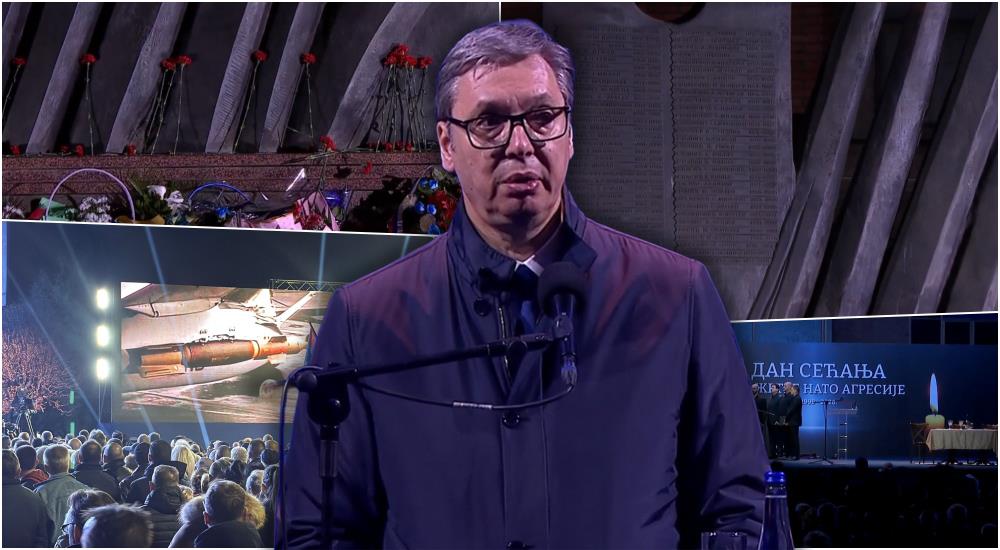
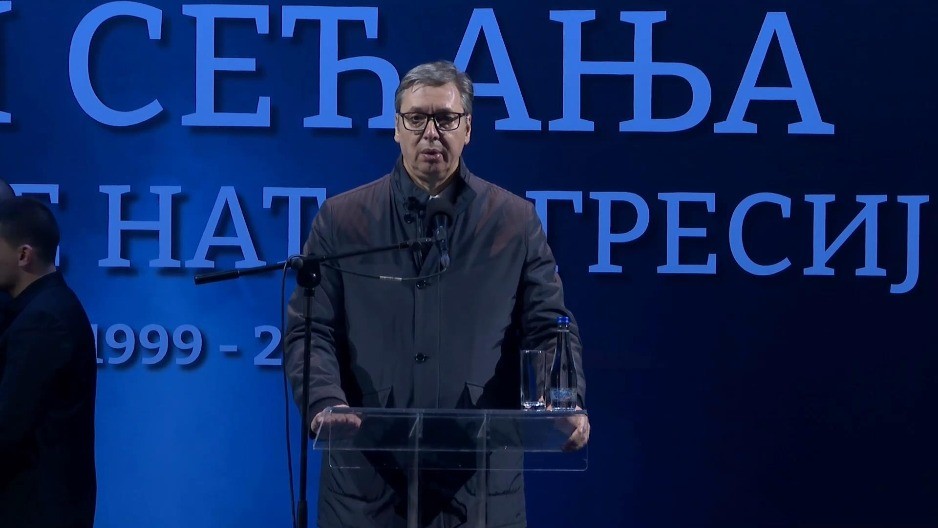
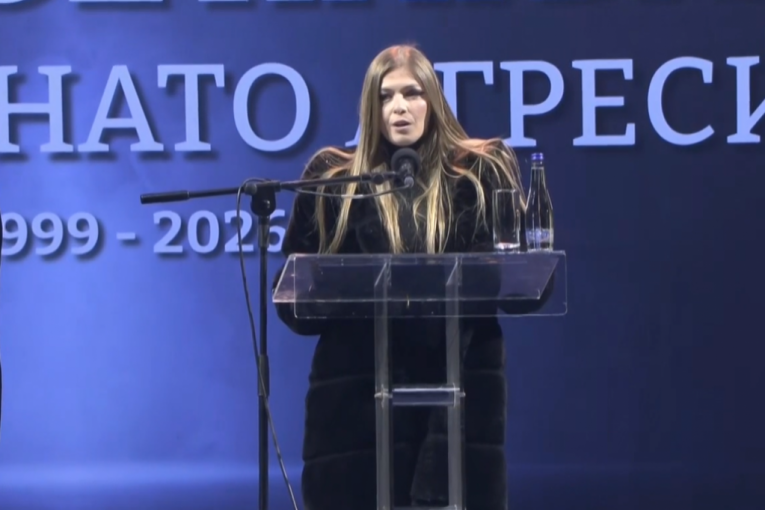
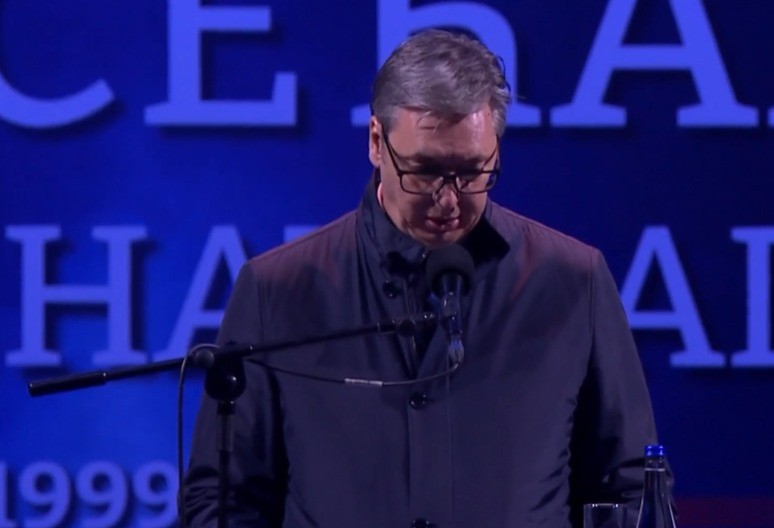
Serbian and Republika Srpska officials, led by President Aleksandar Vučić and joined by Serbian Orthodox Patriarch Porfirije, held a central state commemoration in Vranje to mark the Day of Remembrance for victims of the 1999 NATO bombing. The event took place in front of the National Museum’s Gallery plateau, drew thousands of citizens from across Serbia, and included a religious service, a minute of silence, and speeches honoring both military and civilian casualties, with figures commonly cited in coverage of more than 1,000 soldiers and around 2,500 civilians killed. Reports from both sides describe emotionally charged testimonies, such as that of the granddaughter of a man killed in Vranje and references to children victims like Milica Stojanović and Irena Mitić, as well as the widely reported cynical inscription “bad times aren’t they wonderful” allegedly written on one of the bombs that killed a girl.
Both opposition and pro-government outlets agree that the ceremony is anchored in remembrance of the 1999 NATO air campaign against the then Federal Republic of Yugoslavia, which began on 24 March 1999 without UN Security Council authorization and caused large-scale human and material losses in Serbia. They present the Vranje commemoration as part of a broader institutionalized memorial practice in Serbia—the official Day of Remembrance—combining state protocol, Orthodox religious rites, and family testimonies, and situating it within long-term debates over international law, the Kosovo conflict, and Serbia’s security and foreign-policy orientation. Coverage on both sides acknowledges that the event serves to underline commitments to peace and a stable future for younger generations, even as it revisits the causes and consequences of the bombing.
Areas of disagreement
Nature of NATO aggression and global implications. Pro-government media frame the 1999 bombing as a decisive break with international law, repeatedly presenting Vučić’s claim that “every war” and today’s global disorder began on 24 March 1999 and treating NATO’s action as the starting point of the world’s “final destruction.” Opposition-aligned outlets, while also calling the bombing an aggression and illegal in terms of the UN framework, tend to confine its significance to regional power politics and Western interventionism in the Balkans rather than a near-apocalyptic global turning point. They are more likely to contextualize the intervention within prior human rights narratives, ethnic cleansing claims, and the failures of Milošević-era policy, even when disputing NATO’s justifications.
Role of domestic political actors and ‘traitors’. Pro-government reporting strongly amplifies Vučić’s narrative that “they had their people here,” stressing alleged domestic collaborators, foreign-backed NGOs, and former opposition figures who supposedly paved the way for NATO by defaming Serbia and supporting “Albanian terrorists.” Opposition media, by contrast, either ignore or explicitly challenge this line, arguing that such accusations are meant to delegitimize current critics and whitewash the responsibility of past and present ruling elites. Where loyalist outlets personalize blame toward Western allies and local “traitors,” opposition coverage is more likely to discuss policy failures, authoritarianism, and nationalist excesses of the 1990s as internal drivers that weakened Serbia and made it vulnerable.
Future orientation: peace, militarization, and Kosovo. Pro-government outlets highlight Vučić’s insistence that Serbia is now militarily stronger, that “there are no more invisible planes,” and that the country will “never recognize independent Kosovo,” presenting this as a balanced line of deterrence plus peace, in which rearmament, non-recognition of Kosovo, and refusal to be “naive” toward neighbors are cast as guarantees of stability. Opposition coverage, while also opposing NATO’s past actions and often rejecting Kosovo’s independence, tends to be more skeptical of triumphalist rhetoric about military power and new regional threats, questioning whether the commemorations are being used to justify defense spending, nationalist messaging, and stalled democratic and EU-related reforms. They more frequently underline the risk that linking remembrance with hardline Kosovo positions and talk of hostile alliances in Priština, Tirana, and Zagreb may entrench isolation rather than secure peace.
Use of emotion and memory politics. Pro-government media dwell extensively on harrowing personal stories, images of children killed, and the Patriarch’s and Vučić’s emotionally charged language, tying these memories directly to a call for unity behind the current leadership and its policy of “never forgiving, but preserving peace.” Opposition outlets also cover victims’ suffering and religious rites but are more inclined to separate empathy for the victims from endorsement of the ruling party, sometimes pointing out how anniversaries are turned into stage-managed mass events with “rivers of people” and patriotic slogans that crowd out discussion of accountability, transitional justice, or Serbia’s role in regional reconciliation. They present memory politics as a competitive field where the government instrumentalizes grief for domestic legitimacy, while pro-government narratives portray commemoration as a near-sacred, above-politics national duty.
In summary, opposition coverage tends to accept the core illegality and tragedy of the NATO bombing while questioning the regime’s use of the anniversary to bolster nationalist narratives and current power structures, while pro-government coverage tends to elevate the Vranje commemoration into a foundational story of victimhood, resistance, and renewed strength that validates Vučić’s leadership, military build-up, and hard line on Kosovo.
Story coverage
pro-government
VUCIC ROARS: "THERE ARE NO MORE INVISIBLE PLANES"
No more impunity for attacks
7 days ago