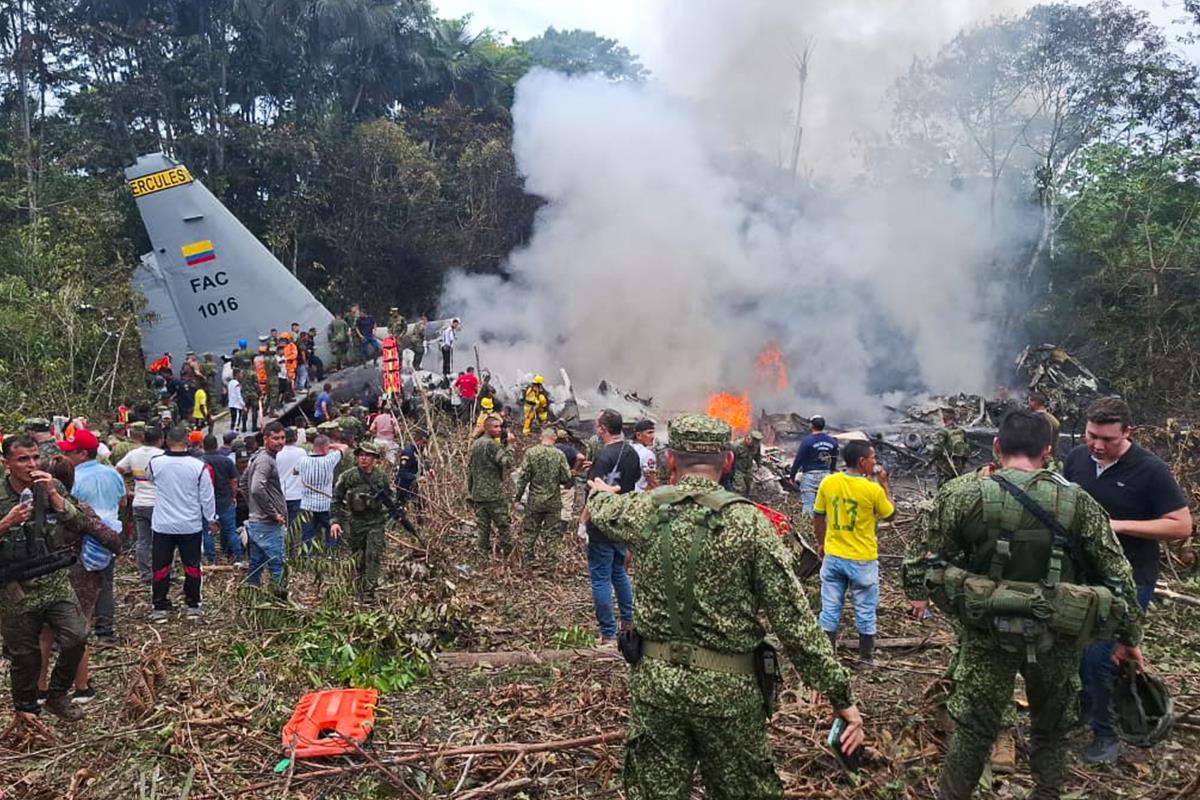
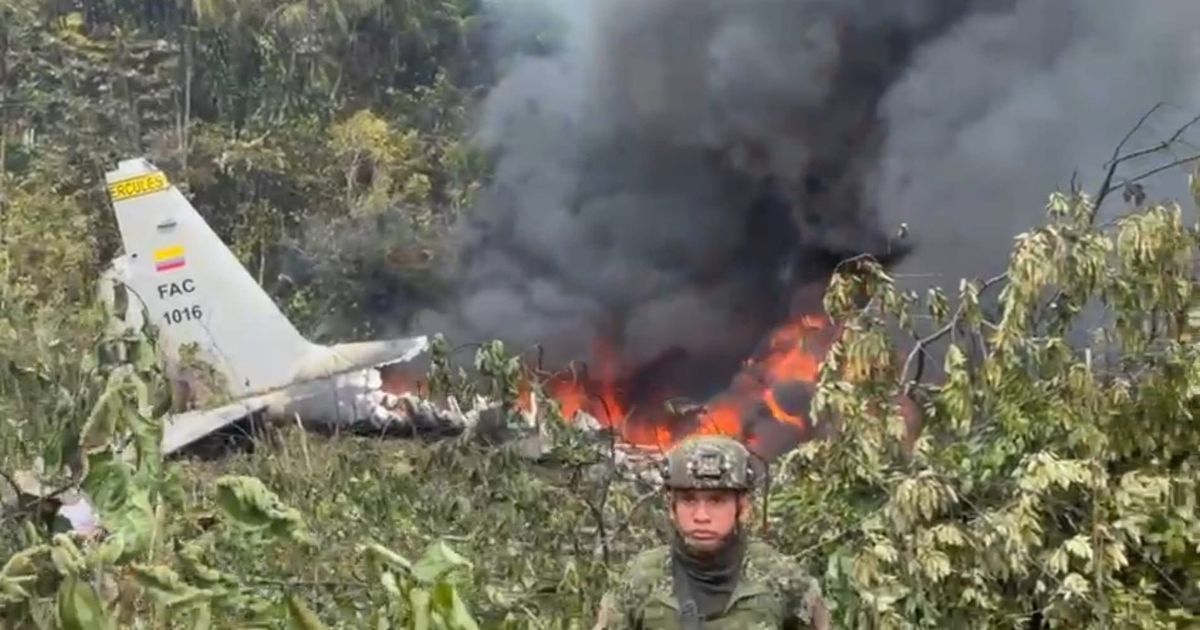
A Colombian military Lockheed Martin C-130 Hercules transport plane carrying 126 people crashed shortly after takeoff from Puerto Leguizamo, near Colombia’s border region, killing 69 and injuring 57. Both opposition and pro-government outlets agree on these core figures, the aircraft type, its military cargo role, and that munitions on board detonated after impact, complicating rescue efforts but not altering the basic casualty count. They also converge in reporting that, so far, there is no evidence the crash was caused by hostile action from armed groups, and describe the event as one of the country’s deadliest military aviation disasters in recent years, prompting a high-profile response from national authorities.
Across the spectrum, coverage notes that President Gustavo Petro publicly addressed the nation, offering condolences and ordering an official investigation while senior defense officials provided initial technical and security details. Both sides highlight the plane’s age and the longstanding issue of slow defense procurement and fleet renewal as central contextual factors, mentioning bureaucratic delays and an overextended military airlift system repeatedly tasked with operations in remote and conflict-affected zones. Outlets agree that the crash has reignited debates over military modernization, safety standards, and institutional accountability in Colombia’s armed forces, and that any definitive conclusions will depend on the findings of formal inquiries already announced by the government and the military.
Areas of disagreement
Responsibility and blame. Opposition-aligned outlets tend to frame the crash as symptomatic of systemic negligence, arguing that the current administration bears political responsibility for failing to accelerate replacement of aging aircraft despite known risks. Pro-government media, by contrast, stress that the problems of an outdated fleet and procurement bottlenecks predate Petro’s tenure and result from decades of underinvestment and red tape across multiple governments. Opposition coverage is more likely to describe the tragedy as avoidable with proper planning and oversight, while pro-government sources emphasize that the president has acknowledged the shortcomings and is not personally culpable for legacy structural failures.
Characterization of Petro’s response. Opposition sources are inclined to portray Petro’s televised address and subsequent statements as reactive damage control, suggesting his emphasis on bureaucratic delays serves to deflect from his administration’s own pace of reform. Pro-government outlets emphasize his quick public appearance, the expression of condolences, and his call for a thorough investigation as evidence of transparent crisis management. While opposition narratives question whether his response will translate into concrete change, pro-government coverage presents it as responsible leadership in the face of a national tragedy.
Focus of investigation and reforms. Opposition media often press for an investigation that scrutinizes current budget allocations, command decisions, and maintenance protocols under the present government, warning against a whitewash that blames only abstract bureaucracy or past administrations. Pro-government outlets highlight official assurances that technical, operational, and administrative factors across several years will be examined, stressing continuity with broader modernization plans already announced by Petro’s team. The former prioritize present-day political accountability and possible mismanagement, whereas the latter foreground long-term structural reform and institutional processes over immediate partisan fault-finding.
Security and conflict framing. Opposition-aligned coverage may underline the broader security context in which the plane operated, including ongoing conflict dynamics and the risks of flying heavily loaded, older aircraft into frontier areas, sometimes suggesting the government has not adequately resourced operations in those zones. Pro-government outlets are more explicit in ruling out any involvement of armed groups, framing the incident as a tragic accident unrelated to Petro’s security policies and stressing the defense minister’s statements on the absence of attack indicators. Thus, opposition narratives weave the crash into a larger critique of state capacity in conflict regions, while pro-government accounts try to decouple the event from broader security debates.
In summary, opposition coverage tends to foreground political responsibility, present-tense mismanagement, and links to wider security and state-capacity failures, while pro-government coverage tends to emphasize historical structural problems, Petro’s prompt and empathetic response, and the need for a technical investigation framed within longer-term modernization efforts.