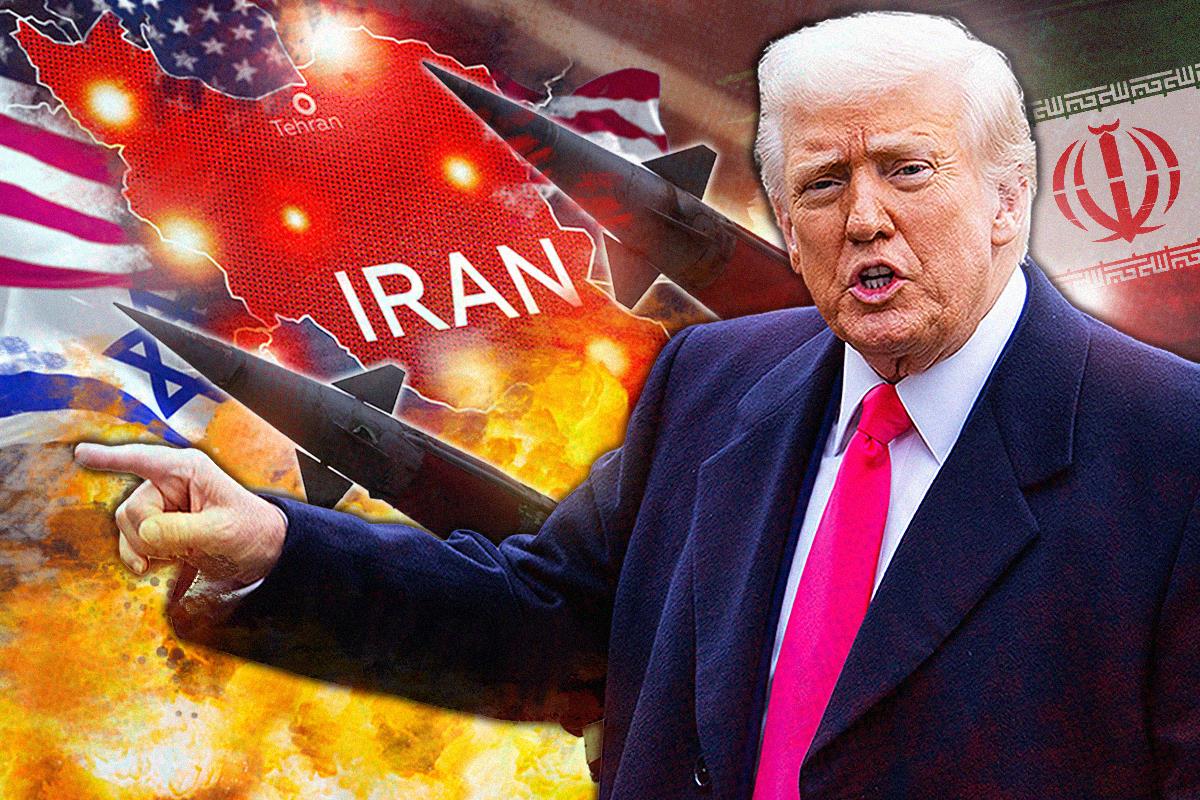

U.S. President Donald Trump has publicly stated that Washington is close to achieving its goals in its confrontation with Iran and is therefore considering a reduction in military activities against Tehran. Across outlets, reports converge that Trump’s stated objectives include crippling Iran’s missile capabilities as well as its naval and air forces, blocking Iran’s path to nuclear weapons, and assuring the security of U.S. allies in the Middle East, while pushing countries that rely on the Strait of Hormuz to take more responsibility for their own maritime security. Media on both sides agree that Iran’s leadership has openly rejected the idea that U.S. military pressure is easing, that Iranian officials have vowed to deliver a “historical lesson” to Trump rather than a short-term response, and that these statements come amid a sharp increase in oil prices linked to the continued disruption and partial closure of the Strait of Hormuz, a vital route for global oil supplies.
Coverage from both opposition and pro-government sources situates these events within a longer arc of U.S.–Iran confrontation, highlighting institutions such as the U.S. presidency, the Iranian state, and regional security frameworks anchored in the Gulf and broader Middle East. Both sets of outlets present the Strait of Hormuz as a strategic chokepoint whose stability influences global markets, noting its centrality to energy exports and the vulnerability of shipping when tensions rise. There is broad agreement that U.S. sanctions, Iran’s regional posture, and long-running disputes over Iran’s missile and nuclear programs form the backdrop to Trump’s declared goals, while Iran’s rhetoric reflects its longstanding doctrine of resistance and deterrence. Accounts from both sides also recognize that any change in U.S. military posture will be shaped by domestic political pressures, alliance commitments, and concerns over escalation, even as public narratives in Washington and Tehran seek to project strength to both domestic and international audiences.
Areas of disagreement
Motives and credibility. Opposition-aligned sources tend to portray Trump’s talk of reducing military activity as either an admission of overreach or a tactical narrative shift driven by political and economic pressures, questioning whether core U.S. objectives have actually been met. Pro-government outlets, by contrast, frame Trump’s remarks as a sign of strategic success, arguing that U.S. forces have already degraded Iran’s capabilities to the point where de-escalation is now feasible and largely on Washington’s terms. While opposition coverage emphasizes Iran’s skepticism as evidence that U.S. claims lack credibility on the ground, pro-government coverage presents that same skepticism as bluster masking Tehran’s military and diplomatic setbacks.
Military balance and outcomes. Opposition sources are more likely to highlight Iranian resilience, pointing to Tehran’s continued ability to close or disrupt the Strait of Hormuz and maintain deterrent capabilities as proof that U.S. goals such as the “complete destruction” of Iran’s missile and naval assets remain unfulfilled. Pro-government media instead underscore U.S. technological superiority and coalition backing, suggesting the campaign has already neutralized much of Iran’s effective power and that remaining disruptions are temporary leverage, not lasting strength. Where opposition outlets describe a precarious balance in which both sides still have escalatory options, pro-government narratives depict Iran as strategically cornered and forced into rhetorical escalation.
Economic and market effects. Opposition coverage generally stresses that ongoing tensions and the threat to Hormuz are driving oil prices higher and feeding global uncertainty, often implying that Trump’s strategy has backfired by destabilizing markets and alarming allies. Pro-government sources acknowledge price spikes but attribute them primarily to Iran’s actions and threats, arguing that a decisive U.S. stance and eventual reduction in operations will restore stability once the Iranian threat is contained. Thus, opposition outlets cast Trump’s announcements as contributing to volatility, whereas pro-government outlets frame them as a path toward eventual market normalization once U.S. goals are secured.
Regional responsibility and alliances. Opposition-aligned media tend to treat Trump’s demand that countries using the Strait of Hormuz secure it themselves as a sign of U.S. retrenchment and burden-shifting that could weaken traditional security guarantees and fragment the regional order. Pro-government coverage presents the same demand as a corrective move that encourages regional powers to shoulder more defense responsibilities while the U.S. moves into a supervisory and supportive role, having already blunted Iran’s capacity to threaten shipping. As a result, opposition narratives worry about a power vacuum and miscoordination among local states, whereas pro-government narratives emphasize strengthened partnerships built around U.S.-set red lines and conditional assistance.
In summary, opposition coverage tends to question the reality and durability of any U.S. military drawdown, stressing unresolved risks, Iranian leverage, and potential strategic overreach, while pro-government coverage tends to depict Trump’s statements as evidence of a successful coercive campaign that has weakened Iran, justified shifting burdens to regional actors, and set the stage for controlled de-escalation.