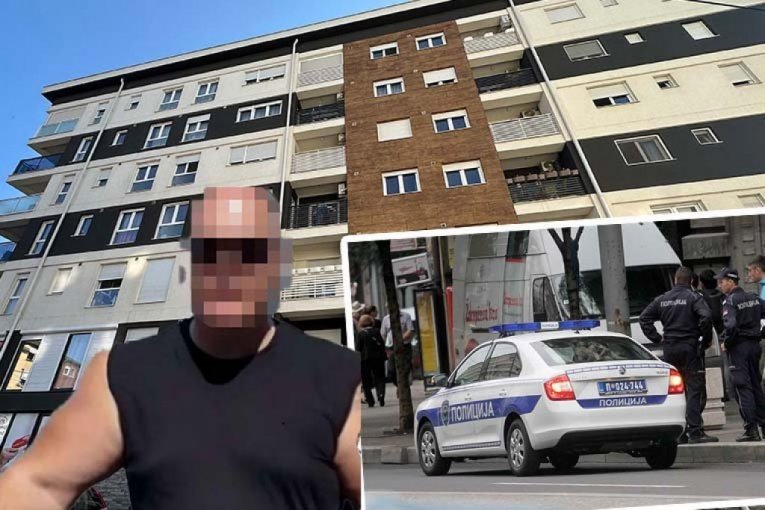

Three men have been arrested in Čačak on suspicion of the aggravated murder of 57/58‑year‑old Nenad Kustudić, who was found dead with severe head and body injuries believed to have been inflicted by a hammer or other blunt object. Pro‑government outlets report that the suspects, identified by initials (M. M., V. T., and F. P.), were detained after police investigation linked them to the killing, while an initially detained witness, known as Dule Crta, who discovered the body, has been released after giving a statement and being cleared of involvement. Coverage broadly agrees that the crime took place amid a recent spate of violent incidents in Čačak, that the case is legally classified as aggravated murder carrying the possibility of a long prison sentence or life imprisonment, and that formal proceedings are underway to establish individual responsibility and the exact course of events.
Shared context across the spectrum emphasizes that Kustudić was a well‑known local figure with a criminal background and ties to the Hells Angels motorcycle group, and that his lifestyle and prior conflicts may be relevant to understanding the circumstances of the killing. Reports concur that there are indications of earlier disputes and unsettled accounts between the victim and at least one of the arrested men, that members of his biker circle are expected to attend his funeral in an organized fashion, and that investigators are still working to clarify motive, potential accomplices, and whether the murder is linked to broader patterns of organized crime or rising violence in the city.
Areas of disagreement
Framing of the crime and its significance. Opposition outlets tend to frame the murder as emblematic of a broader collapse of public safety in Serbia, tying the Čačak killing to a nationwide pattern of rising violence and alleged government failure to control crime networks. Pro‑government outlets, while acknowledging a "wave of violence" in Čačak, more often present the case as an extreme but localized incident within a specific criminal milieu, stressing the rapid police response and procedural handling. Opposition coverage is more likely to emphasize fear among citizens and systemic insecurity, whereas pro‑government coverage highlights institutional action and downplays the notion of generalized lawlessness.
Portrayal of the victim and suspects. Opposition‑aligned sources typically balance mention of Kustudić’s Hells Angels ties with an emphasis on his status as a murder victim whose rights and safety the state failed to protect, questioning whether his criminal past is being used to relativize the crime. Pro‑government outlets more strongly foreground his extensive criminal record and biker‑gang affiliation, suggesting the killing arose from conflicts within a high‑risk environment and implying that ordinary citizens are less directly threatened. Where opposition coverage stresses the humanity of the victim and the need to solve the killing regardless of his background, pro‑government stories lean on his profile to frame the case as part of underworld score‑settling.
Assessment of institutions and accountability. Opposition media tend to use the case to criticize police and judicial institutions, arguing that frequent violent incidents in Čačak reflect deeper failures in crime prevention, intelligence work, and prosecution of organized groups close to power. Pro‑government outlets underscore that the police quickly identified and arrested three suspects and corrected an initial error by releasing the wrongly detained witness, portraying this as proof that institutions function effectively. Opposition narratives question whether all masterminds and networks behind such crimes will ever be investigated when they intersect with political interests, while pro‑government narratives largely trust the announced legal process and stress that the case is already "in the hands of the courts."
Political implications and narrative scope. Opposition coverage more readily situates the murder within a broader critique of the ruling party, arguing that an atmosphere of impunity fostered by politicized security services and tolerated criminal clans ultimately enables such killings. Pro‑government outlets usually avoid explicit political attribution, treating the case as a criminal‑justice matter rather than a reflection on the government, and limit their political framing to calls for harsher punishments or stronger policing. While opposition sources link the Čačak murder rhetorically to other high‑profile crimes and scandals to suggest a pattern, pro‑government media isolate it as a specific tragedy with primarily local and subcultural dimensions.
In summary, opposition coverage tends to use the murder of Nenad Kustudić as evidence of systemic insecurity and institutional failure with clear political overtones, while pro-government coverage tends to emphasize rapid police action, the criminal milieu of the victim, and a depoliticized, procedural framing of the case.
Story coverage