

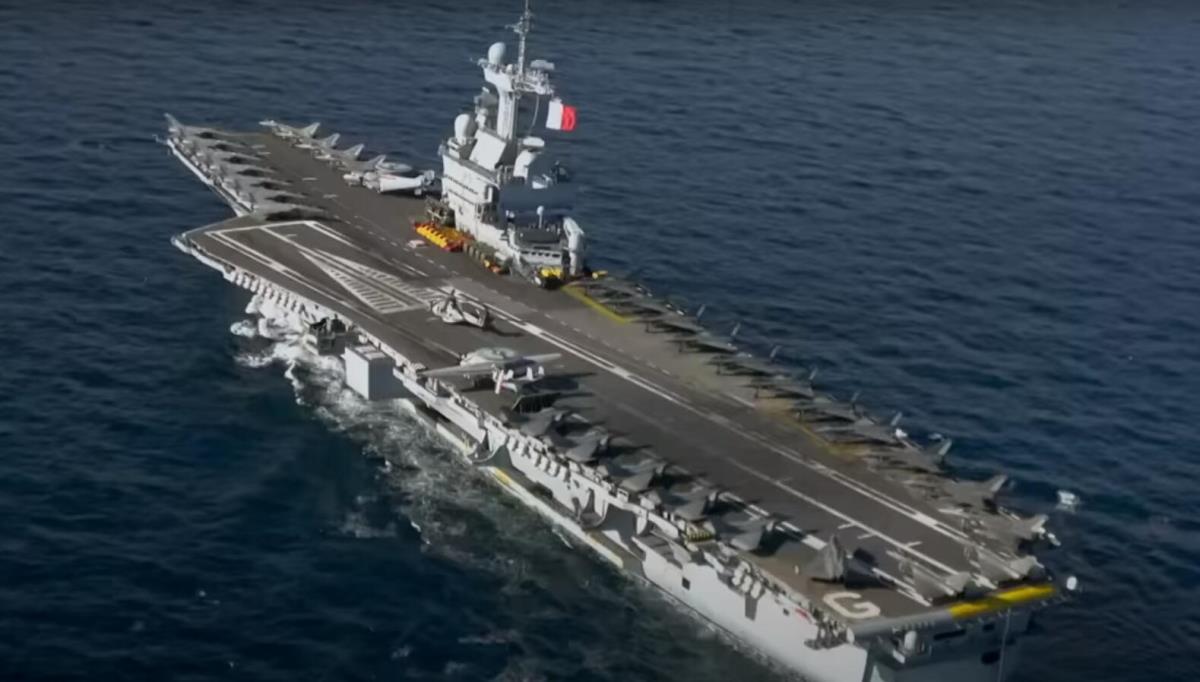
France has announced a major naval project to build a new aircraft carrier to succeed the Charles de Gaulle, with commissioning planned around 2038. Both opposition and pro-government sources agree that the ship will be significantly larger than the current carrier, about 310 meters long and roughly 1.8 times its tonnage, powered by two nuclear reactors. The cost is consistently reported at around 10 billion euros, and the vessel is to operate advanced aircraft, with coverage stressing its central role in sustaining France’s blue-water navy and carrier strike capabilities. Reports align that the program is a flagship element of France’s long-term defense planning and will span multiple decades of design, construction, and testing before entering service.
Across outlets there is broad agreement that the carrier is framed as essential to France’s nuclear deterrent posture, since French doctrine links its carrier group to the credibility and flexibility of its strategic forces. Both sides note that President Emmanuel Macron personally announced the program and cast it as a pillar of national and European strategic autonomy, as well as a driver of industrial and technological innovation for France’s defense sector. Coverage agrees that key state institutions—such as the presidency, defense ministry, and major naval and nuclear contractors—are deeply involved, and that the program is consistent with earlier French commitments to maintain an independent capacity to project power globally. There is also shared recognition that the project will lock in long-term budgetary and industrial choices that shape French defense and foreign policy for decades.
Areas of disagreement
Strategic necessity and threat environment. Opposition-aligned sources tend to question whether a second or successor carrier is the most appropriate response to current threats, arguing that asymmetric, cyber, and land-based missile challenges might make such a platform vulnerable or outdated. Pro-government outlets, by contrast, emphasize the continued relevance of carrier strike groups for crisis response, power projection, and alliance commitments, presenting the ship as indispensable for France’s role in Europe, the Mediterranean, the Indo-Pacific, and beyond. While critics frame the move as potentially misaligned with evolving security realities, supportive coverage insists the carrier is precisely what is needed to keep France at the top tier of military powers.
Cost, priorities, and social trade-offs. Opposition coverage typically foregrounds the nearly 10 billion euro price tag as an opportunity cost, suggesting these funds could be redirected to social programs, health care, or more distributed defense investments such as drones and air defenses. Pro-government outlets tend to portray the expenditure as a long-term investment that sustains high-skilled jobs, industrial capacity, and strategic autonomy, downplaying immediate budgetary strain. Critical voices describe the carrier as an emblem of elite priorities at odds with everyday economic pressures, whereas supportive reports frame it as a responsible choice to secure France’s future security and industrial base.
Symbolism, prestige, and national identity. Opposition-aligned sources are inclined to see the project’s symbolic dimension—especially naming and prestige narratives—as evidence of a presidential desire for grandeur and legacy-building, portraying the carrier as a vanity project tied to Macron’s image. Pro-government coverage embraces the symbolism more positively, highlighting the carrier as a unifying national emblem of resilience, historical memory, and the continuation of France’s great-power status. Where critics suggest the focus on prestige obscures practical questions of effectiveness and accountability, proponents argue that such symbols are integral to maintaining national confidence and international influence.
European and alliance implications. Opposition narratives often cast doubt on the claim that the carrier primarily strengthens European defense, warning that it could heighten dependence on French leadership or divert resources from shared EU capabilities and NATO cooperation. Pro-government outlets emphasize the ship as a core contribution to Europe’s collective security, allowing France to offer a sovereign carrier capability that complements NATO while reducing reliance on non-European powers. While skeptics caution that the project might reinforce national exceptionalism and complicate burden-sharing debates, supporters depict it as a cornerstone of a more capable and autonomous Europe.
In summary, opposition coverage tends to frame the new carrier as an expensive, prestige-driven bet whose strategic and social trade-offs are under-scrutinized, while pro-government coverage tends to present it as a necessary, future-oriented investment that underpins France’s security, industrial strength, and European leadership.