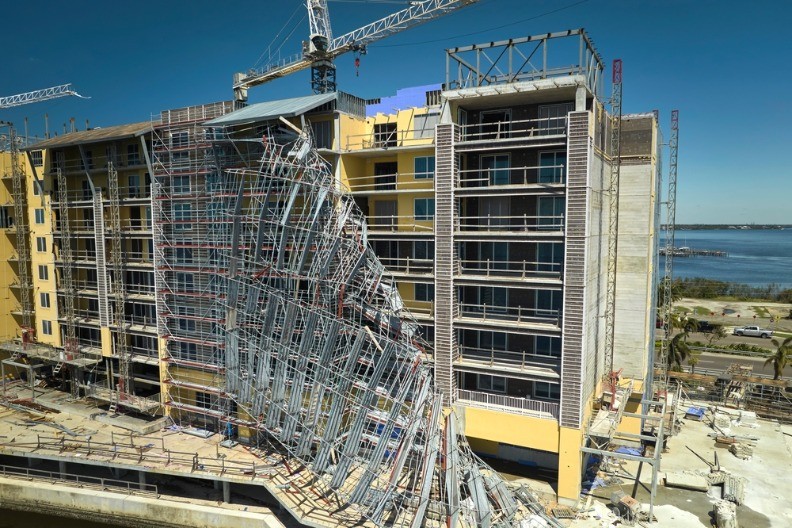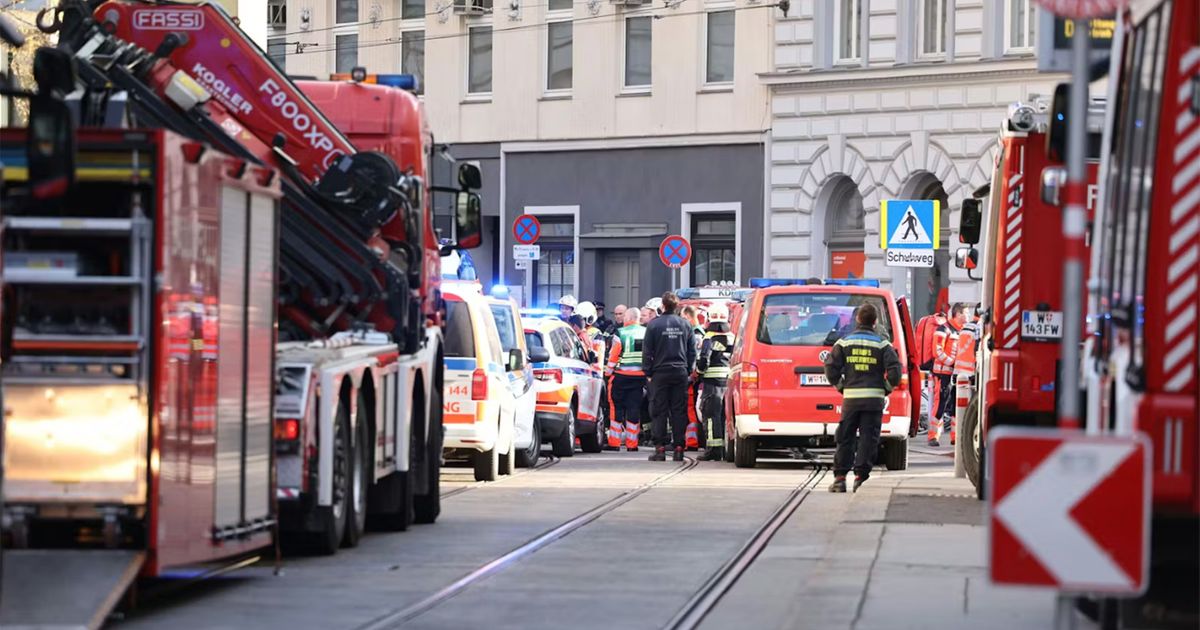



Four construction workers were killed and one seriously injured when scaffolding and parts of the formwork collapsed at a building site in Vienna’s Alsergrund district on March 17, 2026. Both opposition and pro-government-leaning coverage agree on the core facts: a multi-level scaffolding structure gave way during work hours, several workers were buried under debris, four were found dead under the rubble, and one worker from North Macedonia was rescued with severe injuries. Reports consistently state that the victims were migrant workers, including at least one Serbian citizen and several of presumed Albanian origin, and that emergency services rapidly deployed a large rescue operation, using specialized equipment and drones while cordoning off the area.
Across the spectrum, outlets describe the institutional response as involving Vienna’s emergency services, Austrian labor inspectors, and prosecutors opening an investigation into the precise cause of the collapse. There is shared acknowledgment that construction safety rules and inspection procedures are central to understanding what happened, with early reporting stressing that officials have not yet assigned definitive legal responsibility. Coverage on both sides places the event within a broader pattern of risks in high-rise or large-scale construction in major European cities, noting that inquiries typically examine the stability of scaffolding, load calculations, and compliance with occupational safety standards, and that reforms, if any, would likely emerge only after the investigative findings are released.
Areas of disagreement
Responsibility and blame. Opposition-aligned sources tend to frame the collapse as a likely consequence of systemic negligence, pointing to regulatory gaps, cost-cutting by large construction firms, and inadequate enforcement of worker protections. Pro-government coverage, by contrast, emphasizes that the cause is still unknown and underscores the professionalism of Austrian institutions, avoiding direct accusations against authorities or major contractors. While opposition outlets often suggest that migrant workers were placed in especially unsafe conditions, pro-government outlets largely refrain from such claims and portray the event as a tragic but exceptional accident pending full investigation.
Political framing and system critique. Opposition media typically connect the tragedy to broader criticisms of the government, arguing that current economic and labor policies create a climate where safety is sacrificed to speed and profit. They may highlight previous incidents or warnings from unions to suggest a pattern of official indifference. Pro-government coverage, however, presents the accident as non-political, stressing technical and investigative angles and framing the state as responsive and orderly rather than negligent, thereby downplaying any systemic political culpability.
Focus on migrant labor and social issues. Opposition outlets are more likely to highlight the workers’ migrant backgrounds as evidence of structural vulnerability, suggesting that foreign laborers are overrepresented in dangerous, under-regulated jobs and insufficiently protected by host-country and sending-country authorities. Pro-government sources acknowledge the nationalities of the victims, particularly the Serbian worker, but mainly to personalize the tragedy and evoke sympathy, not to argue that migrants face distinct structural risks. This leads opposition coverage to stress social inequality and labor exploitation, whereas pro-government reporting centers on family grief and national mourning without expanding into broader socio-economic critique.
Future reforms and accountability. In discussing next steps, opposition coverage tends to demand stronger, more transparent investigations and concrete reforms in construction oversight, often hinting that without political pressure the matter could fade without accountability. Pro-government outlets highlight that an official investigation is already underway and express confidence that existing legal mechanisms will identify any wrongdoing, suggesting that the current framework is fundamentally sound. Opposition narratives, therefore, use the incident to argue for deeper structural change, while pro-government narratives signal that the system can correct isolated failures through normal institutional channels.
In summary, opposition coverage tends to treat the Vienna scaffolding collapse as symptomatic of systemic regulatory, political, and socio-economic failures that endanger migrant workers, while pro-government coverage tends to emphasize institutional competence, individual tragedy, and the need to await official investigative results before drawing broader conclusions.
Story coverage