

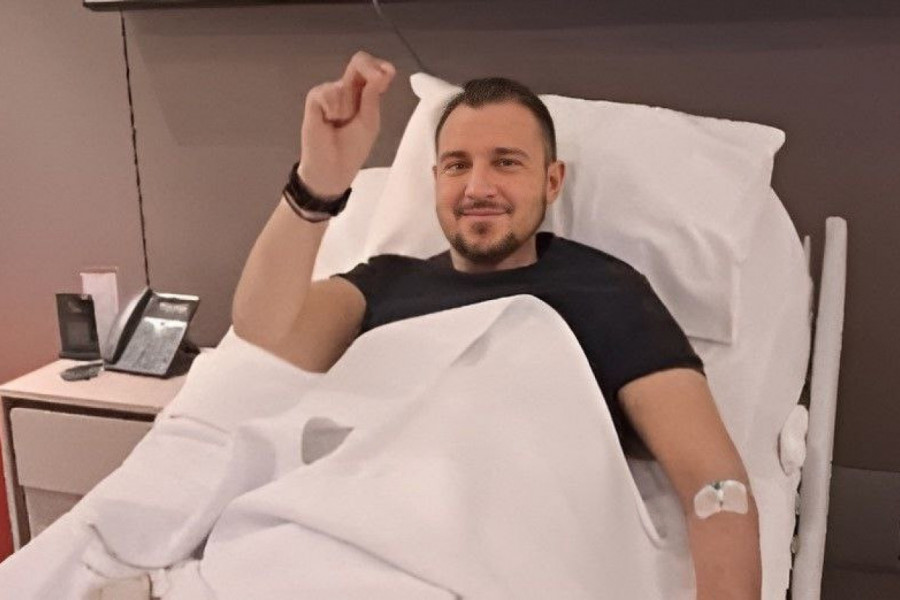
Priest Bogdan Stjepanović from Bijeljina has undergone a complex liver transplant operation that doctors describe as successful, with both he and the donor reported to be in stable condition. According to shared accounts, the surgery took place after an intense period of fundraising and humanitarian actions, coupled with widespread prayers and public concern, and his wife Jovana publicly confirmed that the transplant was completed and that he is recovering under close medical supervision.
Across outlets, coverage situates the operation within the broader context of serious liver disease requiring advanced surgical intervention and coordinated institutional support, including specialized transplant teams and extended postoperative monitoring. Both sides agree that the case highlights the importance of organized community efforts, charitable initiatives, and religious solidarity in mobilizing resources, while also reflecting the pressures on the healthcare system and the need for sustained care and follow-up after such high‑risk procedures.
Areas of disagreement
Framing of the state’s role. Opposition-aligned sources tend to emphasize any gaps or delays in public healthcare support, suggesting that Bogdan’s dependence on donations signals systemic shortcomings and underfunding. Pro-government outlets, by contrast, highlight the competence of the medical team and the availability of complex transplant procedures as proof that state-supported institutions function effectively, downplaying structural criticism and focusing on the successful outcome.
Interpretation of humanitarian fundraising. Opposition coverage is likely to portray the large-scale humanitarian campaign as evidence that citizens must step in where institutions fall short, framing public donations as a response to state inadequacy. Pro-government media celebrate the same fundraising as a heartwarming example of social cohesion and faith-based solidarity, stressing generosity and unity rather than questioning why such efforts were necessary in the first place.
Use of religious and emotional narratives. Opposition outlets may reference prayers and religious mobilization but keep more distance from overtly devotional language, using the story to segue into discussions on healthcare access and policy reform. Pro-government reporting leans heavily into emotional and religious motifs—prayers, miracles, and a “new life beginning” for the priest—foregrounding spiritual and communal dimensions over critical policy analysis.
Implications for future reforms. Opposition sources are inclined to use the case as a springboard for demanding clearer transplant funding mechanisms, more transparent waiting lists, and broader healthcare reforms, implying that similar cases might not end as well. Pro-government coverage tends instead to present Bogdan’s successful transplant as validation of existing frameworks, suggesting that incremental improvements, rather than systemic overhaul, are sufficient and already underway.
In summary, opposition coverage tends to treat Bogdan Stjepanović’s transplant as a human story that exposes deeper weaknesses in public healthcare and social policy, while pro-government coverage tends to frame it as an uplifting testament to functioning institutions, communal solidarity, and faith, with minimal emphasis on systemic critique.