
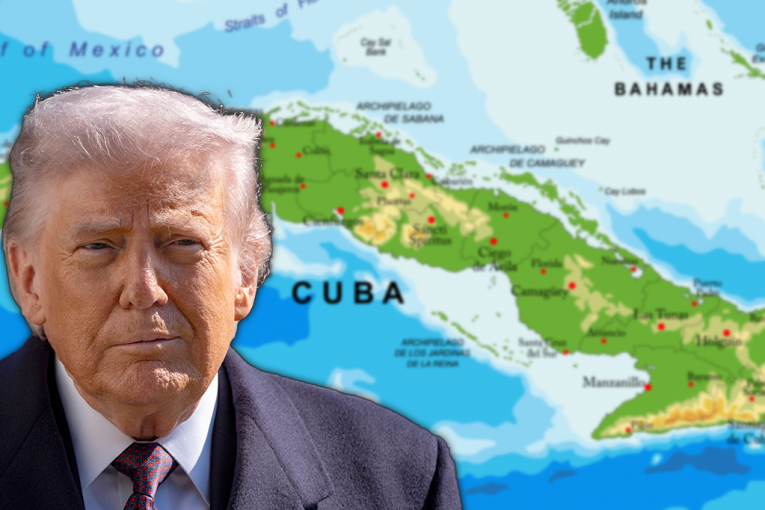
News reports from both camps agree that Donald Trump recently made remarks about Cuba in which he said he believes he will have the "honor of winning" or "conquering" the island, and suggested he could "do whatever" he wants with it, including saying he could "free it or win it." Coverage aligns in placing these comments in the context of his broader foreign policy posture, including references to a possible military offensive or use of force regarding Cuba. Both sides also note that Trump has already taken concrete steps targeting Havana, especially by cutting off Venezuelan oil supplies to Cuba and threatening tariffs on other countries that sell oil to the island, and that these moves have coincided with or contributed to pronounced fuel shortages there.
There is shared acknowledgment that these statements occur against a backdrop of longstanding U.S.–Cuba tensions and U.S. sanctions policy, with Cuba being heavily dependent on imported fuel and historically reliant on Venezuela. Both opposition and pro-government outlets note that the energy crunch in Cuba has reached a level that has pushed Havana to seek talks with Washington, motivated at least in part by the fuel crisis and broader economic pressures. They also concur that Trump has publicly linked his Cuba stance to other foreign policy theaters, such as his reference to possibly postponing a visit to China in order to stay in Washington because of conflict-related priorities involving Iran, framing Cuba policy as intertwined with a more confrontational regional strategy.
Areas of disagreement
Framing of Trump’s intent. Opposition-aligned sources typically portray Trump’s language about "winning" or "conquering" Cuba as reckless saber-rattling that signals a dangerous willingness to violate international norms and threaten Cuban sovereignty. Pro-government outlets instead frame his comments as a sign of decisive leadership, casting the rhetoric of "honor" and "winning" as metaphorical for liberating Cuba from its current regime and asserting U.S. strength. Whereas opposition coverage stresses the literal implications of talk about a military offensive, pro-government reports tend to normalize or downplay the warlike terminology as part of a broader strategy toolkit.
Assessment of legality and norms. Opposition sources emphasize that any suggestion of "doing whatever" the United States wants with Cuba clashes with international law, the United Nations charter, and the principle of non-intervention, often raising concerns about precedents in Latin America. Pro-government coverage, by contrast, tends to avoid extended legal scrutiny and instead implies that U.S. actions are justified by Cuba’s alleged political or human rights failings, treating Washington’s leverage as legitimate pressure. While opposition outlets highlight potential condemnation from international institutions and regional partners, pro-government outlets concentrate on U.S. sovereign rights to set sanctions and contemplate force as options on the table.
Responsibility for Cuba’s crisis. Opposition-aligned media generally attribute Cuba’s fuel shortages and economic stress heavily to U.S. sanctions, the cut-off of Venezuelan oil, and the threat of tariffs on third countries, describing these as forms of collective punishment. Pro-government sources instead foreground Cuba’s own governance and economic model as the main cause of the shortages, presenting U.S. measures as accelerants or necessary pressure but not primary culprits. In opposition narratives, Trump’s policy is framed as deliberately worsening humanitarian conditions; in pro-government narratives, it is portrayed as exposing the fragility and failures of the Cuban system.
Strategic purpose of talks. Opposition sources tend to describe Cuba’s willingness to enter talks with Washington as a reluctant move forced by coercive U.S. pressure, warning that Trump may use the crisis to extract maximal concessions or encourage regime change. Pro-government outlets more often depict the talks as evidence that Trump’s hard line is working, suggesting that economic strain is drawing Havana toward negotiation and possible reforms. Where opposition coverage stresses the risks of asymmetrical bargaining and potential escalation, pro-government accounts stress the potential for U.S. leverage to yield strategic and ideological gains.
In summary, opposition coverage tends to cast Trump’s remarks and policies toward Cuba as dangerous, coercive, and legally questionable moves that aggravate a humanitarian and economic crisis, while pro-government coverage tends to portray them as strong, justified pressure that exposes Cuba’s own failures and potentially advances U.S. strategic objectives.