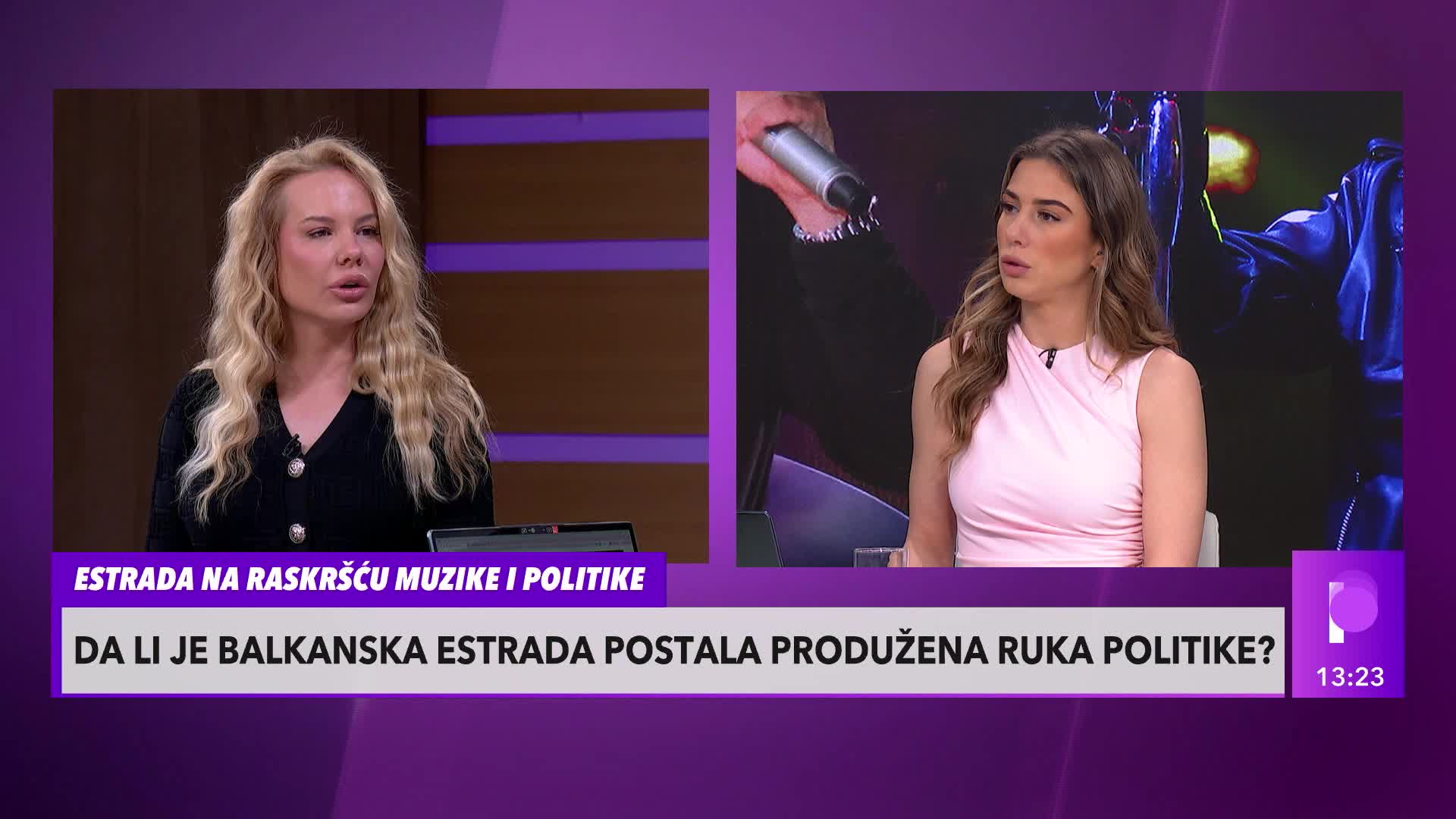

Guests on the pro-government TV program "Pulse of Serbia" discussed a regional scandal involving Croatian singers Toni Cetinski and Severina, focusing in particular on Cetinski’s recent statement that his "foot will no longer step into Serbia." Actress Milena Videnović, speaking on the show, characterized this declaration as "a very difficult sentence" and treated it as a serious and consequential public remark by a prominent regional entertainer. Both opposition and pro-government outlets, where they cover the story, agree on the basic facts: that Cetinski made a categorical statement about no longer performing in Serbia, that it sparked regional debate, and that Serbian media and public figures are reacting to it as part of a broader controversy involving well-known Croatian artists and their relationship with Serbian audiences.
Across the spectrum, coverage situates the episode within the long-standing, often fraught cultural and political relationship between Serbia and Croatia, where entertainers regularly become symbols in wider national and regional disputes. Both sides acknowledge that television talk shows like "Pulse of Serbia" and tabloid-style portals play a major role in amplifying such controversies and turning individual statements into regional talking points. The shared context is that cultural figures’ comments on Serbia are routinely read through the lens of national pride, historical grievances, and market dynamics in the regional entertainment industry, and that any boycott or refusal to perform in Serbia is interpreted as a signal about broader inter-state and inter-ethnic tensions, not just a personal scheduling decision.
Areas of disagreement
Framing of Cetinski’s statement. Opposition-aligned sources are likely to frame Cetinski’s vow not to perform in Serbia as either an individual artistic or political stance, sometimes even downplaying it as performative or media-driven, whereas pro-government outlets present it as a grave insult directed at Serbia and its people. In opposition coverage, his words might be contextualized within Croatia’s internal debates and personal career strategy, with less emphasis on national offense. Pro-government media, by contrast, highlight the intensity of the phrase, echoing Videnović’s description of it as a "very difficult sentence," and treat it as a litmus test of respect for Serbia.
Role of Serbian media and public. Opposition-oriented commentators tend to criticize Serbian media, including shows like "Pulse of Serbia," for sensationalizing celebrity scandals and using them to distract from domestic social and economic problems. They argue that by dedicating airtime to Cetinski and Severina, Serbian outlets are feeding a culture-war narrative that ultimately benefits the ruling establishment. Pro-government coverage instead justifies the focus as a legitimate defense of national dignity and as a reflection of genuine public outrage, depicting the media as merely articulating what many Serbs allegedly feel.
Interpretation of regional relations. Opposition coverage generally treats the controversy as a symptom of deeper unresolved Serbia–Croatia issues and may call for de-escalation, arguing that politicizing entertainers only entrenches nationalism on both sides. Pro-government outlets lean into the story as proof that certain Croatian figures harbor persistent hostility toward Serbia, using it to reinforce narratives of Serbian victimhood and resilience. Where opposition voices might stress mutual cultural dependence and shared audiences across borders, pro-government narratives emphasize self-sufficiency and the idea that Serbia does not need artists who "reject" it.
Implications for cultural policy and identity. Opposition-aligned media are more likely to say that the state should stay out of such artistic disputes and that audiences, not politicians or pundits, should decide which performers to support. Pro-government sources, however, often hint that public institutions and organizers should reconsider giving platforms or state-linked venues to artists perceived as disrespectful to Serbia, framing this as a matter of preserving national dignity. Thus, where opposition commentary sees the episode as a cautionary tale about over-politicizing culture, pro-government commentary reads it as a justification for firmer cultural gatekeeping.
In summary, opposition coverage tends to treat Toni Cetinski’s controversial statement and the "Pulse of Serbia" debate as an overblown media spectacle that reflects deeper regional tensions but should not dictate cultural policy, while pro-government coverage tends to portray it as a serious affront to Serbia that validates stronger national and cultural defensiveness in response.