

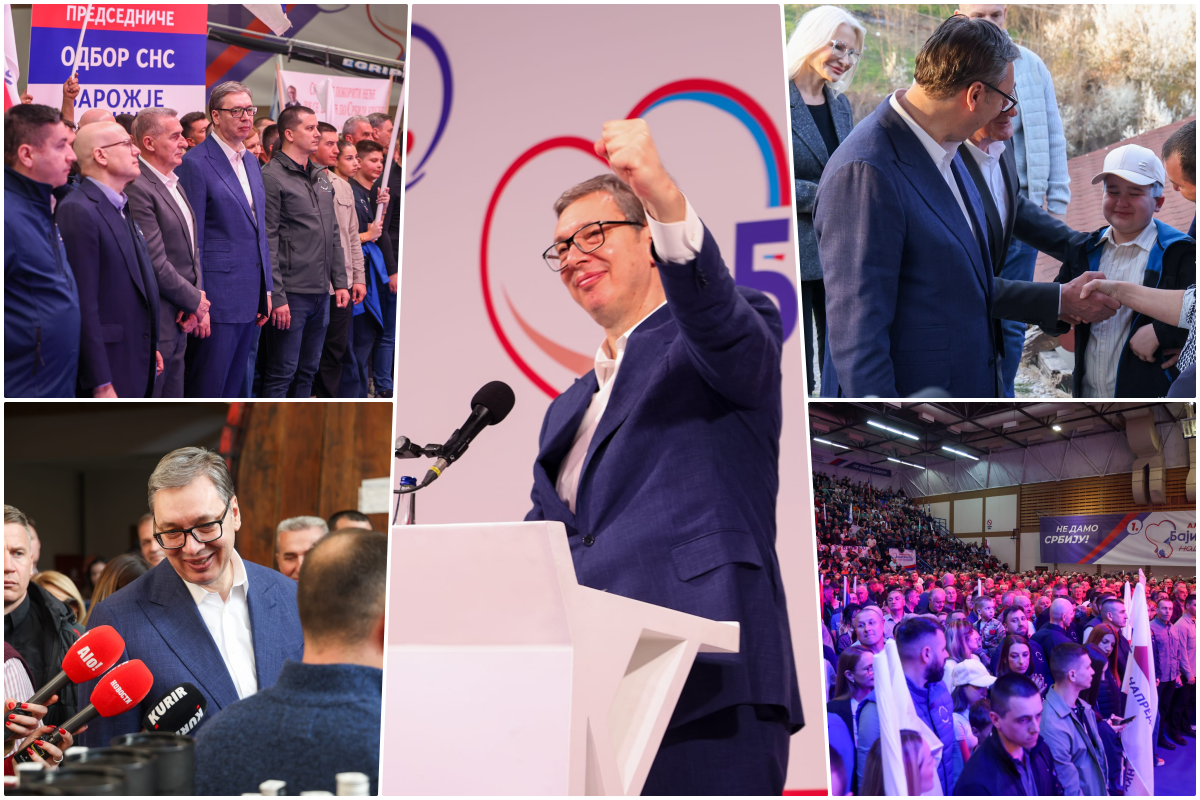
President Aleksandar Vučić publicly responded to recent remarks by Croatian President Zoran Milanović, addressing them in speeches that were covered by Serbian media. Both opposition and pro-government outlets agree that Vučić spoke from within Serbia, tying his comments to the run-up to local elections and broader national politics, and that the exchange centers on Milanović’s perceived interference in Serbian affairs and criticism of Serbia’s political course. They concur that Vučić explicitly rejected any notion that Croatia or its president could dictate what Serbia’s leaders may say, insisting Serbia will pursue its own policy. Both sides also report that Vučić used strong language directed personally at Milanović, warning Croatian authorities to be cautious in their actions toward Serbia.
Across the spectrum, outlets situate this episode within long-standing tensions between Serbia and Croatia, especially over national sovereignty, regional influence, and narratives about the recent past. Media from both camps note that Vučić framed the issue as part of a broader struggle over Serbia’s independence in decision-making and foreign policy orientation. There is general agreement that relations between Belgrade and Zagreb are sensitive and often colored by historical disputes from the Yugoslav wars and subsequent state-building processes. Coverage also commonly links Vučić’s response to domestic political dynamics, acknowledging that cross-border verbal clashes frequently become tools in internal debates over Serbia’s direction, institutions, and alignment between East and West.
Areas of disagreement
Framing of Milanović’s remarks. Opposition-aligned sources tend to present Milanović’s statements as harsh but politically recognizable criticism from a neighboring EU and NATO member, sometimes suggesting that his comments expose regional concerns about democratic backsliding in Serbia. Pro-government outlets instead depict Milanović’s remarks as outright interference in Serbia’s internal affairs and as part of a broader pattern of Croatian hostility toward Serbia. Opposition coverage often downplays personal affront and focuses on the substantive policy critiques, while pro-government media emphasize insult, provocation, and a need for a firm national response.
Portrayal of Vučić’s response. Opposition outlets are likelier to characterize Vučić’s reaction as theatrically defiant, arguing that he uses confrontational rhetoric toward Croatia to bolster his domestic standing and distract from governance problems. Pro-government media, by contrast, highlight his reply as dignified, responsible, and necessary to defend national sovereignty, underscoring phrases about Serbia not taking orders from others. While critics question whether his tone escalates tensions for political gain, loyalist coverage stresses composure, patriotism, and a clear red line against foreign pressure.
Link to elections and internal politics. Opposition media generally claim that Vučić is instrumentalizing the clash with Milanović to turn local elections into a pseudo-referendum on national honor and external threats, thereby avoiding discussion of corruption, rule-of-law issues, and economic grievances. Pro-government outlets frame the same linkage as legitimate, asserting that upcoming elections will decide whether Serbia continues on a stable, independent path or returns to a period of weakness and subservience. Opposition narratives see the rhetoric as fear-mongering and mobilization of the electorate through external enemies, whereas pro-government narratives present it as sober warning about the stakes and a call for “responsibility and seriousness.”
Regional and international context. Opposition coverage more often situates Milanović’s remarks within broader European criticism of Serbian leadership, suggesting they reflect concerns from EU partners and neighbors about Serbia’s foreign policy ambiguity and democratic standards. Pro-government outlets, by contrast, downplay any legitimacy in such external concerns, portraying them instead as pressure campaigns aimed at forcing Serbia into unwanted geopolitical alignments. While opposition voices argue that constructive engagement with Croatia and the EU could reduce tensions, pro-government media insist that accommodating such criticism would erode Serbia’s autonomy and betray national interests.
In summary, opposition coverage tends to treat Vučić’s clash with Milanović as a politically useful confrontation that reinforces existing concerns about Serbia’s leadership and democratic trajectory, while pro-government coverage tends to cast it as a principled stand in defense of national sovereignty, using strong rhetoric to rally public support for the current course and upcoming elections.
.jpg)