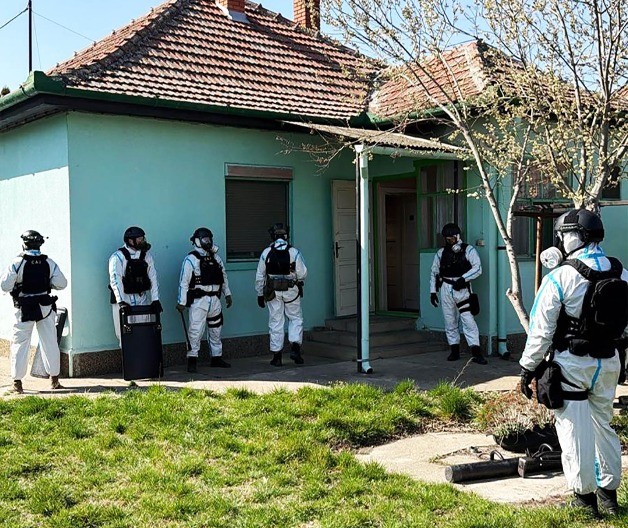
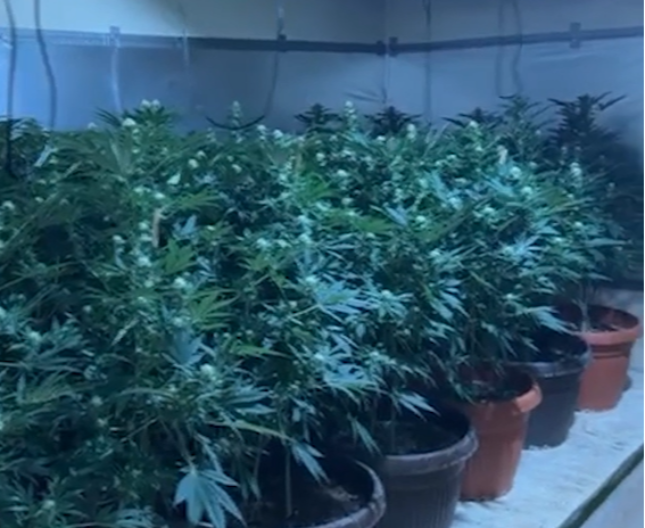
Police and anti-drug units near Subotica dismantled two indoor cannabis cultivation sites, described as sophisticated laboratories, during a coordinated operation. Across both opposition and pro-government coverage, it is reported that two suspects, identified by initials and birth years, were arrested on suspicion of unauthorized production and trafficking of narcotics, with police seizing about 180 cannabis plants and roughly 12 kilograms of dried marijuana, and the suspects held in custody for up to 48 hours pending further proceedings.
Both sides agree that the operation involved specialized branches of the Interior Ministry, including anti-drug and tactical police units, and that the discovery fits into an ongoing institutional effort to target organized drug production. They converge on the framing that such labs are part of a broader illegal market that state authorities are formally mandated to combat, linking the case to existing legal frameworks on narcotics and standard prosecutorial procedures following such seizures, and situating the event within an established pattern of drug-related enforcement actions rather than as an isolated incident.
Areas of disagreement
Framing of state capacity. Opposition-aligned outlets tend to question how long the cannabis labs may have operated undetected, using the case to suggest systemic blind spots or selective enforcement, whereas pro-government media emphasize the professionalism and efficiency of the operation as proof that institutions are functioning effectively. While opposition reporting often highlights structural weaknesses in policing and oversight, pro-government coverage stresses coordination between specialized units and presents the raid as evidence of robust state control.
Political significance. Opposition sources are likely to downplay the operation as routine policing, sometimes hinting that its publicization is timed to distract from economic or governance issues, while pro-government outlets present it as a high-impact success story that confirms the government’s commitment to citizen security. The former may treat the case as a symptom of deeper corruption or institutional failure, whereas the latter frames it as a standalone victory in the fight against drugs, closely associated with the current leadership’s policies.
Transparency and detail. Opposition reporting typically presses on missing or vague details, such as who financed the labs, potential links to local elites, and how oversight failed, implying that only partial information is being released. Pro-government coverage, in contrast, focuses on operational visuals and basic facts (numbers of plants, quantity of marijuana, units involved), offering less probing about networks behind the labs and framing the published details as sufficient evidence of accountability and success.
Future implications. Opposition-aligned outlets often argue that without broader reforms, including stronger anti-corruption measures and independent oversight, such raids will not significantly reduce organized drug production, using the case to call for systemic change. Pro-government media instead suggest that continued similar operations and firm application of existing laws will deter would-be offenders, portraying this raid as part of a sustainable enforcement trajectory rather than a catalyst for institutional overhaul.
In summary, opposition coverage tends to treat the Subotica cannabis lab case as a window into systemic weaknesses, under-enforcement, and possible political instrumentalization of police work, while pro-government coverage tends to frame it as a clear-cut operational triumph that validates the effectiveness and determination of current state institutions.