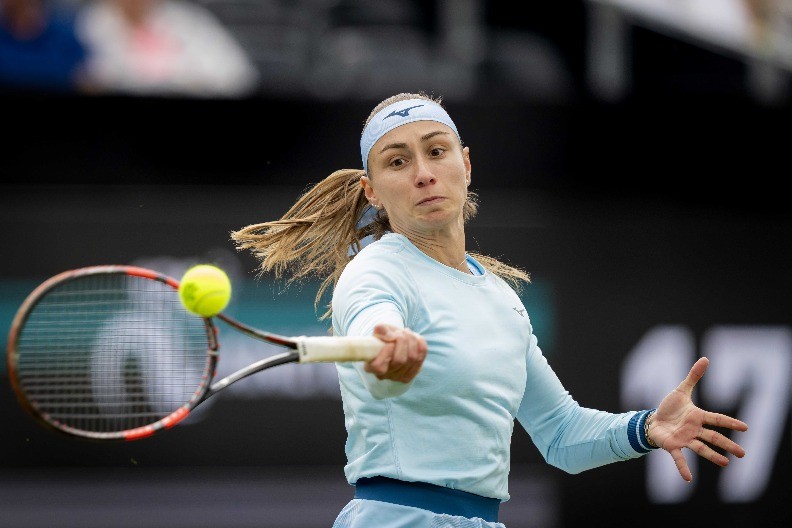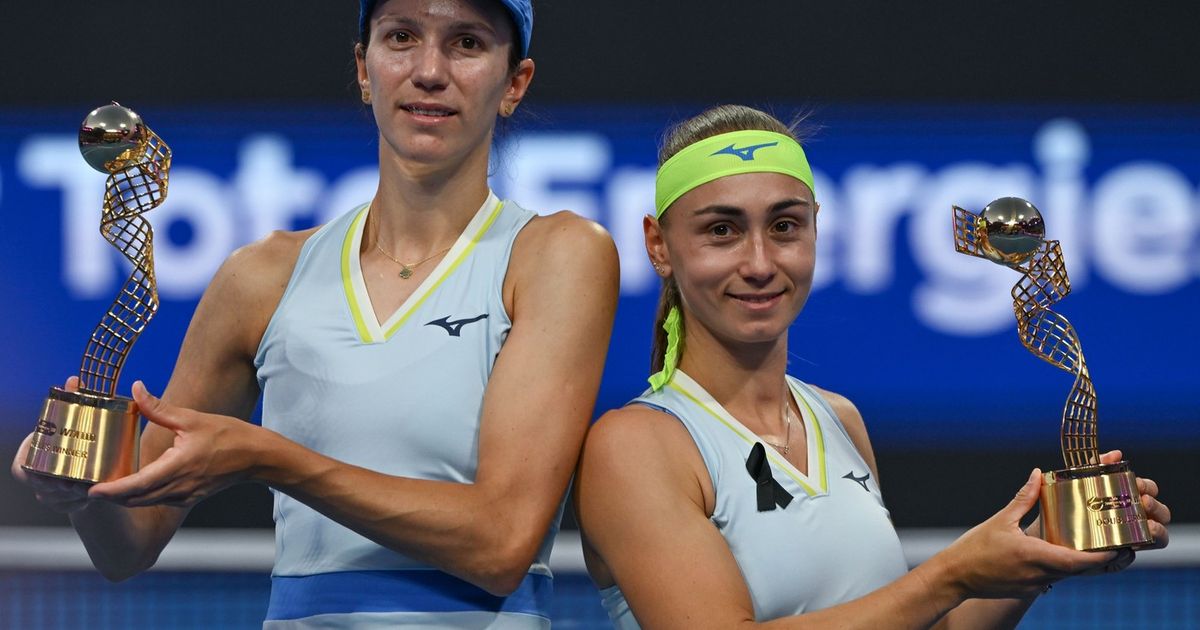


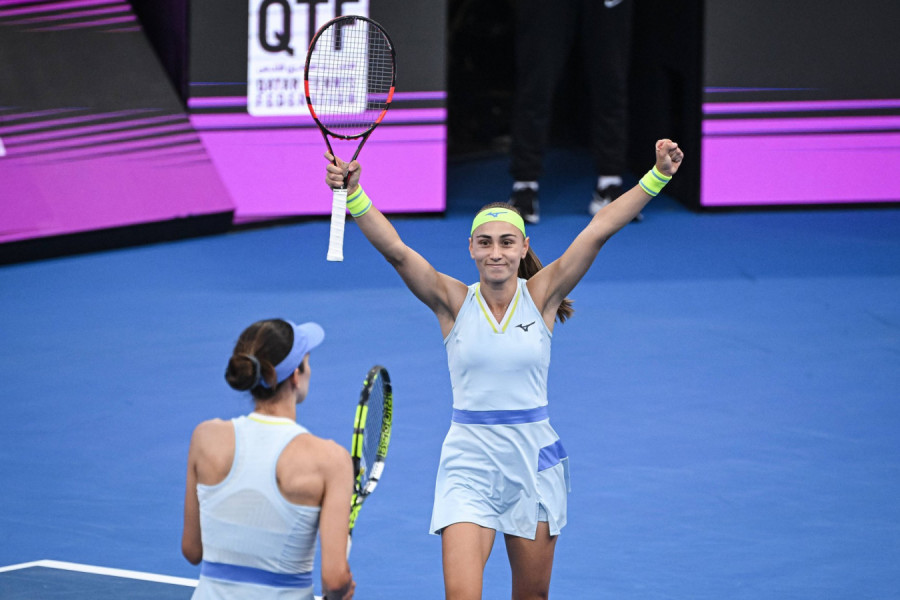
Aleksandra Krunić and her partner Ana Danilina reached the women’s doubles final at the Indian Wells tournament, where they were defeated by Katerina Siniakova and Taylor Townsend. Both opposition and pro-government-leaning accounts agree on the core sporting facts: Krunić and Danilina lost in straight sets, 7:6, 6:4, after having earlier produced a strong semifinal win over Nicole Melichar-Martinez and Cristina Bucsa by 6:3, 6:4. Reports concur that in the final they trailed in the second set, managed to recover from a break deficit without allowing additional breaks, but were ultimately outplayed in the decisive games by the Townsend/Siniakova pair.
Coverage also aligns on the broader context that this result represents a major achievement in Krunić’s doubles career, despite the defeat. Both sides acknowledge that Indian Wells is one of the most prestigious events on the WTA calendar, that reaching the final significantly boosts Krunić’s standing, and that she has moved into the WTA doubles Top 10, around eighth place with roughly 6,765 ranking points, alongside a prize money haul of about $123,920. There is shared recognition that her campaign in Indian Wells confirms a longer-term upward trajectory in doubles, and that the match featured not only technical quality but also emotional narratives, including Townsend’s sacrifices and gratitude to her partner.
Areas of disagreement
Framing of the result. Opposition-aligned outlets are likely to emphasize the loss itself, presenting the straight-sets defeat as a missed historic opportunity and dwelling on the failure to convert momentum in the second set, while pro-government sources frame the same match as a notable success story marked by reaching a prestigious final. Pro-government coverage tends to highlight the positive spin that Krunić “won” by securing ranking points and prize money, positioning the loss as a stepping stone, whereas opposition outlets more readily underline how close she came to the title and how the Serbian public was left without a trophy. In doing so, opposition narratives cast the final as another near-miss in Serbian sport, while pro-government narratives present it as a triumph in all but name.
Emphasis on personal versus national narrative. Opposition media are more inclined to situate Krunić’s defeat in a national frame, stressing Serbia’s absence from the winners’ podium and implicitly linking the disappointment to broader frustrations about support for athletes, while pro-government outlets focus on Krunić’s individual journey, resilience and professional gains. Pro-government reporting amplifies human-interest angles like Townsend’s emotional sacrifice and the high level of the opponents to diffuse the sting of defeat, whereas opposition accounts would more likely minimize those details and instead foreground what the loss means for Serbian tennis prestige. This creates a divergence between a people-centric narrative of struggle and sacrifice, and a nation-centric narrative of underachievement.
Interpretation of systemic support and implications. Opposition coverage is prone to hint that Krunić’s narrow defeat reflects structural shortcomings in how Serbian sport, especially women’s tennis and doubles specialists, are funded and supported, suggesting that with better resources and planning she might have converted such finals into titles. Pro-government media, by contrast, use her rise to the Top 10 and substantial prize earnings as proof that existing pathways and support structures are functioning, pointing to her success as validation rather than as evidence of gaps. Where opposition voices might connect the result to calls for reform or more strategic investment, pro-government voices underline the result as confirmation that the system already produces elite outcomes.
Significance for future expectations. Opposition outlets tend to temper or question optimistic projections, warning that without concrete changes this final could remain an isolated peak rather than the start of a sustained run at major titles, and they may stress the mental and physical toll of repeatedly falling just short. Pro-government coverage, on the other hand, extrapolates from the Indian Wells run to forecast more finals and potential titles, portraying Krunić’s new ranking status as a launchpad for future success and a symbol of national sporting progress. This leads to a split between a more cautious, skeptical outlook and a forward-leaning, celebratory narrative about what comes next.
In summary, opposition coverage tends to spotlight the sting of defeat, structural shortcomings, and the risk that this final remains an unfulfilled opportunity, while pro-government coverage tends to highlight the prestige of reaching the final, Krunić’s ranking and financial gains, and the match as evidence of a successful system and promising future.
Story coverage