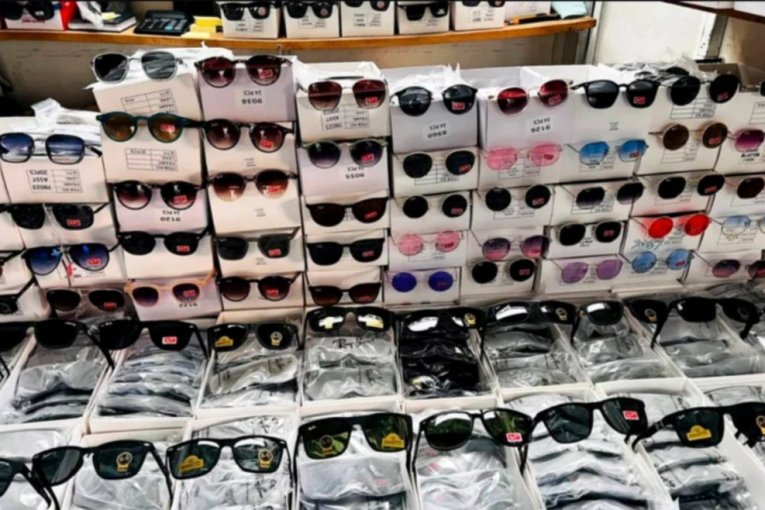

Police and customs authorities in Serbia reported seizing counterfeit shoes and glasses with an estimated market value of around nine million dinars, most prominently in actions in or linked to Pančevo and Šabac. According to official statements echoed by pro-government outlets, criminal charges were filed against one Serbian and two Bulgarian citizens on suspicion of illegal trade, as well as unauthorized use of another’s business name and product markings, with the seized goods lacking documentation of origin.
Across both camps, coverage situates the case within broader efforts to curb the grey economy and suppress illicit trade in branded goods. The role of the police, customs, and prosecutorial bodies is acknowledged as central, with the case framed as part of a series of ongoing operations rather than an isolated incident, and there is general agreement that counterfeit goods pose risks to fair competition, consumer protection, and state tax revenues.
Areas of disagreement
Framing of state effectiveness. Pro-government outlets present the seizure as proof that institutions are actively and successfully tackling the grey economy, highlighting coordination between police and other authorities as an operational success story. Opposition-aligned sources, by contrast, tend to frame such seizures as selective or sporadic enforcement, suggesting they are used to showcase apparent efficiency while systemic issues in border control, customs oversight, and corruption remain unresolved or underreported.
Political implications and motive. Pro-government media usually describe the operation in technical, crime-focused terms, emphasizing legal classifications like illegal trade and unauthorized use of business names, and rarely link the case to broader political dynamics. Opposition coverage, however, is more likely to interpret the publicity around a nine-million-dinar haul as politically timed messaging, arguing that these stories are amplified to bolster the government’s image on law and order while diverting attention from higher-level actors allegedly benefiting from large-scale smuggling and grey-market channels.
Systemic causes and accountability. Pro-government narratives often foreground individual suspects and foreign nationals, casting the incident as a contained criminal enterprise that the state has disrupted, and implying that current laws and institutions are largely adequate when properly enforced. Opposition-oriented outlets instead focus on structural enablers, arguing that weak regulatory oversight, patronage networks, and underfunded inspections allow counterfeit operations to flourish, and that responsibility extends beyond the arrested traders to political and institutional leadership.
Impact and follow-through. In pro-government reporting, the key impact is portrayed as immediate removal of illicit goods from the market and a deterrent signal to others engaged in similar activities, with ongoing investigations framed as routine steps toward prosecution. Opposition sources question whether such cases lead to meaningful convictions or broader cleanups of supply chains, noting that media-promoted raids often fade from view without public transparency on court outcomes, confiscation procedures, or reforms to prevent recurrence.
In summary, opposition coverage tends to portray the seizure as a surface-level crackdown that obscures deeper systemic and political problems surrounding the grey economy, while pro-government coverage tends to showcase it as clear evidence that state institutions are functioning effectively and protecting the market from counterfeit goods.