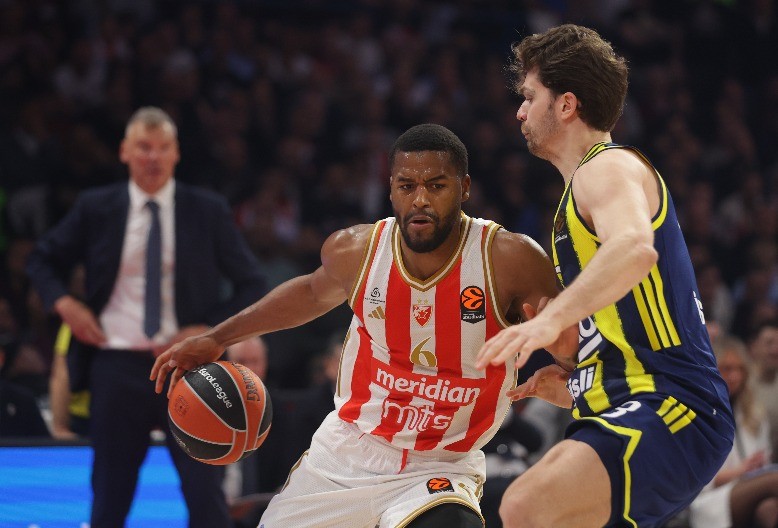

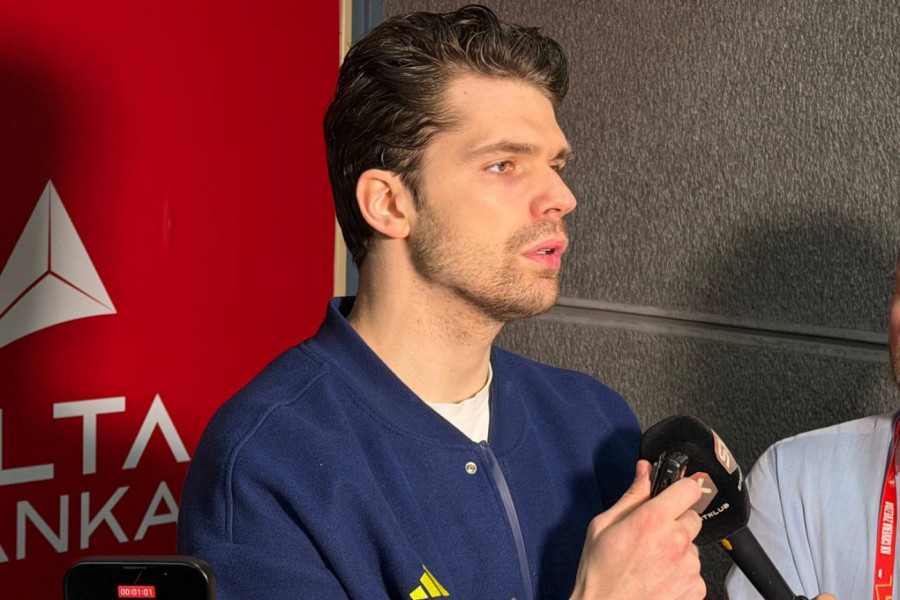
Crvena zvezda defeated Fenerbahce 79–73 in Belgrade in Round 31 of the EuroLeague, handing the reigning European champions their first loss after a long unbeaten stretch that had lasted since early January and included 19 consecutive victories. Both opposition and pro‑government reports agree that Zvezda trailed for much of the game before turning it around with a powerful second half, especially a decisive third quarter in which the hosts raised their defensive level, ran more in transition, and got key scoring bursts from players such as Cody Miller‑McIntyre, Moneke, Nwora, Butler, and Izundu. They also concur that Tarik Biberović publicly shouldered part of the blame for Fenerbahce’s defeat, pointing to late‑game mistakes and acknowledging Zvezda’s physicality and energy as decisive factors, while standings tables across outlets show Zvezda improving to 18–13 and moving into the EuroLeague top six playoff positions.
Coverage from both camps situates the result within the broader EuroLeague landscape, emphasizing that Fenerbahce remains at or near the top of the standings despite the setback, while Zvezda’s victory significantly boosts their playoff prospects amid a difficult remaining schedule with only a few home games left. There is shared focus on coach Saša Obradović’s emphasis on defense, aggression, and team character as the core of Zvezda’s resurgence following earlier inconsistency, and on the symbolic importance of snapping the European champions’ long winning streak. Both sides also reference the psychological dimension: the match is framed as a potential “wake‑up call” for Fenerbahce and a confidence‑building turning point for Zvezda, especially given the pressure created by their prior loss to Bayern and the reintegration of players like Tyson Carter returning from a lengthy absence.
Areas of disagreement
Significance of the victory. Opposition‑aligned sources tend to frame the win as impressive but largely sporting, stressing that it is one step in a still‑uncertain playoff chase and warning against overhyping a single game. Pro‑government outlets, in contrast, cast it as a landmark triumph over the European champion, highlighting the end of Fenerbahce’s 19‑game streak and portraying it as proof that Zvezda can “beat anyone” when playing with maximum energy. While opposition coverage is more inclined to emphasize the remaining difficult schedule and prior inconsistency, pro‑government media lean into celebratory language and present the result as validation of the club’s and, implicitly, national sporting ambitions.
Attribution of success and failure. Opposition reporting generally distributes credit and blame more evenly, underscoring Fenerbahce’s uncharacteristic mistakes and tactical stagnation alongside Zvezda’s improved defense, and using Biberović’s self‑criticism to argue that the champions simply had an off night. Pro‑government coverage focuses far more on Zvezda’s virtues, spotlighting Obradović’s in‑game adjustments, heightened aggression, and the depth of contributions across the roster, treating Fenerbahce’s errors as a by‑product of the pressure Zvezda applied. Where opposition outlets stress mutual factors and variance typical of a long EuroLeague season, pro‑government outlets personalize success in Obradović and his players’ “character” and “energy.”
Broader narrative framing. Opposition‑aligned media are more likely to frame the match within a critical narrative of Zvezda’s season, reminding readers of prior lapses, uneven form, and structural issues in roster construction and club management, arguing that one win does not resolve deeper problems. Pro‑government sources instead tie the victory into a positive arc of steady improvement, pointing to the team’s climb into the top six and the successful integration of new and returning players as evidence that earlier turbulence has been overcome. As a result, opposition articles often sound cautious or skeptical about long‑term implications, whereas pro‑government pieces extrapolate from this game to forecast further successes and a strong playoff push.
Political and symbolic undertones. Opposition outlets tend to downplay or critique any attempts to politicize the result, rejecting narratives that subtly equate Zvezda’s resilience with governmental or national strength and cautioning against turning a basketball win into a propaganda motif. Pro‑government coverage, while usually staying within sports discourse, frequently uses national pride cues and emphasizes that a Serbian club toppled the European champion, resonating with broader state‑aligned messaging about national resurgence and competitiveness. Thus, where opposition media try to keep the game in a narrower sporting frame or use it to question institutional priorities, pro‑government media allow the symbolism of beating a powerhouse like Fenerbahce to reinforce a feel‑good story aligned with the current political establishment.
In summary, opposition coverage tends to treat the 79–73 win as an important but limited sporting achievement that must be weighed against Zvezda’s broader inconsistencies and structural questions, while pro-government coverage tends to elevate it into a defining proof of strength, character, and national sporting momentum that validates the current trajectory on and around the club.