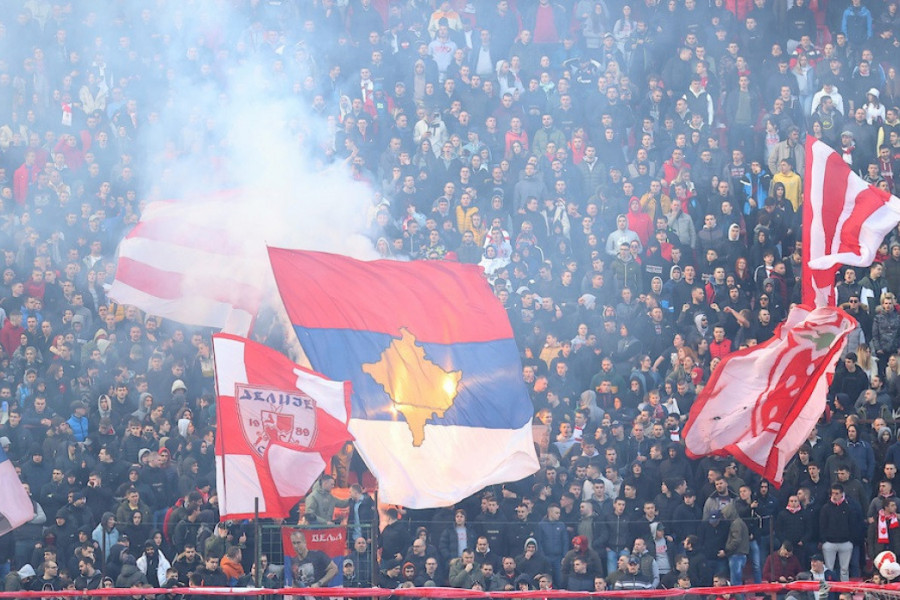


Crvena zvezda and Partizan have been sanctioned by the Football Association of Serbia after the latest Eternal Derby in Belgrade, which was marked by crowd disturbances, extensive pyrotechnics, and security lapses. Across media camps, it is consistently reported that Crvena zvezda, as the host, was fined 1,800,000 dinars for poor organization, excessive use of pyrotechnics, and inadequate security checks, while Partizan was punished with a ban on its fans attending the next two away matches because of their supporters’ pyrotechnics and vandalism. Reports also agree that this was the 178th Eternal Derby, that the disciplinary decision came from the FSS disciplinary bodies, and that an earlier suspended sanction against Partizan formally remains in force alongside the new penalties.
Coverage on both sides adds shared background that these sanctions fit into a long-running pattern of disciplinary action following high‑risk derbies between the two Belgrade clubs, where fan groups are tightly organized and have a history of confrontations and stadium rule violations. Media of all alignments highlight the central role of the FSS as the governing body responsible for safety and discipline in Serbian football, and frame the latest measures as part of broader efforts to curb violence, uncontrolled pyrotechnics, and property damage at big matches. There is also agreement that these episodes feed into periodic calls for stricter enforcement, better stadium security protocols, and potential reforms in how clubs manage and are held accountable for the behavior of their organized supporter groups.
Areas of disagreement
Severity and fairness of sanctions. Opposition-aligned outlets tend to question whether the financial fine for Crvena zvezda is proportionate to the scale of organizational failures and whether Partizan’s fan ban is either too harsh or selectively applied compared with past derbies. Pro-government media, by contrast, emphasize that both the 1,800,000-dinar fine and the two-match away fan ban demonstrate a necessary and balanced toughness from the FSS. While opposition sources are more likely to suggest inconsistency or political selectivity in disciplinary practice, pro-government outlets frame the sanctions as a strong but fair message to all clubs.
Distribution of responsibility. Opposition coverage typically spreads responsibility across the clubs, the FSS, law enforcement, and even political authorities, arguing that recurring disorder reflects systemic failures in crowd management policy and oversight. Pro-government outlets focus responsibility more narrowly on the clubs’ organized fan groups and on specific breaches such as pyrotechnics and vandalism, portraying clubs as primarily accountable actors under clear FSS rules. Where opposition media raise questions about the role and effectiveness of state institutions in preventing these incidents, pro-government reporting underscores club-level obligations and compliance with established procedures.
Political backdrop and institutional trust. Opposition-aligned sources often connect the derby incidents and subsequent sanctions to broader concerns about the politicization of football institutions, suggesting that decisions may be influenced by the clubs’ perceived proximity to ruling structures or by the state’s relationship with fan groups. Pro-government media generally present the FSS as a professional, autonomous body applying regulations without political interference, steering clear of any suggestion that sanctions reflect deeper political dynamics. This leads opposition outlets to use the derby as an example of weakened institutional credibility, while pro-government coverage leverages the same case to project institutional order and rule enforcement.
Future reforms and solutions. Opposition media tend to argue that repeated sanctions show that piecemeal financial fines and fan bans are insufficient, calling for structural reforms in how supporter groups are regulated, how stadium security is organized, and how transparent FSS decision-making is. Pro-government outlets are more likely to portray the current disciplinary framework as fundamentally sound, needing only consistent application and gradual tightening rather than systemic overhaul. Thus, opposition coverage stresses the need for broader change in governance and oversight of football, while pro-government coverage highlights incremental improvements within existing rules.
In summary, opposition coverage tends to treat the derby sanctions as symptoms of deeper institutional and political problems in Serbian football, while pro-government coverage tends to frame them as justified, rules-based measures that confirm the strength and impartiality of existing disciplinary mechanisms.