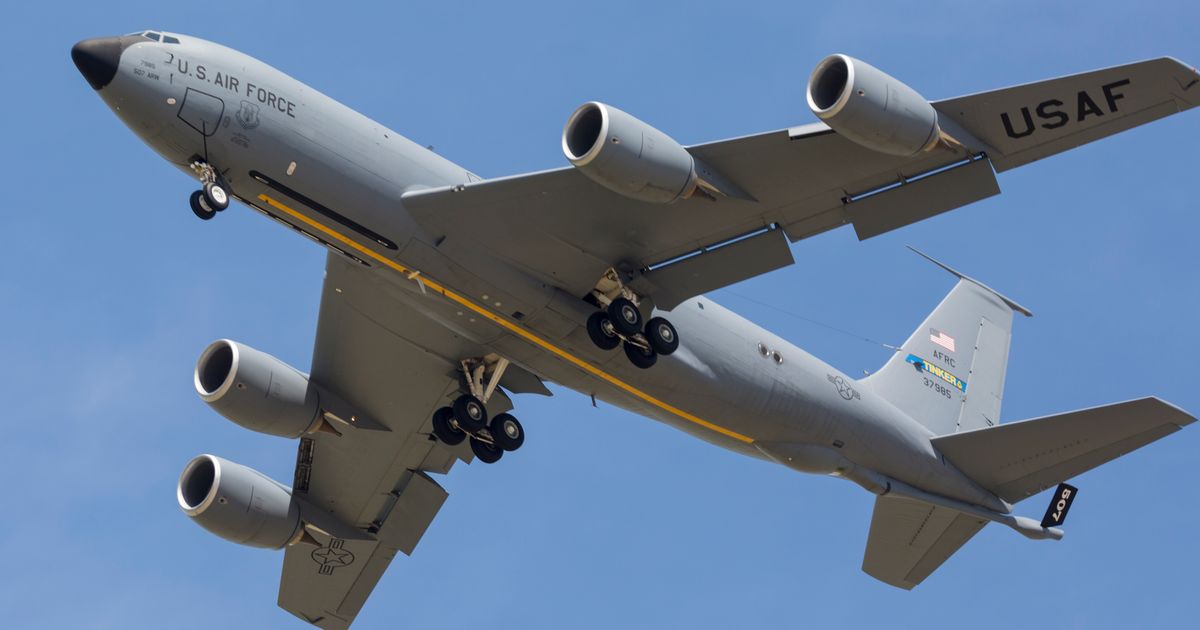


Multiple outlets report that a US KC-135 aerial refueling aircraft crashed in western Iraq while supporting American operations, described in pro-government coverage as part of Operation Epic Blaze and linked to ongoing US and Israeli military pressure on Iran. The crash reportedly occurred during or around an aerial refueling sequence involving at least one other aircraft, with the second plane, likely a fighter jet, landing safely. US Central Command is cited as confirming the incident and stating that preliminary assessments indicate it was not caused by hostile or friendly fire, and that search-and-rescue or recovery operations were initiated for the crew and wreckage. Some reports around the incident also mention that six French soldiers were wounded and a military base was hit in related regional violence, and that oil prices have risen amid the broader escalation.
Shared context across the spectrum ties the crash to a tense regional environment marked by sustained US and Israeli actions against Iranian targets and Iranian-aligned groups, with the incident occurring during an ongoing campaign that has already spanned nearly two weeks. Both sides reference that US aerial refueling tankers like the KC-135 are critical enablers of long-range operations, extending the reach of strike and patrol aircraft involved in missions around Iraq, Syria, and potentially Iran. Coverage agrees that the region is seeing heightened military activity, cross-border strikes, and base attacks involving Western forces and their partners, and that this volatility is feeding into global energy market concerns. There is also broad acknowledgment that the crash, regardless of cause, underscores operational risks for US and allied forces operating in crowded and contested airspace.
Areas of disagreement
Cause and characterization of the crash. Pro-government outlets emphasize the official line that the KC-135 loss was an “incident” not caused by hostile or friendly fire, framing it as an operational mishap amid complex air missions. Opposition-aligned sources are more likely to question the sufficiency of that explanation, hinting at possible mechanical failure, human error, or even underplayed hostile activity and demanding fuller disclosure. Pro-government reports tend to stress that one accompanying aircraft landed safely as evidence of controlled response, whereas opposition coverage may treat that as circumstantial and not conclusive on the underlying cause.
Link to wider conflict with Iran. Pro-government media heavily tie the crash to Operation Epic Blaze and a broader US-Israel effort against Iran, presenting the tanker’s mission as part of a necessary campaign to deter Iranian aggression and its proxies. Opposition outlets, while acknowledging the Iran-related operational context, are more inclined to frame the crash as a symptom of an overextended and politically driven military posture that risks further regional destabilization. Where pro-government narratives highlight operational continuity and resolve against Tehran, opposition narratives question the strategic wisdom of sustaining such operations at the cost of increased accidents and escalation.
Civilian impact and regional stability. Pro-government reporting mentions wounded French soldiers, a hit military base, and rising oil prices largely as downstream effects of ongoing hostilities, underscoring that adversarial actions and regional turmoil are driving market and security risks. Opposition coverage is likelier to emphasize how the dense pattern of US and allied air activity, including tanker-supported strike missions, contributes to a climate of permanent crisis for local populations and heightens the chance of miscalculation. While pro-government outlets stress that Western military presence is stabilizing and protective, opposition sources tend to see it as a key factor perpetuating insecurity and economic volatility.
Transparency and accountability. Pro-government sources foreground the prompt statement from Central Command and the assertion that there was no hostile or friendly fire, portraying this as evidence of institutional transparency and professionalism. Opposition-aligned media are more prone to highlight what is not yet disclosed—such as detailed technical findings, crew status, or cockpit data—and to suggest that initial military statements often minimize operational faults or politically inconvenient factors. Thus, pro-government reporting conveys confidence that formal investigations will duly address the incident, whereas opposition coverage treats the crash as another case where public scrutiny is needed to extract a full and honest accounting.
In summary, opposition coverage tends to question the official non-hostile-fire explanation, tie the crash to overreach in US regional operations, and push for more transparency and accountability, while pro-government coverage tends to echo Central Command’s initial findings, frame the loss as an operational mishap within a justified campaign against Iran, and stress continuity of missions despite the incident.