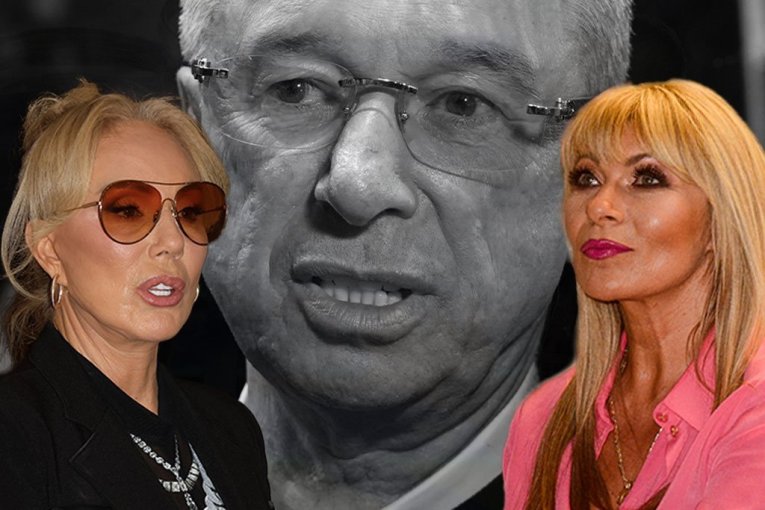


Media on both sides agree on the basic contours of the story: after the birth of Suzana Jovanović’s granddaughter Marta, journalists asked whether long‑time friend and professional associate Lepa Brena had offered congratulations. Suzana publicly expressed great joy over her granddaughter and listed numerous celebrity well‑wishers, but pointedly refused to say whether Brena had congratulated her, instead waving off the question and giving only a terse response. Outlets concur that this comes after a difficult year marked by the death of Suzana’s husband and Brena’s close associate Saša Popović, and that both women have been repeatedly asked about the state of their relationship, with Brena declining to comment directly.
Both opposition and pro‑government coverage situate the incident within the long, intertwined history of the two singers in the regional entertainment industry, including their shared ties to Popović and the Grand production milieu. They agree that the lack of an explicit public congratulation is fueling speculation about a possible cooling of relations after decades of public closeness and shared moments of grief and celebration. Coverage on both sides frames the rumor mill as driven by tabloids and social networks, noting that neither artist has issued a clear, on‑the‑record statement confirming a definitive break or reconciliation, so the narrative currently rests on subtle public gestures, evasive answers, and media interpretation rather than verifiable new facts.
Areas of disagreement
Significance of the incident. Opposition‑aligned outlets tend to amplify the episode as emblematic of deeper fractures, treating the missing public congratulation as a serious symbolic rupture and highlighting every ambiguous gesture as proof of a personal and professional split. Pro‑government outlets, while acknowledging the unanswered question and the intrigue it creates, more often frame it as a minor celebrity misunderstanding or a private matter, emphasizing Suzana’s joy and the family context over the supposed drama. The former portray the situation as a notable development in the entertainment world, whereas the latter downplay its systemic importance and resist treating it as a major cultural scandal.
Attribution of causes. Opposition coverage is more likely to speculate that business disagreements, inheritance questions after Saša Popović’s death, or broader industry power shifts lie behind any potential rift, sometimes hinting that Brena has distanced herself from Suzana in pursuit of new alliances. Pro‑government outlets typically avoid detailed theorizing, instead suggesting that grief, emotional exhaustion, and normal changes in friendships over time could explain any distance, and they refrain from tying the episode to larger disputes in the music business. As a result, opposition narratives lean toward structural or strategic motives, while pro‑government narratives keep explanations in the realm of personal emotion and privacy.
Use of political and institutional analogies. Opposition sources more readily draw parallels between this rumored estrangement and perceived cronyism or patronage networks around major entertainment institutions, using the story as a metaphor for how once‑tight circles can fracture when interests diverge. Pro‑government coverage largely avoids such analogies, treating Grand and related entities as neutral show‑business platforms rather than power structures, and steering clear of linking the singers’ relationship to broader critiques of media or cultural institutions. Thus, opposition media embed the gossip in a wider narrative about influence and loyalty, whereas pro‑government media keep it firmly in the realm of celebrity life.
Framing of public silence. Opposition‑aligned outlets frame both women’s reluctance to speak plainly—Suzana’s evasive answer and Brena’s refusal to comment—as evidence of "hidden truths" and backstage tensions that the public is not being told, reading silence as confirmation of conflict. Pro‑government outlets, while noting the same silences, tend to interpret them as legitimate attempts to preserve privacy and dignity after a period of mourning, suggesting that not every aspect of their relationship needs to be publicly dissected. In this way, opposition narratives cast discretion as suspicious, while pro‑government narratives cast it as appropriate restraint.
In summary, opposition coverage tends to treat the rumored rift as a meaningful symbol of deeper personal and institutional tensions that invites speculation about motives and power dynamics, while pro-government coverage tends to acknowledge the gossip but minimize its political or structural significance, presenting it instead as a private matter between two grieving celebrities.