

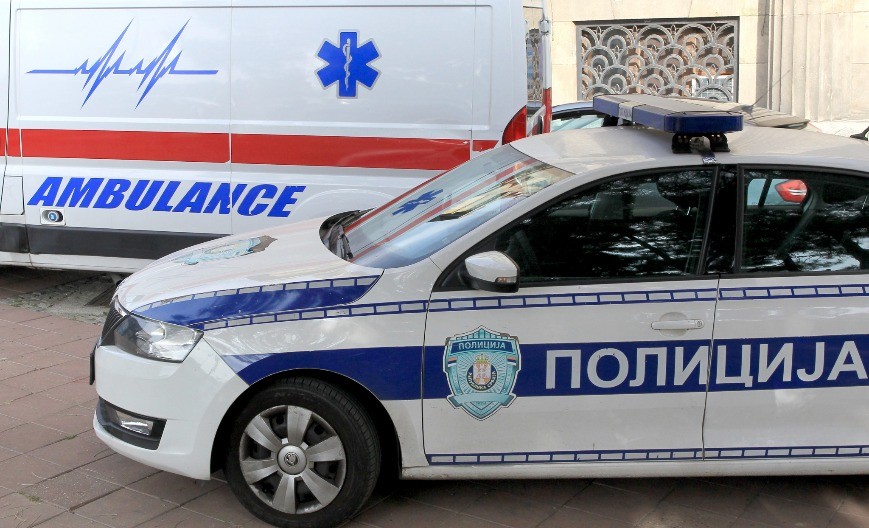
One person was killed and four others were injured in a head-on collision between two passenger vehicles near Gružansko Lake in the municipality of Knić, central Serbia, around early afternoon hours, with several outlets specifying about 13:00. Both opposition and pro-government reporting concur that the crash involved cars traveling in opposite directions on a local road and that emergency services, including firefighters, intervened on the scene. They agree that one victim died at the site or shortly afterward, while four injured individuals were transported for medical treatment, and that police launched an investigation to clarify the precise circumstances and chain of events that led to the collision.
Shared context across the spectrum emphasizes that this is another in a series of severe traffic accidents on regional roads, highlighting concerns about road safety, driver behavior, and infrastructure conditions in Serbia. Outlets from both camps reference the involvement of standard state institutions such as traffic police, emergency medical services, and fire brigades, presenting the response as routine but necessary. There is also agreement that formal investigative procedures will determine whether speeding, improper overtaking, or other violations contributed to the crash and that any systemic discussion about road safety legislation, enforcement, and infrastructure remains tied to these official findings rather than to immediate speculation.
Areas of disagreement
Framing of responsibility. Opposition-aligned outlets tend to embed the accident within a pattern of rising traffic fatalities and implicitly connect responsibility to perceived state neglect of regional roads and lax enforcement, suggesting that government policies create conditions where such crashes are more likely. Pro-government outlets, by contrast, present the event primarily as an isolated tragedy, focusing on the immediate circumstances and refraining from linking it to broader state accountability. While opposition reporting leans toward systemic criticism, pro-government coverage stays closer to the language of unfortunate fate pending official investigation.
Emphasis on systemic causes. Opposition media are more likely to raise questions about road maintenance, signage, and the adequacy of safety measures on less-trafficked routes near places like Gružansko Lake, sometimes referencing past accidents in the region to imply structural risk. Pro-government outlets, however, center their narratives on individual factors such as possible speeding, distraction, or driver error, leaving infrastructure issues largely unaddressed. This leads to opposition coverage framing the crash as symptomatic of deeper governance problems, whereas pro-government reporting treats it as primarily a matter of individual conduct and chance.
Portrayal of state response. Opposition coverage tends to characterize the institutional reaction as reactive and routine, noting that emergency services and police arrived and opened an investigation but questioning whether preventive steps are ever meaningfully implemented afterward. Pro-government outlets highlight the professionalism and speed of firefighters, medical teams, and police, underlining actions such as the extrication of trapped victims to present the state as effective and caring in crisis. As a result, one side uses the response to argue for systemic shortcomings, while the other uses it to reinforce confidence in public services.
In summary, opposition coverage tends to situate the head-on collision near Knić within a broader narrative of state negligence, systemic road-safety failures, and insufficient preventive policy, while pro-government coverage tends to treat it as a stand-alone tragedy caused by as-yet-unclear individual factors, emphasizing the prompt and competent response of state services and avoiding broader political implications.
