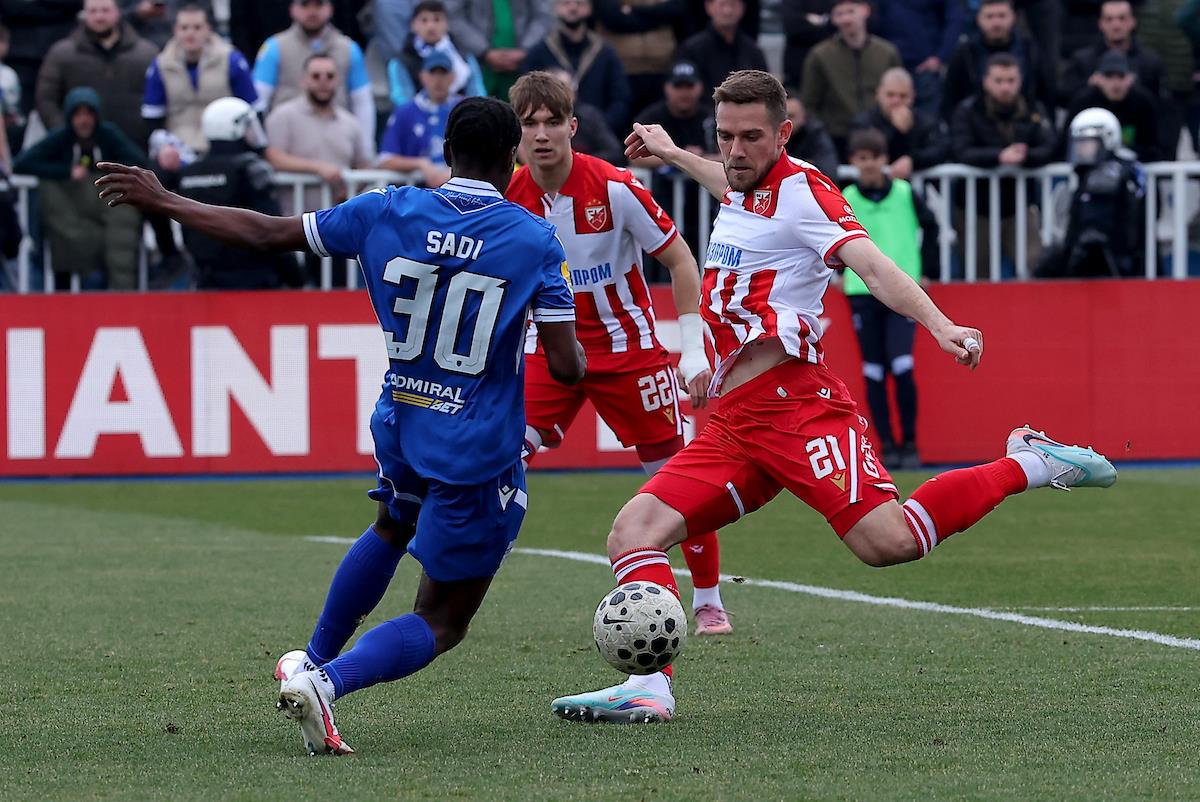

Crvena zvezda’s 2-0 away win over Novi Pazar in the Serbian Cup quarter-final is consistently reported across the spectrum as a decisive result that sends the defending cup holders into the semi-finals. Media on both sides agree that the match was played in Novi Pazar, that Red Star scored through Nair Tiknizjan and Timi Max Elšnik, and that the game was repeatedly interrupted due to fan incidents involving pyrotechnics and clashes in the stands. There is broad agreement that at least two Red Star players, forward Bruno Duarte and goalkeeper Mateus, suffered injuries during the match, that a Novi Pazar goal was disallowed, and that the Football Association of Serbia has reacted by convening an emergency or urgent meeting in response to the violence and security failures around the tie.
Reporting from both opposition-aligned and pro-government outlets also situates the game within a familiar Serbian football context of intense atmospheres, powerful supporter groups, and recurring security concerns. Both sides highlight the institutional role of the Football Association of Serbia in managing disciplinary responses and potential reforms aimed at curbing stadium violence. The coverage generally presents Crvena zvezda as a dominant domestic force whose progression deepens their pursuit of another double, while Novi Pazar are framed as underdogs who nonetheless benefited from strong home support and a charged atmosphere. There is shared recognition that the incidents in the stands risk overshadowing sporting achievements and that league and cup organizers face renewed pressure to address fan misconduct, stadium safety, and the broader culture around high-risk fixtures.
Areas of disagreement
Emphasis of the story. Opposition-aligned outlets are more likely to frame the match primarily as a public-order and governance failure, treating the 2-0 result as secondary to questions about security planning, policing, and the authorities’ track record on fan violence. Pro-government outlets, by contrast, foreground Red Star’s sporting achievement, the quality of the goals and the team’s efficiency, with disorder presented as a disruptive backdrop rather than the main narrative. Where opposition coverage tends to treat the incidents as symptomatic of deeper systemic problems, pro-government reporting emphasizes that the competition continues smoothly and that the rightful winner advanced.
Portrayal of institutions. Opposition sources typically cast the Football Association of Serbia and security services as reactive and partly responsible, stressing that an “urgent meeting” shows officials were unprepared and have failed to implement long-promised reforms. Pro-government media underline the same emergency meeting as evidence of swift, responsible action by the FSS, presenting condemnations of violence and calls for tougher measures as proof that institutions are functioning. This leads to contrasting tones: critical and skeptical on the opposition side, versus reassuring and procedural on the pro-government side.
Characterization of fan behavior. Opposition outlets usually broaden the description of fan incidents into a critique of tolerated hooliganism and its political connections, implying that certain groups act with impunity and that the state selectively enforces rules. Pro-government coverage tends to describe the same events in narrower, more technical terms—“pyrotechnics,” “clashes,” “interruptions”—without delving into possible political protection or structural causes. While opposition narratives present the stands as a mirror of wider social and political tensions, pro-government narratives treat the unrest as regrettable but isolated misconduct by a minority.
Framing of coaches and atmosphere. Opposition-aligned reporting is more inclined to question the appropriateness of interactions like Delije’s demands that Nenad Lalatović cross himself, reading them as examples of pressure and the blurring of sport, identity, and power. Pro-government outlets frame the same scenes as colorful, even touching moments of mutual respect between coach and fans, emphasizing the “strong atmosphere” and the loyalty of the roughly 300 visiting supporters praised by Dejan Stanković. As a result, what one side sees as problematic symbolism in a volatile setting, the other side presents as passion and tradition that add flavor to Serbian football.
In summary, opposition coverage tends to treat the match as a case study in persistent security failures, politicized fan culture, and institutional weakness overshadowing sport, while pro-government coverage tends to highlight Red Star’s routine progression, depict institutions as acting responsibly after the fact, and downplay deeper structural or political implications of the unrest in the stands.
Story coverage