

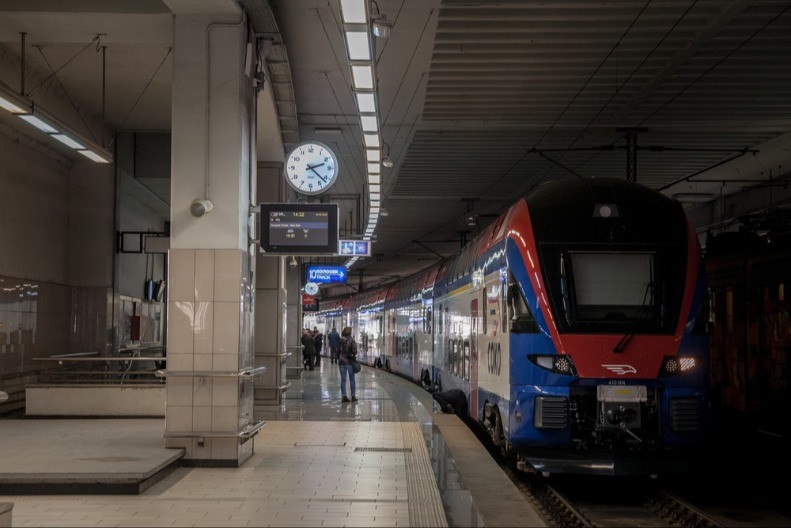
Direct passenger train service between Belgrade and Budapest is set to start on March 27, with both opposition and pro-government outlets reporting a one-way ticket price of about 25 euros and a planned travel time of roughly three hours. Coverage agrees that this makes the connection one of the more competitively priced international routes in the region, and that the line is intended to provide a modern, comfortable alternative to driving, buses, or flying between the two capitals. Both sides note that buses are typically slower and often more expensive, while flights are faster but significantly pricier, so the train is positioned as an attractive middle ground on cost and convenience.
Across the spectrum, media emphasize that the new line is meant to strengthen connectivity between Serbia and Hungary and to fit into a broader pattern of European rail travel where price, speed, and comfort are all important factors. Outlets agree that the economic calculus for travelers will depend on the number of passengers, with cars remaining competitive for groups and the train particularly appealing for solo travelers or pairs. There is shared acknowledgment that beyond the headline fare, passengers will weigh factors such as border procedures, schedule frequency, and reliability when choosing between transport modes. Both types of outlets situate the project within ongoing efforts to modernize rail infrastructure and to offer a more sustainable alternative to road and air travel.
Areas of disagreement
Economic framing and competitiveness. Opposition-aligned outlets frame the 25-euro ticket mainly in terms of household budgets, carefully comparing total travel costs by car, bus, and plane to ask whether the train is genuinely the most economical choice for different traveler profiles. Pro-government coverage, by contrast, presents the price as proof that Serbia’s rail offer is competitive at a European level, highlighting favorable comparisons with more expensive Western European routes. While opposition sources stress that the train is competitive but not always the absolute cheapest option, pro-government media tend to treat the fare as an unambiguous success and a sign of smart economic policy.
Performance and user experience. Opposition reporting focuses on practical considerations like total journey time, flexibility, and the trade-offs between comfort and cost, often underscoring that cars may still be preferable for families or groups. Pro-government outlets emphasize the modernity and comfort of the new line itself, presenting it as a flagship example of upgraded infrastructure that will offer a pleasant, efficient ride. In opposition pieces, success is conditional on how the service actually performs in real life and how it compares day-to-day with other transport modes, whereas pro-government narratives assume that the combination of price and promised comfort will naturally draw passengers.
Political significance and narrative. Opposition sources describe the service in largely technical and consumer-oriented terms, treating it as one option in a wider mobility landscape and avoiding grand claims about national transformation. Pro-government media embed the project within a broader success story of state-led modernization and international connectivity, implicitly crediting current authorities with delivering a European-standard rail link. Where opposition coverage is cautious and transactional, focusing on whether the offer truly benefits ordinary travelers, pro-government coverage is celebratory and symbolic, casting the route as evidence of Serbia’s progress and growing regional integration.
In summary, opposition coverage tends to scrutinize the train’s real-world cost-effectiveness and practical value for different types of travelers, while pro-government coverage tends to spotlight the line as a showcase of modernization, comfort, and Serbia’s rising status in European rail.
