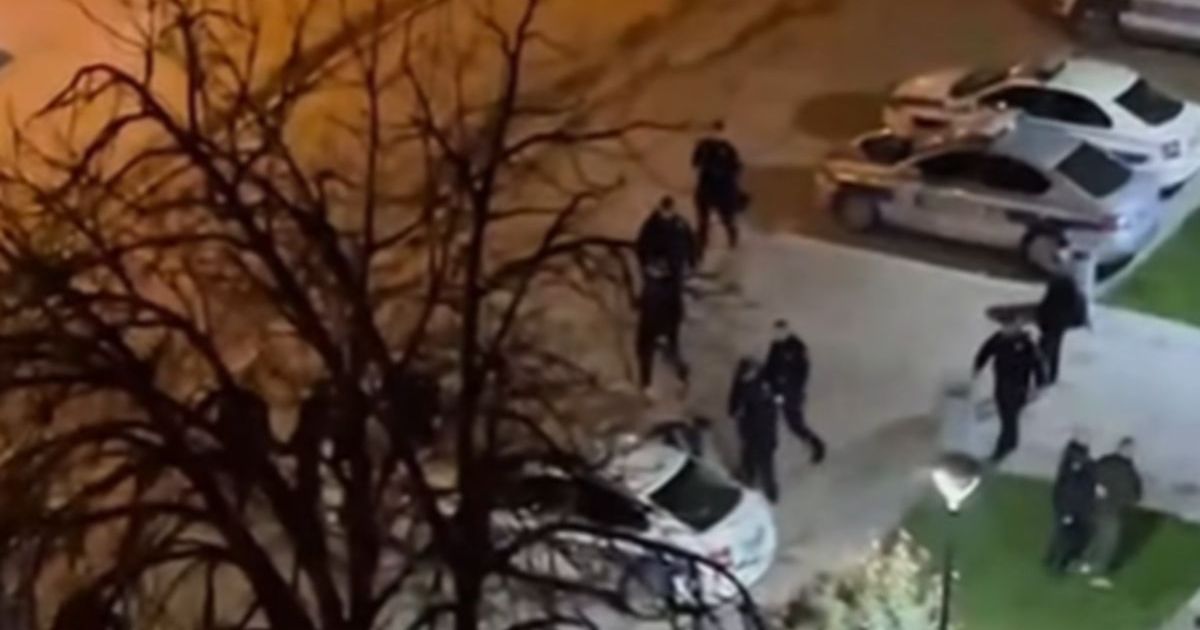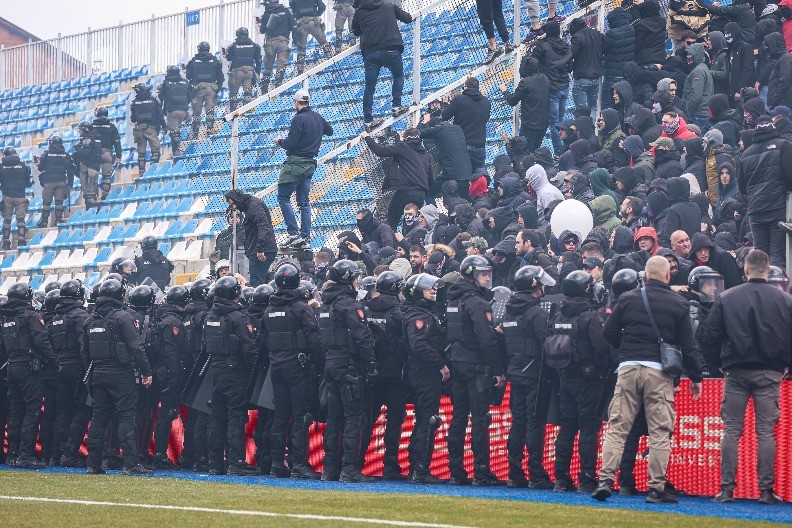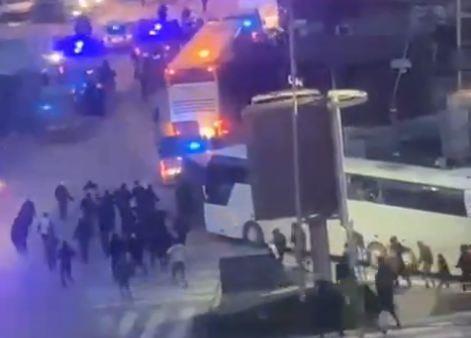



Fan violence surrounding the Serbian Cup quarter-final match between Novi Pazar and Crvena zvezda in Novi Pazar escalated on and off the pitch, with both sides of the media spectrum agreeing that there were serious clashes between rival supporters and confrontations with the police. Reports concur that the match was disrupted by flares and pyrotechnics on the stands, that there were multiple altercations among home and visiting fans, and that the unrest spilled into the streets afterward, particularly near the Police Administration building and around buses transporting Crvena zvezda supporters. Both opposition and pro-government outlets acknowledge that at least two people were arrested, that buses carrying visiting fans were attacked with stones, and that a significant police presence blocked streets and intervened to prevent further escalation.
There is broad agreement that the violence reflects ongoing issues with football hooliganism in Serbia, particularly involving organized supporter groups such as Novi Pazar’s Torcida and Crvena zvezda’s Delije, and that matches with strong regional, ethnic, or political undertones are especially volatile. Coverage from both sides places the incident within a pattern of repeated security challenges at high-risk fixtures, stressing the role of police, local authorities, and football institutions in managing crowd safety. Both perspectives note that security protocols were in place but proved insufficient to fully prevent clashes, and they refer to prior episodes of fan violence as part of a wider debate about stadium security, club responsibility, and the need for more effective preventative measures and sanctions.
Areas of disagreement
Responsibility and blame. Opposition-aligned outlets tend to emphasize systemic failures, arguing that the state and security apparatus bear primary responsibility for allowing known high-risk groups to come into close contact and for not preventing escalation despite prior warnings. They often portray the violence as a predictable outcome of long-term tolerance of hooligan structures linked to political patrons. Pro-government outlets, by contrast, focus on the immediate actions of individual fan groups, especially highlighting Torcida’s stone-throwing at buses and brawls in front of the police station, framing the unrest primarily as criminal behavior by a minority of extremists rather than a broader governance failure.
Role of the police and security forces. Opposition coverage typically questions the adequacy and professionalism of the police response, suggesting that deployment was poorly planned, that crowd separation was mishandled, and that the authorities reacted belatedly once violence was already widespread. Some opposition narratives imply that the state shows selective toughness, tolerating certain hooligan groups perceived as politically connected. Pro-government outlets underscore that a large police presence ultimately prevented more serious incidents, present interventions in and around the stadium as necessary and decisive, and highlight arrests and street blockades as evidence that the state acted swiftly and responsibly.
Political and ethnic subtext. Opposition sources are more likely to situate the clashes within a broader context of tensions between the central government and regions with significant Bosniak and Muslim populations, hinting that unresolved grievances and inflammatory nationalist rhetoric create a combustible atmosphere around such fixtures. They may interpret the incident as a symptom of deeper polarization and a lack of genuine outreach or integration. Pro-government reporting largely de-emphasizes political or ethnic dimensions, characterizing the events as a football-related security problem, and warns against politicizing hooliganism or framing it as an interethnic conflict.
Framing of reforms and accountability. Opposition outlets use the incident to argue for far-reaching reforms of how fan groups are regulated, calling for transparent investigations into links between hooligans, club managements, and political elites, and for independent oversight of policing at sports events. They often claim that previous promises of a crackdown on hooliganism were cosmetic. Pro-government media, however, stress existing legal frameworks and recent measures against violent fans, suggesting that the Novi Pazar events show the need for stricter enforcement of current rules rather than a wholesale overhaul, and tend to avoid narratives that would implicate senior officials or ruling-party figures.
In summary, opposition coverage tends to frame the Novi Pazar–Crvena zvezda violence as the predictable outcome of state negligence, politicized hooligan networks, and deeper regional and ethnic tensions, while pro-government coverage tends to frame it as an isolated outbreak of fan criminality handled decisively by the police within an already adequate institutional framework.