

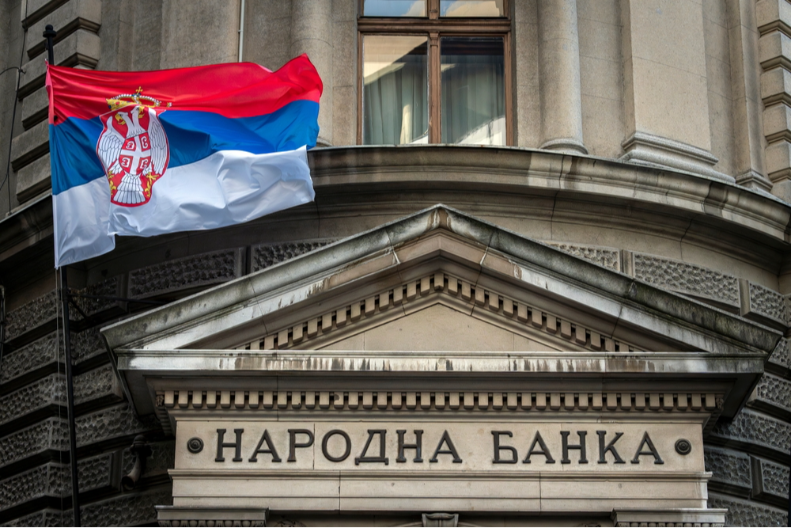
The National Bank of Serbia has received a positive assessment from the European Payments Council to join the SEPA Credit Transfer scheme and be entered into the SEPA register, with pro-government and opposition-leaning outlets agreeing that this will enable standardized euro payments between Serbia and 41 SEPA countries. Both sides report that formal inclusion in the SEPA register takes effect in mid-March (with slight variation in exact date emphasis) and that full operational readiness and actual execution of SEPA credit transfer payments is expected in 2026, with dates in spring cited for the go-live of transactions. They concur that the change will allow cheaper, faster, and more predictable euro transactions for citizens, businesses, and public sector users, and that it effectively treats cross-border euro payments as domestic SEPA payments once fully implemented.
Coverage across the spectrum agrees that SEPA is an EU-wide framework overseen by the European Payments Council that harmonizes retail euro payments among participating countries, and that Serbia’s participation is framed as part of a broader process of aligning with European financial standards. Both sides describe this step as a technical and regulatory milestone in modernizing Serbia’s payment system infrastructure and integrating it with EU mechanisms, particularly relevant for exporters, importers, diaspora remittances, and budget users. There is shared recognition that the measure comes after a period of regulatory and technical preparations within the National Bank of Serbia and the banking sector, and that SEPA participation is one of several financial-sector reforms linked to Serbia’s gradual European integration, even if it does not in itself imply EU membership.
Areas of disagreement
Significance and framing. Opposition-aligned sources tend to present Serbia’s SEPA accession as a routine technical alignment that most European countries have already achieved, downplaying it as overdue rather than historic, while pro-government outlets frame it as a major breakthrough and “new era” for the payment system. Opposition coverage is more likely to stress that benefits will be incremental and contingent on broader economic conditions, whereas pro-government media highlight the symbolic importance and immediate prestige of being listed in the SEPA register. Pro-government narratives emphasize that this is a milestone on the path to Europe, while critical outlets describe it as catching up with a standard the region largely adopted years ago.
Credit and political ownership. Opposition media generally attribute SEPA readiness to long-term institutional work by technocrats in the National Bank of Serbia and continuity with earlier regulatory harmonization, often noting that alignment with EU payment rules started under previous governments. Pro-government sources instead underline the role of the current government and central bank leadership, portraying the outcome as proof of their successful economic policy and international credibility. While opposition outlets mention the NBS as a relatively professional body insulated from day-to-day politics, pro-government narratives personalize the achievement around current officeholders and use it as validation in domestic political debates.
Economic impact and beneficiaries. Opposition-leaning coverage tends to question whether ordinary citizens will feel significant relief in fees and processing times, arguing that commercial banks may retain high charges or that savings will primarily benefit large businesses and the state. Pro-government outlets emphasize substantial gains for all users, focusing on cheaper transfers for the diaspora, exporters, and public sector entities, and often implying that banks will pass on most of the efficiency gains. Opposition voices also warn that SEPA access alone will not solve deeper issues such as low wages, high interest margins, or limited competition in banking, whereas pro-government sources spotlight SEPA as a concrete improvement in everyday financial life.
European integration narrative. Opposition media usually treat SEPA membership as a narrow sectoral integration measure that can progress even when political EU accession talks stall, cautioning against presenting it as a substitute for genuine rule-of-law reforms. Pro-government outlets more readily fold the story into a broader narrative of steady movement toward Europe, presenting SEPA participation alongside other infrastructure and investment projects as evidence that Serbia is firmly on a European trajectory. While opposition reports may briefly note that SEPA does not imply political membership or voting rights in EU institutions, pro-government reporting often glosses over these limits and accentuates the symbolic closeness to the EU.
In summary, opposition coverage tends to portray SEPA accession as a necessary but belated technical standardization whose benefits may be uneven and whose political significance is modest, while pro-government coverage tends to celebrate it as a landmark achievement of current authorities that delivers broad, tangible economic benefits and confirms Serbia’s European course.
