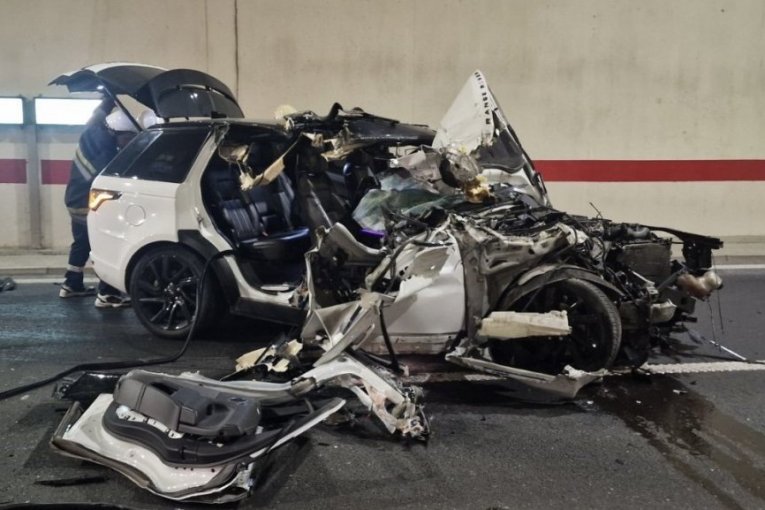

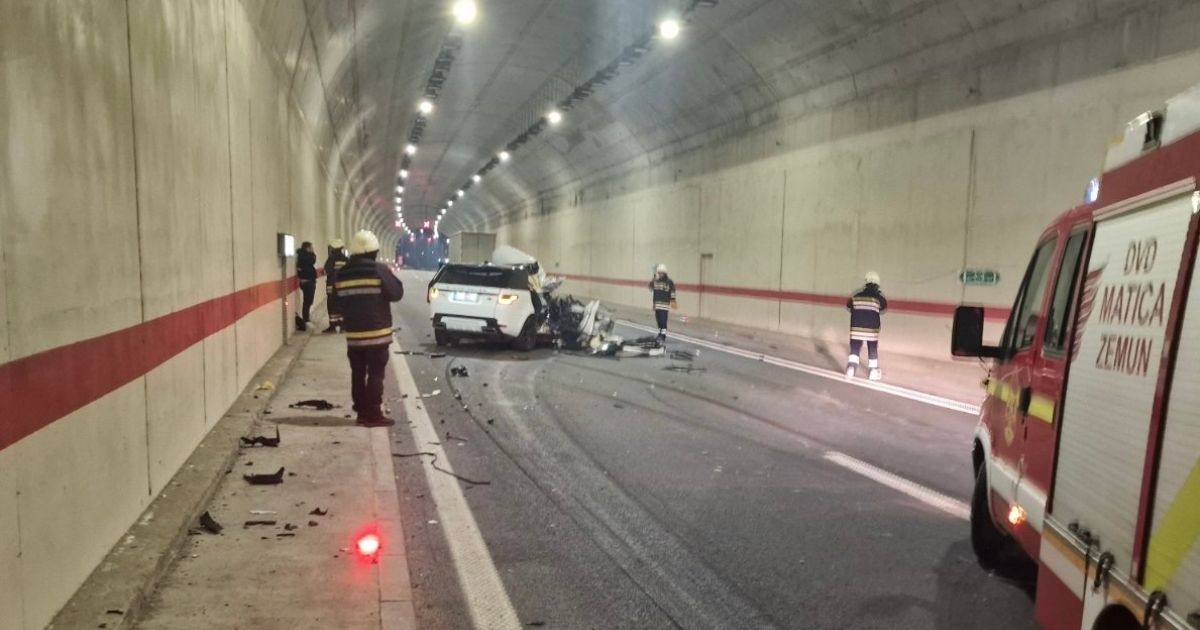
A traffic accident occurred on the Miloš Veliki highway near Trbušani, inside or by a tunnel, involving a Land Rover jeep that reportedly lost control and crashed into a wall. All sides agree that the crash led to major or at least significant traffic jams, that police and emergency services were present at the scene, and that initial reports suggested no fatal injuries, with the driver escaping serious harm despite the vehicle being heavily damaged. Coverage converges on basic details such as the location on the Miloš Veliki corridor, the involvement of a single passenger vehicle, the formation of long queues and delays, and the evening timing of the incident.
Across outlets, there is shared contextual framing that highlights broader road safety and procedural issues tied to accidents on major Serbian highways. Both opposition and pro-government media refer to standard emergency responses, including securing the scene, warning other drivers, and notifying police and medical services, and they mention that such incidents expose vulnerabilities in traffic flow management on busy routes like Miloš Veliki. There is general agreement that the event fits into a recurring pattern of highway accidents prompting renewed attention to driver behavior, tunnel safety, and the adequacy of institutional protocols, even if deeper causes and responsibilities are interpreted differently.
Areas of disagreement
Causation and responsibility. Opposition-aligned outlets tend to move beyond the simple claim that the driver “lost control,” probing whether poor road design, tunnel safety features, or inadequate maintenance on Miloš Veliki contributed to the crash, and hinting at systemic negligence by state or concessionary authorities. Pro-government outlets, by contrast, typically stick to the formulaic explanation that the driver lost control and present it as an isolated incident, avoiding speculation about infrastructure faults or institutional accountability. Opposition reports may cite past accidents and expert critics to argue that design flaws make loss of control more likely, while pro-government coverage frames it as a matter of individual driving conditions and fate.
Institutional performance. Opposition media often use the accident to question the efficiency of police, highway maintenance services, and emergency responders, focusing on how long it took to clear the scene, restore normal traffic, and provide transparent information about the event. Pro-government outlets emphasize that the police were quickly on the scene, that traffic was regulated, and that the state apparatus functioned properly under pressure. While opposition reports portray the incident as another example of overstretched or poorly coordinated institutions on a flagship highway, pro-government stories highlight the responsiveness and professionalism of services, sometimes adding practical guidance for citizens on what to do in such situations.
Infrastructure and project framing. Opposition coverage frequently situates the accident within a broader critique of the Miloš Veliki project, arguing that rapid construction, alleged corruption, and insufficient safety audits have produced a highway vulnerable to dangerous incidents and bottlenecks in tunnels and junctions. Pro-government coverage treats Miloš Veliki as a symbol of successful national infrastructure development and avoids associating the crash with any structural shortcomings of the project, presenting it instead as an unfortunate but statistically expectable event on a busy motorway. The opposition tends to connect this accident to a pattern of incidents on new corridors to question official narratives of world-class standards, whereas pro-government media insulate the project’s image by separating this crash from broader policy debates.
Political and media tone. Opposition outlets often adopt a critical and sometimes accusatory tone, using the accident and the subsequent traffic jams to underline the everyday consequences of governance failures and to challenge official safety statistics and public relations messaging. Pro-government outlets adopt a more neutral or sensational style, focusing on dramatic imagery of the wrecked jeep and on traffic conditions, while embedding the story in advice-oriented content about how drivers should behave in accidents. Where opposition media see the event as a window into deeper structural and political problems, pro-government media treat it more as a news incident and a vehicle for public-service instructions, steering clear of overt political implications.
In summary, opposition coverage tends to frame the Miloš Veliki accident and ensuing traffic jams as evidence of deeper infrastructure and governance failings that go beyond a single driver’s error, while pro-government coverage tends to depict it as an isolated mishap on an otherwise successful highway project, highlighting prompt institutional response and practical driver guidance rather than systemic critique.