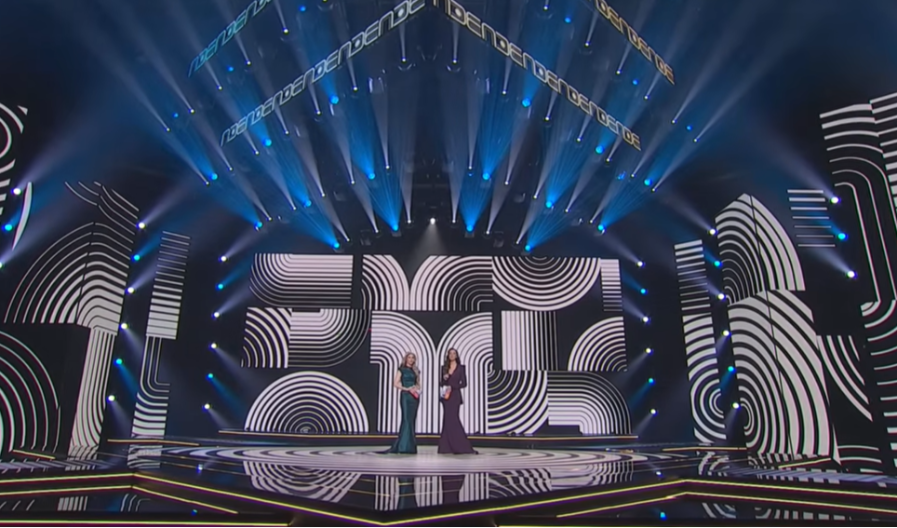


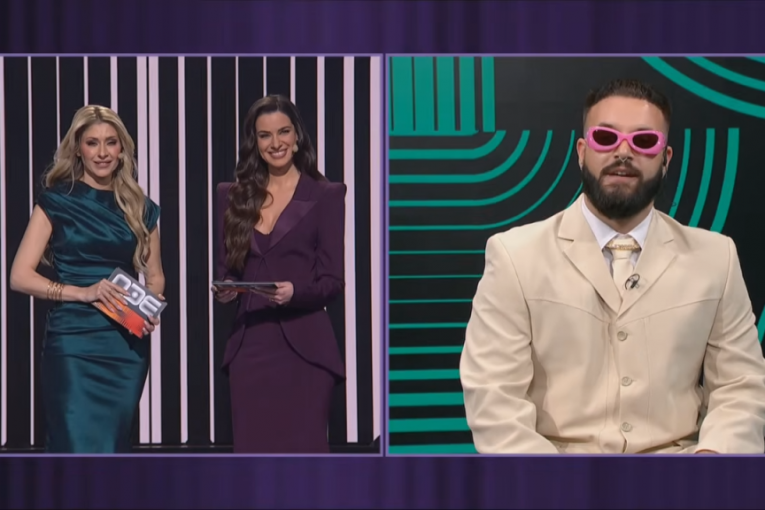
The latest coverage agrees that Radio Television of Serbia (RTS) has revealed the members of the expert jury for Pesma za Evroviziju 2026, which will select Serbia’s representative for the Eurovision Song Contest. The jury is composed of five music industry professionals: singer Zoe Kida, arranger and composer Alek Aleksov, singer Nina Radojičić, rapper Igor Panić Nući, and composer Aleksandra Kovač, who serves as president of the jury. Reports concur that the competitive portion of PZE 2026 has ended and that fourteen finalists are in contention, with the winner to be chosen in a live final broadcast. All sides also agree that the result will be determined by a 50/50 combination of public televote and the expert jury’s votes, and that each jury member receives a fee, reported at 30,000 dinars, paid by RTS for their participation.
Across outlets, there is a shared framing of PZE 2026 as Serbia’s official national selection format for Eurovision, organized annually by RTS as the national public broadcaster. The jury members are consistently presented as established figures in the Serbian music scene, spanning roles such as performers, composers, arrangers, and producers, with particular emphasis on Aleksandra Kovač’s leadership position and prior industry credentials. Coverage from both sides situates the expert jury within Eurovision’s broader tradition of combining expert assessments with popular voting to balance musical professionalism and audience preference. There is also common acknowledgment that the competition’s structure, with semi-finals leading into a televised final and the dual voting system, is intended to ensure both transparency and a perception of artistic quality in the selection process.
Areas of disagreement
Legitimacy of the jury. Opposition-aligned sources portray the jury’s composition as politically tinged, suggesting that RTS chose figures who are either safely apolitical in public or broadly acceptable to the current cultural establishment, and they question whether the panel reflects the full spectrum of Serbia’s contemporary music scene. Pro-government outlets, by contrast, emphasize the professional credentials of each juror, stressing their experience as performers, composers, and arrangers, and present the jury as a balanced mix of genres and generations. While critical outlets frame the presence of a mainstream rapper as a calculated attempt to appear modern, loyalist coverage highlights the same name as proof that the format embraces current trends and younger audiences.
Role of RTS and transparency. Opposition coverage characterizes RTS as an institution under strong government influence and uses the jury announcement to raise broader concerns about how transparent the selection and voting procedures really are, hinting that a 50/50 jury–public split can be used to override an unfavorable popular outcome. Pro-government media treat RTS as a neutral cultural organizer fulfilling its public-service mandate, framing the detailed presentation of the jury members and fee amounts as evidence that the broadcaster is being open about how the process works. Where critics see the jury as a potential tool for backstage control, supportive outlets describe it as a safeguard that prevents televote volatility from undermining artistic quality and Serbia’s chances at Eurovision.
Framing of payment and public money. Opposition-leaning sources focus on the reported 30,000 dinars per juror as a symbol of how public funds are used, often contrasting juror fees with broader economic hardships and questioning why RTS spends on what they see as image-building entertainment for the ruling establishment. Pro-government outlets mention the same fee primarily as neutral information, presenting it as a modest and standard honorarium for professionals working on a high-profile national project. Critical coverage tends to connect the payments to a narrative of partisan patronage within public institutions, whereas supportive coverage decouples the money from politics and emphasizes the need to fairly compensate experts.
Public reaction and political subtext. Opposition-aligned media underscore segments of the audience who are “stunned” or skeptical about certain jury members, interpreting surprise reactions as distrust in RTS’s choices and as a proxy for broader dissatisfaction with the political climate. Pro-government outlets use the language of surprise mainly as entertainment value, highlighting that a rapper’s inclusion is unexpected but fun, and presenting social media buzz as excitement rather than discontent. In critical narratives, the jury announcement is another stage on which cultural control and soft propaganda play out, while loyalist narratives keep the story firmly in the realm of show-business, insisting that the only stakes are musical quality and Eurovision success.
In summary, opposition coverage tends to read the jury announcement as part of a wider pattern of politicized control over RTS, budget usage, and cultural representation, while pro-government coverage tends to highlight the jurors’ professionalism, the show’s entertainment value, and continuity with standard Eurovision selection practices.
Story coverage