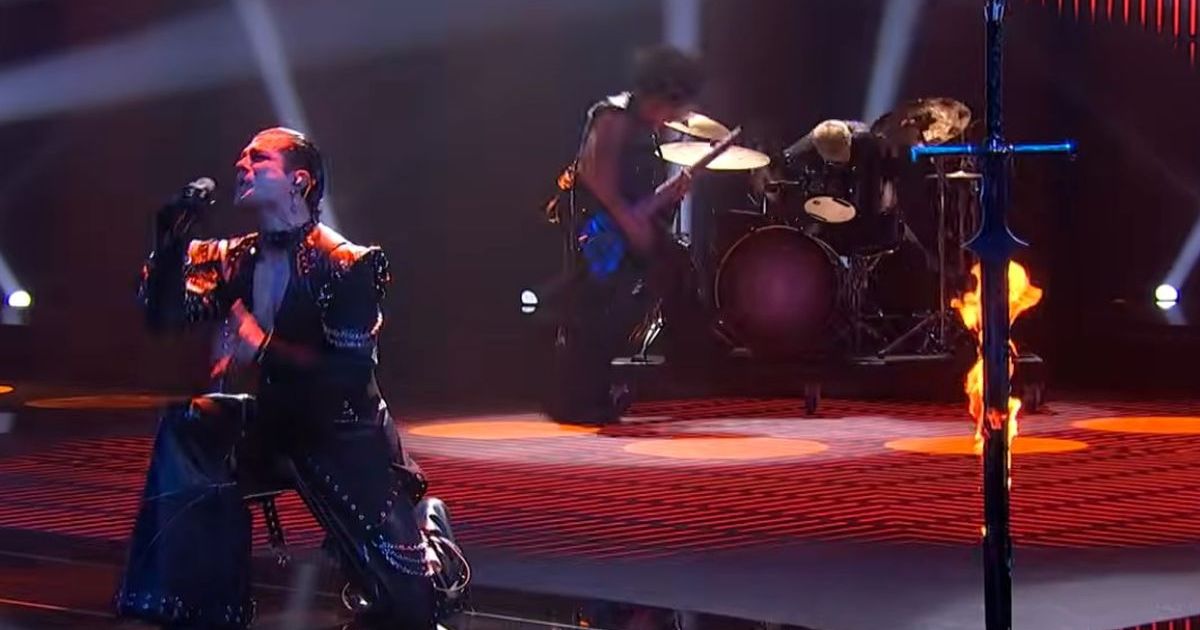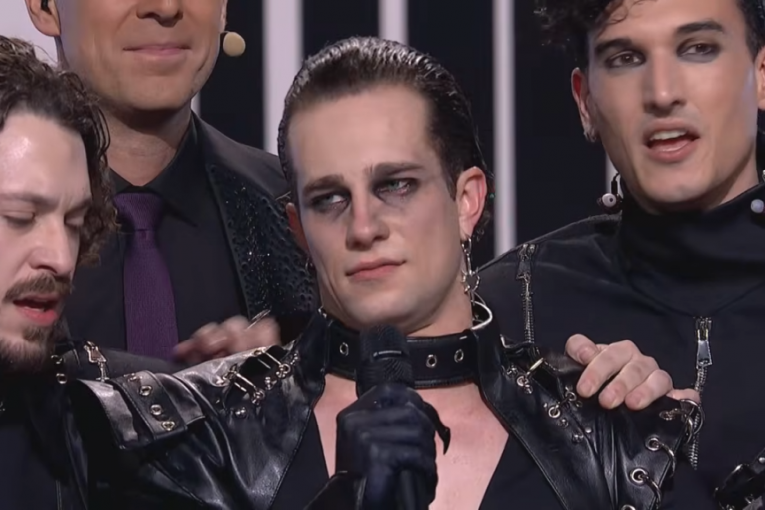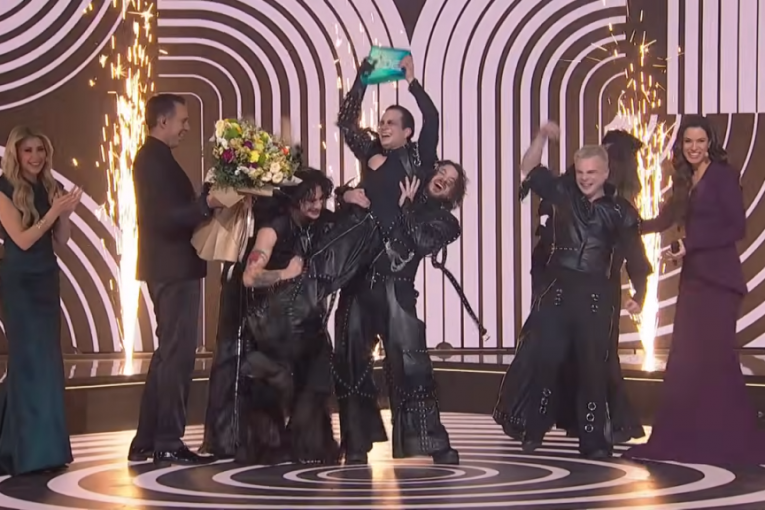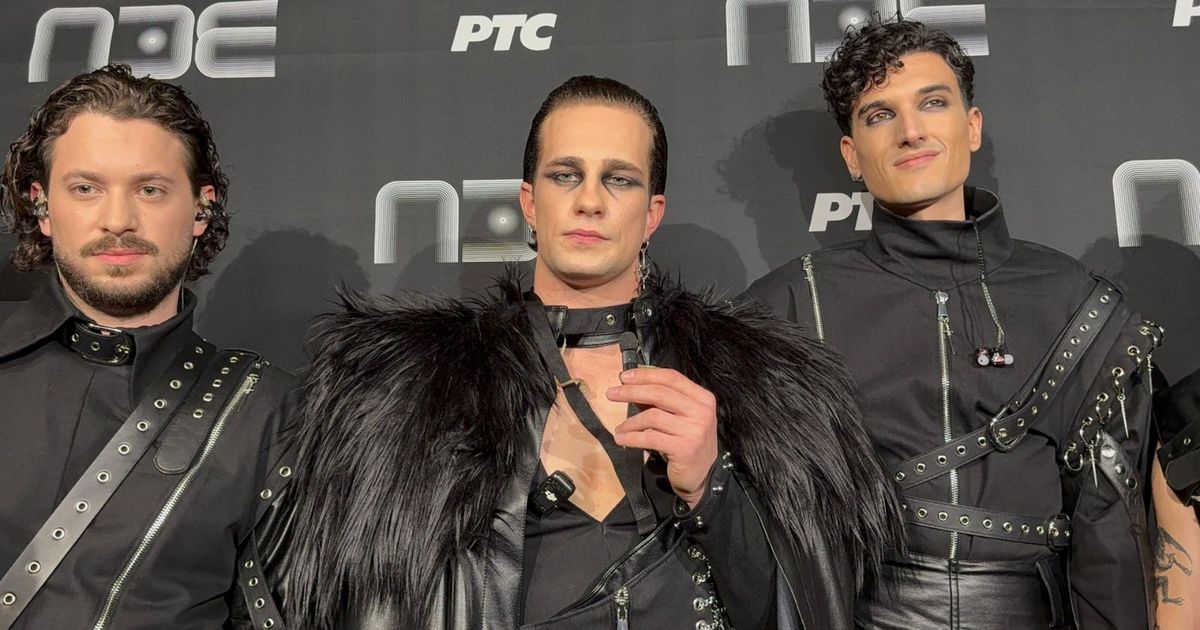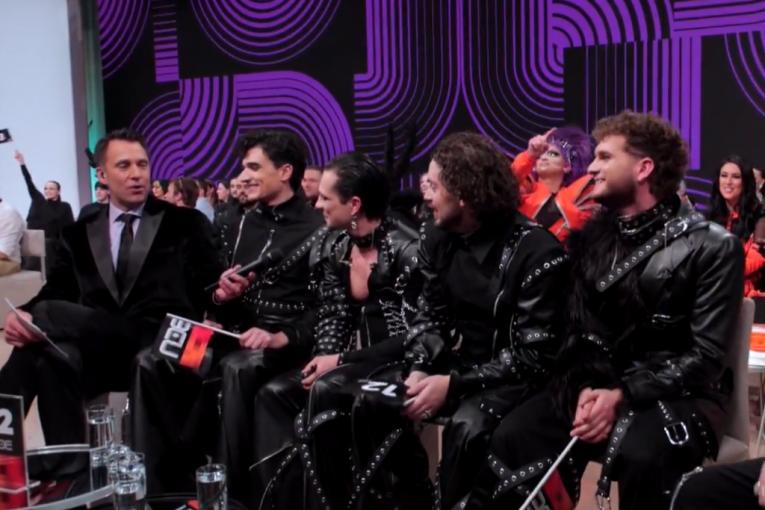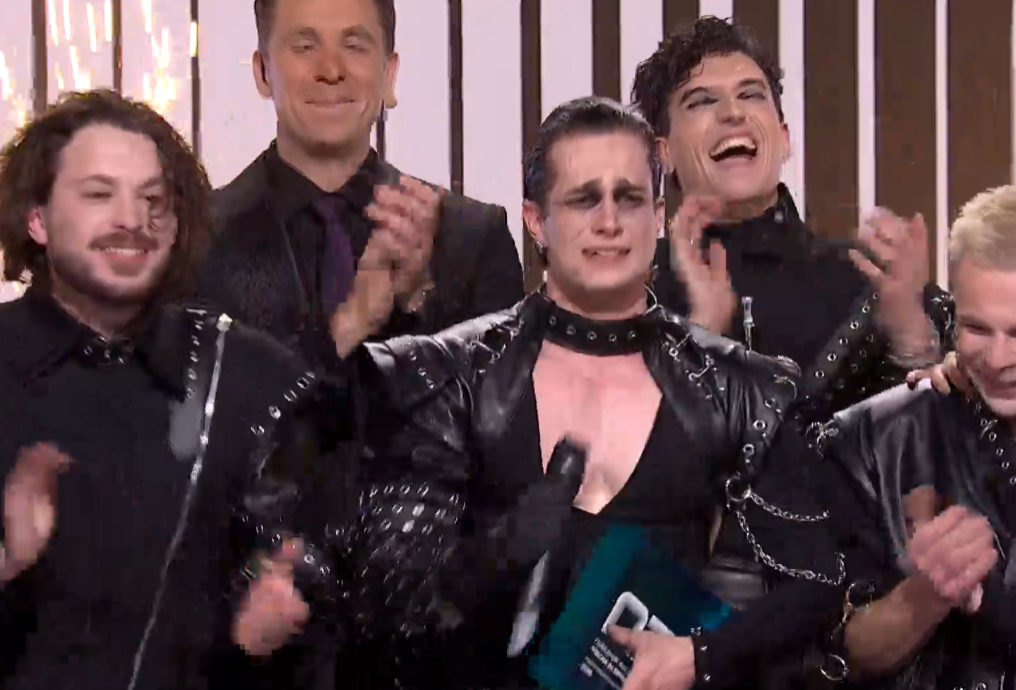




The band Lavina from Niš has been selected as Serbia’s representative for the 70th Eurovision Song Contest after winning the national final Pesma za Evroviziju 2026 with their song “Kraj mene” / “Kraj sebe,” in a competition featuring fourteen finalists and a voting system split between a professional jury and public SMS votes. Both opposition and pro-government outlets agree that Lavina dominated throughout the contest, earning strong jury support and the highest number of public votes (reported as 29,759 SMS messages), that the result was announced in a live-broadcast final, and that the visibly emotional band will perform on the big Eurovision stage in Vienna after a performance that drew intense viewer attention and social-media buzz.
Coverage across both camps also converges on Lavina’s profile as a young, Niš-based metal/rock band formed around 2020, with a debut album “Odyssey” released in 2022, and on the significance of a guitar-driven, metal-influenced sound returning to Serbia’s Eurovision lineup, with frequent comparisons to Scandinavian metal and to bands like Måneskin. Both sides describe frontman Luka Aranđelović as a charismatic figure whose distinctive look and stage presence, as well as his work as a music teacher, have intrigued the public, and they highlight how online reactions, viral clips, and collaborations such as the duet version of the winning song with Zorja have amplified Lavina’s early momentum ahead of Vienna.
Areas of disagreement
Framing of the victory. Opposition outlets frame Lavina’s win primarily as a musical and cultural moment, stressing the alignment of jury and public taste, the early sense that the band was a “clear favorite,” and the artistic legitimacy of a rock/metal act breaking through on a mass platform. Pro-government outlets, while acknowledging the public and jury support, tend to frame the result more as a celebratory national event, focusing on emotional reactions, sensational headlines about “triumph,” and the excitement of Serbia having a new representative, with less detailed exploration of how or why the musical style prevailed.
Cultural and scene impact. Opposition-aligned coverage emphasizes Lavina’s stated ambition to revitalize Serbia’s metal and alternative scene, amplifying Luka’s messages to young musicians about practice, authenticity, and love of music, and casting the win as a boost for non-mainstream genres. Pro-government coverage largely sidelines this scene-building narrative, concentrating instead on human-interest angles about the band members’ backgrounds, small-town origins, and personal relationships, framing Lavina more as relatable media personalities than as standard-bearers for an alternative subculture.
Treatment of rivals and controversy. Opposition outlets briefly note the breadth of styles at Pesma za Evroviziju and the popularity of collaborations like the Lavina–Zorja duet, implicitly portraying the outcome as broadly accepted within the music community. Pro-government media, by contrast, dwell on moments of drama such as Zejna Murkić’s disappointed reaction to receiving few public points, highlighting bookmaker expectations and social-media chatter to inject a sense of rivalry and spectacle around the result, even while affirming that Lavina legitimately topped both jury and audience.
Narrative focus and political subtext. Opposition coverage subtly situates the story within a longer-running narrative about underfunded or overlooked non-mainstream music scenes in Serbia, using Lavina’s success to hint at structural issues in cultural policy and the dominance of commercial pop. Pro-government outlets largely strip the story of any policy or systemic subtext, favoring upbeat reports, glossy photo galleries, and behind-the-scenes celebrations that present Pesma za Evroviziju as a smoothly functioning national spectacle, implicitly reinforcing trust in public broadcasters and cultural institutions.
In summary, opposition coverage tends to treat Lavina’s win as a culturally meaningful breakthrough for alternative music and as evidence of genuine alignment between artistic merit and public taste, while pro-government coverage tends to treat the victory as a feel-good national entertainment story centered on emotion, celebrity, and spectacle around Serbia’s new Eurovision representatives.
Story coverage