

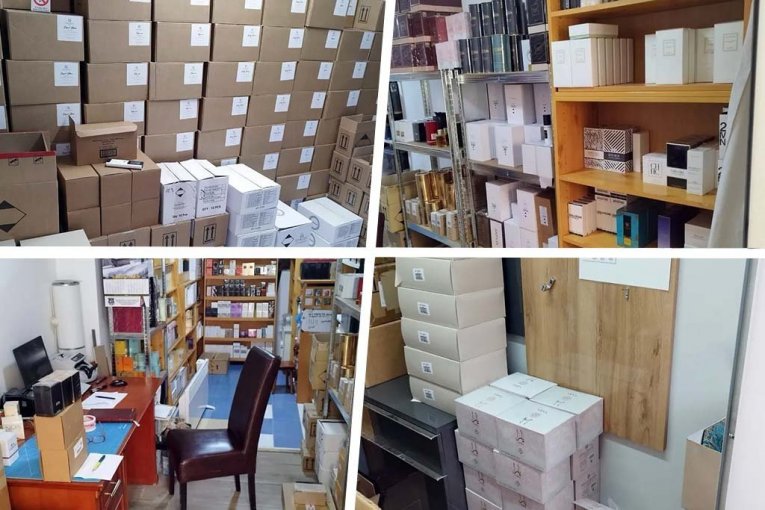
Police reports cited across the spectrum state that officers in Subotica seized around 800 branded perfume bottles from a man identified by initials (R. Č.), with an estimated black-market value of roughly 5.85 million dinars. The seizure took place during an operation targeting illegal trade and storage of goods, and was accompanied by a criminal complaint for unauthorized commercial activity; pro-government outlets further note that a related case in Niš involved another suspect (N. I.) detained over similar illegal perfume trading that allegedly caused financial damage to the state.
Both sides, where they report on the incident, agree that the Subotica operation fits within broader efforts by Serbian police and market inspectors to curb the gray economy and counterfeit-branded products that evade tax and customs duties. They also concur that such operations are formally framed as protecting legitimate businesses, state revenues, and consumer safety, and that Serbian institutions frequently highlight these seizures as part of ongoing enforcement campaigns against illicit trade.
Areas of disagreement
Framing of the operation. Opposition-aligned sources, when they cover similar raids, tend to frame them as routine police work with limited structural impact on the deeper problem of corruption and the gray economy, often downplaying spectacle and numbers. Pro-government outlets, by contrast, present the Subotica perfume seizure as a significant success story, emphasizing the high valuation, number of items seized, and swift filing of a criminal complaint as proof that state institutions are effective and vigilant.
Political significance. Opposition media typically question or minimize the political relevance of such seizures, portraying them as isolated street-level enforcement that does not address alleged ties between larger smuggling networks and political elites. Pro-government reporting on the Subotica case instead treats it as politically meaningful, weaving it into a narrative that the sitting government is systematically cracking down on illegal trade, thereby reinforcing claims that institutions function independently and in the public interest.
Scale and systemic issues. Opposition coverage generally situates similar seizures within a broader critique that authorities target small or mid-level offenders while leaving systemic smuggling channels and high-level organizers untouched. Pro-government outlets use the Subotica seizure and the linked Niš case to argue that the state is tackling the gray economy at multiple levels, stressing the monetary damage prevented and the deterrent signal sent to others involved in counterfeit or untaxed goods.
Use of publicity and imagery. Opposition-aligned media often criticize what they describe as "show operations," suggesting that heavily publicized images of seized goods are used to distract from unresolved scandals or governance failures. Pro-government outlets lean into the visual dimension, publishing photos of the confiscated perfumes and detailed counts of items to dramatize the effectiveness of the police and justify continued trust in official anti-smuggling campaigns.
In summary, opposition coverage tends to treat such perfume seizures as routine, small-scale enforcement that risks being used for political optics and leaves deeper structural problems unaddressed, while pro-government coverage tends to showcase the Subotica operation as a high-impact institutional success that demonstrates the government's commitment and capacity to combat the gray economy and protect state revenues.