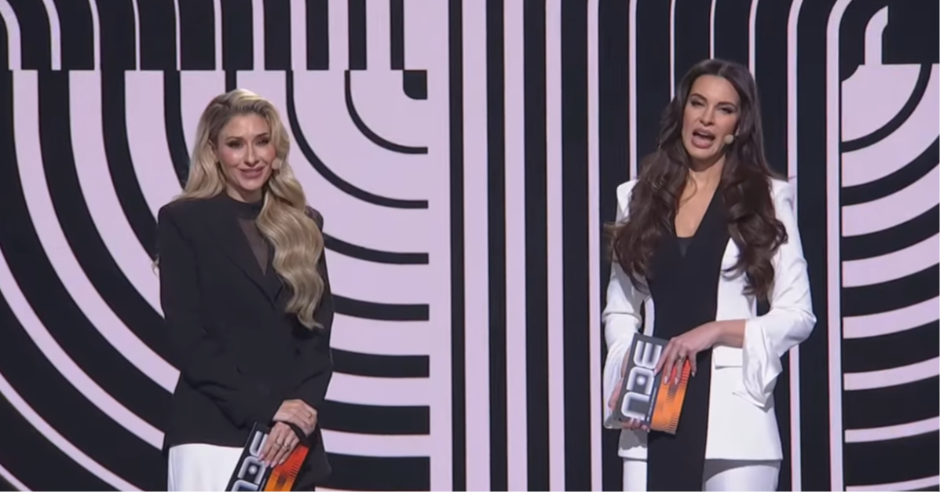


Seven contestants have advanced from the first semi-final of Pesma za Evroviziju 2026, a national selection show broadcast on RTS to determine Serbia’s representative for the Eurovision Song Contest. The semi-final featured 12 competing acts, out of which seven were selected to move on to the final round, which pro-government outlets say will be held on February 28 (a Saturday in their framing) as the grand finale where the eventual Serbian Eurovision act will be chosen.
Across coverage, there is agreement that Pesma za Evroviziju (PZE) serves as Serbia’s formal institutional mechanism for choosing a Eurovision representative, organized and aired by the public broadcaster RTS. Both sides generally accept the format of multiple semi-finals culminating in a final, with a limited number of qualifiers from each show, and they link the event to Serbia’s broader cultural presence in Europe through Eurovision participation, without disputing the basic rules, timing structure, or the role of RTS as organizer.
Areas of disagreement
Framing of the competition. Pro-government outlets present the first semi-final as a celebratory entertainment event, emphasizing the excitement of seven finalists entering the "final race" and highlighting one performer as the biggest favorite to win. Opposition outlets, by contrast, tend to situate the show within a more politicized media landscape, downplaying the spectacle and suggesting that the framing of favorites can reflect broader editorial agendas rather than purely musical merit.
Portrayal of RTS and institutions. Pro-government coverage describes RTS neutrally or positively as the platform hosting a prestigious national contest, reinforcing its role as a legitimate organizer of PZE 2026. Opposition sources are more inclined to question RTS’s neutrality, implying that institutional control over such high-profile broadcasts mirrors political influence in the public media sphere, and they may hint that production choices and narrative emphasis favor government-aligned interests.
Transparency and fairness. Pro-government reports largely treat the qualification of seven contestants as a straightforward result of the established rules, focusing on the outcome and public excitement rather than on voting mechanics or jury composition. Opposition-leaning commentary is more likely to raise questions about transparency, including how votes are counted, whether juries are politically or commercially influenced, and whether labeling certain acts as favorites could pre-shape audience perceptions.
Cultural and political significance. Pro-government narratives stress national pride and the opportunity for Serbia to shine at Eurovision, presenting PZE 2026 as a unifying cultural event above politics. Opposition coverage more often reads the same event as part of a broader soft-power strategy, arguing that high-visibility shows on RTS help the ruling structures project normalcy and modernity, and they may treat the contest as another arena where political symbolism and cultural diplomacy intersect.
In summary, opposition coverage tends to treat the first PZE 2026 semi-final as a politicized media product whose framing, institutional backdrop, and narratives of favorites reflect broader power dynamics, while pro-government coverage tends to present it as a festive, straightforward cultural competition run by RTS, focusing on entertainment value, national pride, and the seven qualifiers’ bid to represent Serbia at Eurovision.