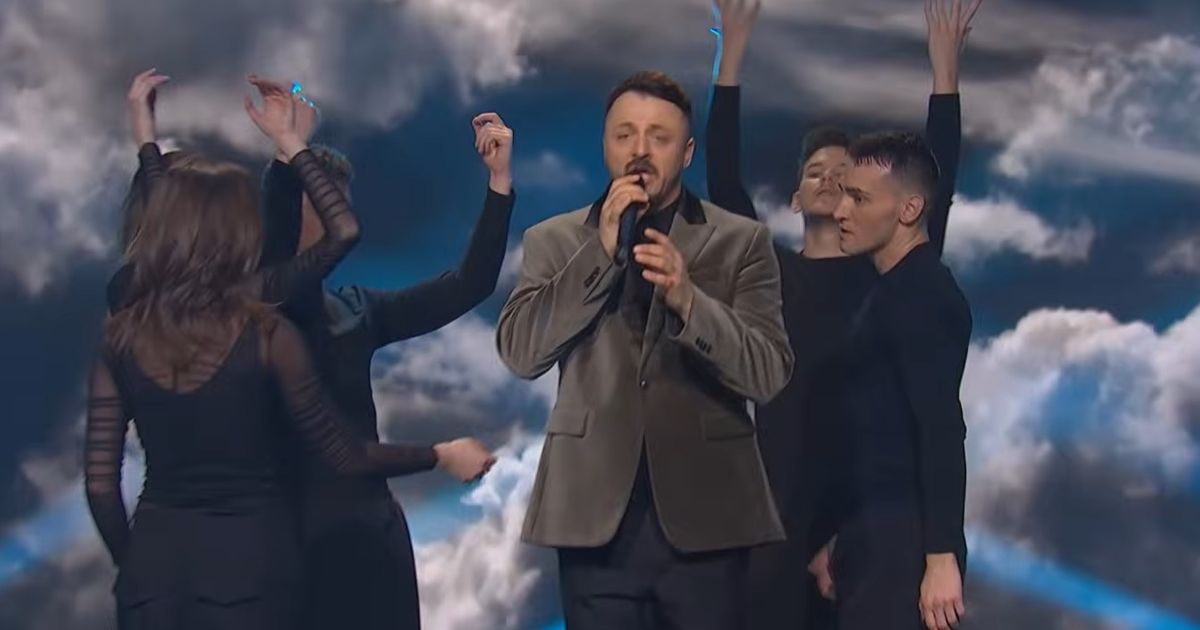

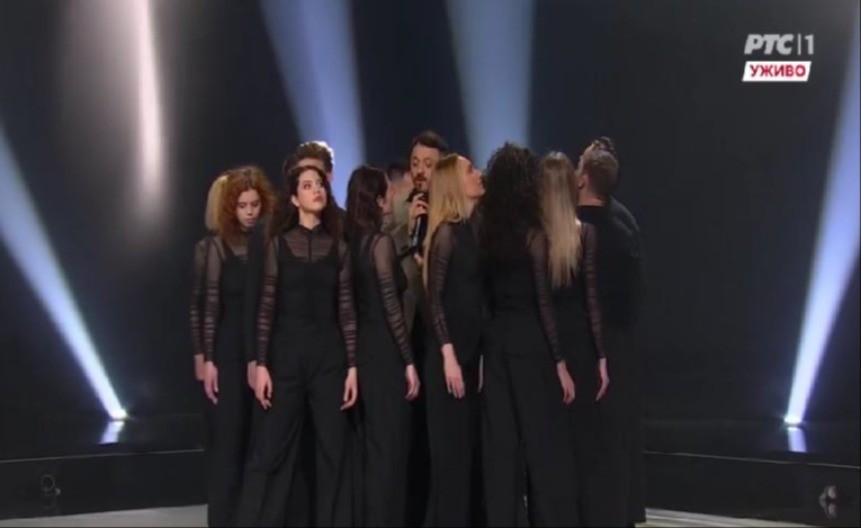
Singer Daniel Kajmakoski, recently the victim of a kidnapping in Belgrade, has made his first appearance on camera since the incident by performing at the RTS “Pesma za Evroviziju” (PZE) 2026 semi-final. Across political lines, coverage agrees that he sang his 2018 song “Nobody but You,” accompanied by a dance group, and that the kidnapping involved him being found tied up in a car after a police pursuit and crash. Both sides acknowledge that the attackers held him at gunpoint and demanded a ransom, that he was ultimately found unharmed, and that police are still searching for at least two suspects involved in the abduction.
There is also shared acknowledgment that the case remains under active investigation by Serbian police and that Kajmakoski’s quick return to the stage has drawn strong public attention because of the dramatic circumstances of his kidnapping. Media from both camps agree on the basic institutional actors—the police, prosecutors, and public broadcaster RTS—and on the sequence of events: the abduction in Belgrade, the ransom demand, the police chase ending in a crash, and the recovery of Kajmakoski in the vehicle. They similarly frame the PZE performance as a symbolic milestone in his personal recovery and as part of RTS’s broader Eurovision selection programming, without disputing these core contextual elements.
Areas of disagreement
Framing of the event. Opposition-aligned outlets tend to frame Kajmakoski’s PZE appearance, when they cover it, as a dramatic human-interest episode that also raises questions about how quickly traumatic incidents are turned into spectacle on public television, while pro-government outlets present it primarily as an uplifting comeback moment that showcases resilience and professionalism. Opposition coverage is more likely to suggest that the timing and prominence of the performance could be used to distract from unresolved aspects of the kidnapping investigation, whereas pro-government media emphasize entertainment value and national pride, downplaying any political subtext. Both mention the same performance details, but they diverge on whether the event is primarily cultural or implicitly political.
Police effectiveness and security. Opposition sources, where they comment, are inclined to stress that the ongoing search for at least two kidnappers shows deficiencies in public security and investigative capacity, arguing that a high-profile case remaining partially unresolved undercuts official narratives of safety. Pro-government outlets, by contrast, highlight that police rapidly pursued the kidnappers, forced a stop that led to a crash, and rescued Kajmakoski unharmed, portraying this as evidence of efficient law enforcement. While both agree that suspects are still at large, opposition reporting treats this as a worrying failure, whereas pro-government reporting treats the successful rescue as the decisive benchmark of police performance.
Use of public broadcaster RTS. Opposition-aligned commentary tends to question RTS’s decision to foreground Kajmakoski’s ordeal in prime-time programming, implying that the public broadcaster is leveraging a sensational private tragedy for ratings and for soft-image benefits to the authorities. Pro-government media, however, frame RTS as simply offering a supportive platform for an artist’s return and as fulfilling its cultural role by continuing with PZE and featuring popular performers. Where opposition voices see possible instrumentalization of the incident by a state-aligned broadcaster, pro-government coverage presents RTS’s role as neutral, professional, and apolitical.
In summary, opposition coverage tends to treat the performance as a potentially politicized spectacle that raises concerns about security, media ethics, and state image, while pro-government coverage tends to depict it as an inspiring, apolitical comeback that underscores competent policing and the positive role of RTS and national entertainment formats.