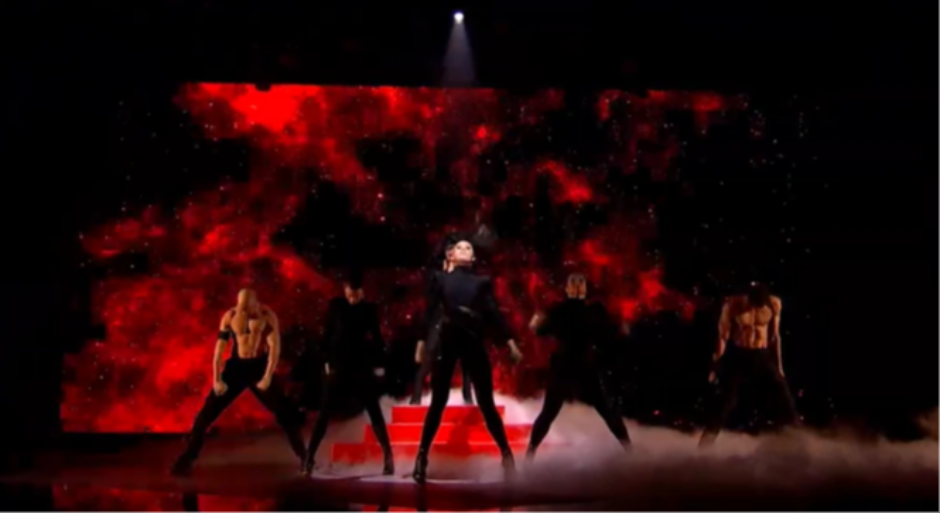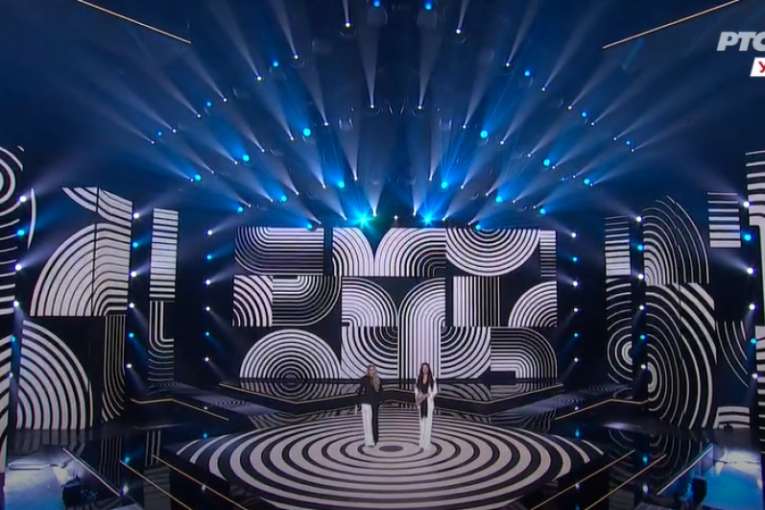




The first semi-final of "Pesma za Evroviziju 2026" at RTS was marred by multiple technical problems, most notably the collapse of a stage crane in the RTS studio before the live broadcast, which caused several hours of delay. Both types of outlets describe how the crane incident occurred during preparations or rehearsal rather than during the televised show itself, stress that there were no injuries, and agree that the production team managed to restart the competition the same evening with a tightened schedule. They also concur that singer Mirna Radulović, scheduled as the opening act with the song "Omaja," suffered significant technical disruptions in sound during her first performance and was granted a full repeat of her act in order to preserve the regularity and fairness of the contest. Across the coverage, the format of PZE 2026 is presented consistently: 24 songs split across two semi-finals, with seven qualifiers from each going to a final where the Eurovision representative is chosen through a 50/50 combination of jury and public voting.
Shared context in both opposition and pro-government narratives highlights RTS as the central organizing institution responsible for staging a complex, large-scale live music event that aspires to Eurovision-level production values. Outlets from both sides mention the ambitious stage design, references to tourism and the 70th anniversary of Eurovision, and the diversity of musical genres and performers, framing the festival as a major national entertainment project rather than a minor show. They also agree that technical glitches, including crane and sound issues, are an inherent risk in such technically demanding live productions and that contingency measures — such as performance repeats — are part of standard practice to maintain fairness to contestants. The shared framing underscores that, despite mishaps, the competition’s structure, voting system, and overall aim of selecting Serbia’s Eurovision entry remain legitimate and broadly accepted by all media camps.
Areas of disagreement
Responsibility and blame. Opposition-aligned sources typically frame the crane collapse and subsequent sound failures as clear evidence of systemic incompetence and mismanagement at RTS, implicitly or explicitly tying these lapses to the current government’s control over public broadcasting. Pro-government outlets, by contrast, emphasize that no one was hurt and portray the incident as an unfortunate but routine technical mishap that can occur in any large-scale live production, downplaying any suggestion of deeper institutional failure. While opposition coverage stresses preventability and accountability, pro-government pieces highlight the quick response of technicians and hosts and cast the recovery as proof of professionalism rather than negligence.
Scale and severity of the incident. Opposition media tend to describe the crane collapse and subsequent delays as a major scandal that deeply disrupted the integrity of the semi-final, foregrounding social media outrage, the four-hour delay, and the atmosphere of chaos. Pro-government reporting focuses on normalization, stressing that the problem was resolved before the live broadcast, noting that the crane fell during rehearsal, and even adding light, human-interest angles such as performers’ comments and the hosts’ outfits to dilute the sense of crisis. This leads opposition outlets to present the evening as almost derailed by cascading failures, whereas pro-government outlets frame it as a stressful but ultimately controlled hiccup in an otherwise successful show.
Fairness of the competition. Opposition narratives are more likely to question whether repeated performances and technical distortions may have advantaged or disadvantaged specific contestants, sometimes connecting these doubts to longer-running suspicions about bias, juries, and RTS’s internal politics. Pro-government coverage instead underscores that allowing Mirna Radulović to repeat her performance was a necessary corrective measure designed to uphold fairness and regularity, likening such decisions to standard Eurovision practices and insisting on trust in the jury and televote. As a result, opposition outlets lean toward portraying the glitches as casting a shadow over the legitimacy of the results, while pro-government media present the very same corrective steps as proof that the system is functioning properly.
Institutional image of RTS. Opposition-leaning coverage often uses the crane collapse and sound problems as a springboard to criticize RTS more broadly, portraying the broadcaster as politicized, underfunded in the wrong areas, and symbolically reflective of wider state dysfunction. Pro-government outlets instead spotlight RTS editors and hosts as capable professionals, emphasizing teamwork, creative vision, and the ambition to deliver a world-class show linking Serbia’s image, tourism, and Eurovision heritage, thereby reinforcing RTS as a pillar institution. Where opposition media may argue the incident shows decay and capture of public media, pro-government media portray it as a stress test passed by an institution striving for excellence under demanding conditions.
In summary, opposition coverage tends to treat the crane collapse and technical problems as symptomatic of deeper institutional and political failings at RTS and in state management, while pro-government coverage tends to frame them as manageable technical glitches in a complex production, using the rapid recovery and corrective measures to reinforce confidence in the broadcaster and the competition.
Story coverage