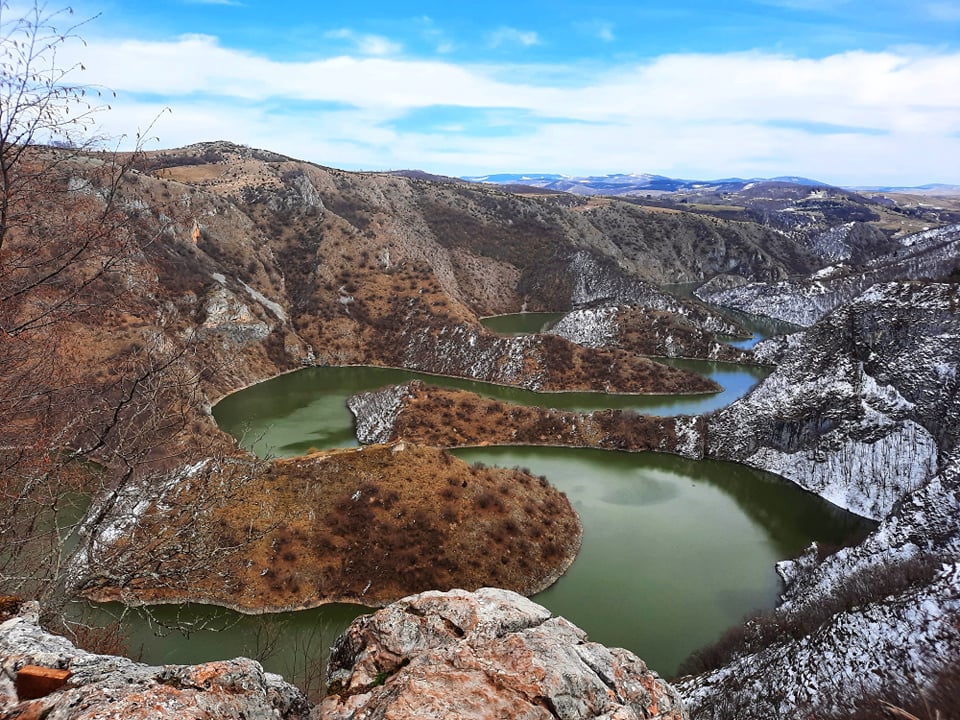
Zlatar Mountain is presented across the media spectrum as an increasingly popular tourist destination in western Serbia, showcased prominently at a recent tourism fair where its stand drew strong interest from domestic and foreign visitors. Both opposition and pro-government outlets agree that Zlatar is being promoted as a less commercial, more “hidden gem” alternative to better-known resorts like Kopaonik and Zlatibor, emphasizing its preserved nature, opportunities for active holidays such as hiking and adventure tourism, rich local gastronomy, and cultural-historical sites including monasteries and churches. Coverage converges on the expectation of a very good upcoming summer season, with tourism officials and local stakeholders highlighting rising visitor numbers and the appeal of events such as Zlatarfest as evidence that the mountain is consolidating its position on Serbia’s tourism map.
Reporting from both sides also stresses institutional involvement and broader policy context, noting the role of local tourism organizations in organizing Zlatar’s appearance at the fair and coordinating promotional activities. There is shared framing of the tourism fair as part of ongoing efforts to decentralize tourism flows away from a few flagship destinations and toward underutilized regions, with Zlatar cited as a case where natural assets and cultural heritage can support sustainable development. Both perspectives acknowledge that improved promotion, infrastructure, and event-based tourism are seen by authorities and local actors as key levers for regional economic growth, especially in rural and mountainous areas seeking to retain population and generate year-round income.
Areas of disagreement
Framing of success and credit. Pro-government outlets describe Zlatar’s rising popularity as a clear success story attributable to coordinated efforts by state and local tourism authorities, often crediting strategic promotion and fair appearances as the main drivers. Opposition-leaning coverage, while recognizing the growth, tends to attribute it more to Zlatar’s intrinsic qualities and longstanding local initiative, suggesting that central authorities are eager to capitalize on a trend they only partially enabled. Where pro-government media emphasize institutional planning and vision, opposition sources are more likely to portray the authorities as arriving late to a naturally emerging success.
Economic impact and regional development. Pro-government coverage highlights Zlatar as proof that government-backed tourism strategies are delivering tangible regional development, suggesting that rising visitor numbers will translate into jobs, improved infrastructure, and broader prosperity for western Serbia. Opposition outlets usually accept that tourism can help the local economy but stress that benefits are uneven, arguing that without deeper investment in public services, transport, and environmental safeguards, the boom may remain superficial or concentrated in a few businesses. Thus, while pro-government narratives foreground Zlatar as a model of balanced growth, opposition narratives warn of structural neglect masked by upbeat tourism statistics.
Comparison with established resorts. Pro-government media often use dramatic language about Zlatar “dethroning” Zlatibor and Kopaonik, presenting the mountain as an emerging “absolute ruler” of western Serbia and as evidence that Serbia now has multiple top-tier destinations. Opposition-aligned sources tend to be more cautious, treating such comparisons as marketing hyperbole and noting that Zlatar still lags behind in accommodation capacity, infrastructure, and international visibility. Both may acknowledge the symbolic value of challenging the dominance of major resorts, but opposition coverage frames it as aspirational branding rather than a fully realized shift.
Sustainability and environmental protection. Pro-government outlets generally treat Zlatar’s “untouched nature” as a marketing advantage, assuming that rising popularity and development can be managed within existing frameworks without major conflict. Opposition sources are more inclined to raise concerns that rapid growth, if not carefully regulated, could repeat the overbuilding and environmental pressures seen in other Serbian mountain resorts, calling for stricter planning and more transparent oversight. As a result, pro-government narratives highlight opportunity and optimism, while opposition narratives pair enthusiasm with warnings about potential ecological and spatial-planning risks.
In summary, opposition coverage tends to question triumphalist narratives, stress structural gaps, and warn about sustainability and distribution of benefits, while pro-government coverage tends to celebrate Zlatar as a flagship success of state-supported tourism policy, focusing on rising demand, institutional credit, and optimistic projections for regional development.